

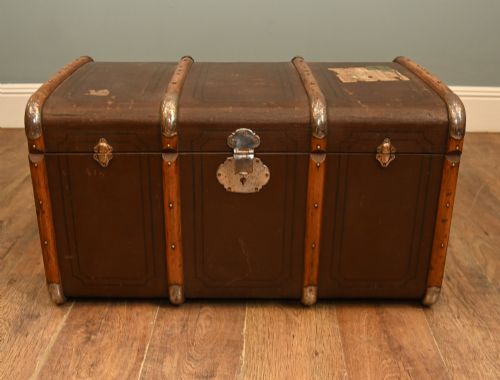


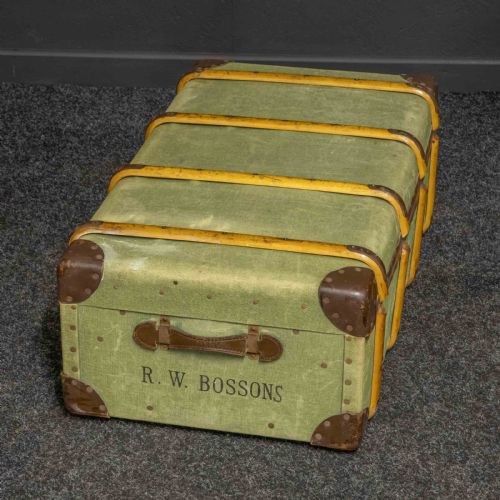


Leather Wooden Chest
These leather wooden chest pieces combine sturdy timber frames with robust hide coverings, offering practical storage with genuine historic character.
Leather Wooden Chest
A leather wooden chest combines a timber carcass with an outer skin of hide, canvas, or metal reinforcement for travel and domestic storage. You will encounter various forms ranging from large travel trunks and campaign bedside cabinets to smaller jewellery caskets and apothecary boxes.
The pieces on this page span several eras from the seventeenth century through the Georgian and Victorian periods into the early twentieth century. Victorian trunks and campaign items appear frequently, alongside occasional Georgian travelling chests and later steamer luggage.
Makers and workshops utilised specific regional materials such as camphorwood, pine, mahogany, and burr walnut beneath their protective leather and metal bindings. These items served practical functions for transport and secure storage before evolving into decorative interior furnishings.
Materials and construction
Construction relies upon a solid wooden foundation shaped from pine, oak, camphorwood, or mahogany to provide structural integrity. This carcass is then clad in leather, hide, or canvas.
Metal components such as brass studs, iron bands, and secure locks reinforce the corners and edges against the rigours of transit. Makers applied these protective elements by hand, securing them with numerous individual tacks and rivets.
Leather Wooden Chest Retail Price Guide 2026
Typical asking prices for leather wooden chest among the pieces listed under this phrase on Sellingantiques today, from the lower quarter to the upper quarter. They describe what is for sale here now, not the wider market.
Listings feature items spanning the seventeenth century through to the early twentieth century, incorporating pine, mahogany, oak, camphorwood, and leather.
Judging quality and execution
Quality rests in the integrity of the underlying timber frame and the durability of the outer leather hide. Superior examples retain their original brass hardware, working locks, and interior linings without structural compromise.
Finer pieces demonstrate careful hand-stitching along the seams and precise placement of metal studwork rather than hasty assembly. The presence of authentic maker stamps or original travel labels adds distinction to the construction.
Seabrook of St Pauls·Aux Etats Unis·Louis Vuitton
The Leather Wooden Chest Glossary
- Campaign furniture
- Portable pieces designed for military officers on active service, featuring folding elements and protective brass corners. These items needed to dismantle or pack easily for transport.
- Steamer trunk
- A lower-profile luggage chest built to fit beneath the cabin berths of ocean liners during the early twentieth century. They often incorporated internal trays and specialised compartments.
- Camphorwood
- An aromatic timber frequently utilised for campaign and travel chests because its natural scent repelled insects. It protected stored garments and documents during long voyages.
- Studded trunk
- A storage chest decorated and reinforced with rows of metal tacks or brass studs hammered into the leather exterior. This technique added both decorative pattern and structural strength.
Leather Wooden Chest: Frequently Asked Questions
How do I clean a leather wooden chest?
Dust the exterior gently with a dry cloth and apply a specialist leather conditioner to maintain the hide. Avoid harsh chemical cleaners that might damage the historic surface.
Take care to protect any exposed metal mounts and wooden sections from excessive moisture during routine maintenance.
Can I use a chest as a coffee table?
Many sturdy trunks and low chests function well as living room tables while providing hidden interior storage. Ensure the flat top surface is stable enough to hold items safely.
Place protective pads beneath decorative objects to prevent scratching the historic leather or wood finish.
How do I date a leather trunk?
Examine the construction methods, nail types, interior paper linings, and lock mechanisms for clues about the manufacturing period. Machine screws and modern adhesives usually indicate a later twentieth-century date.
Earlier pieces typically display hand-beaten metalwork, dovetail joints, and hand-stitched leather seams consistent with nineteenth-century or Georgian production.
Are these chests suitable for daily storage?
These pieces offer generous internal space for blankets, books, and household items while adding distinct historic character to a room. Their robust original construction makes them practical for everyday use.
Check that the interior surfaces are clean and dry before storing delicate fabrics inside antique timber and leather receptacles.