

Leather Wing Armchair
A leather wing armchair offers deep comfort and traditional presence, bringing substance and rich texture to any room.
Leather Wing Armchair
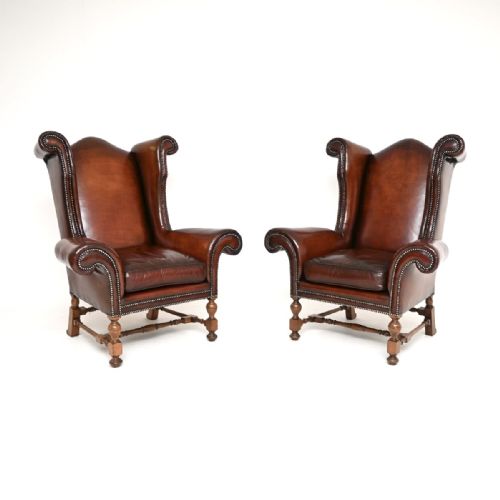
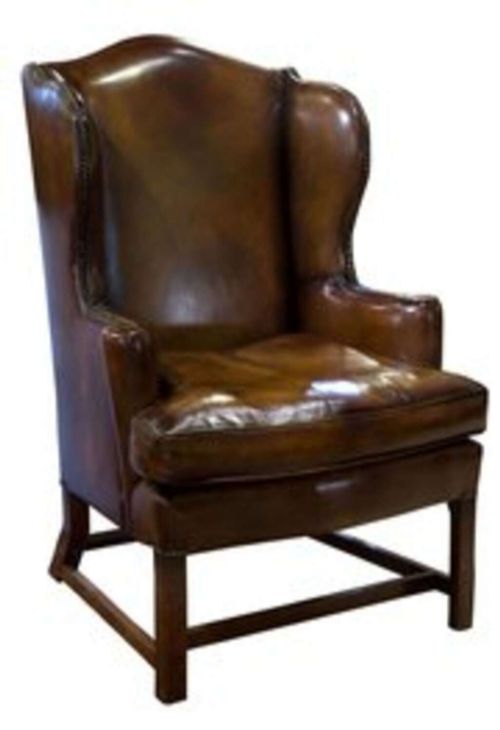
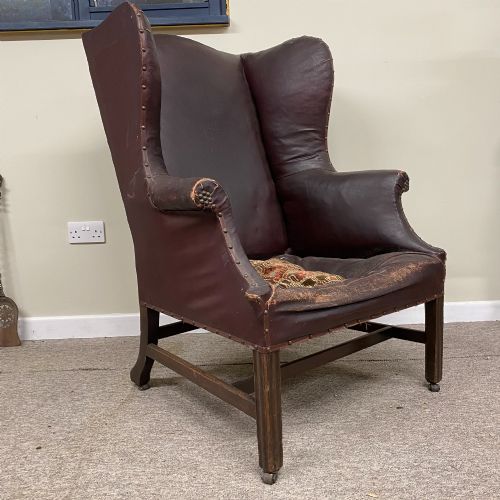
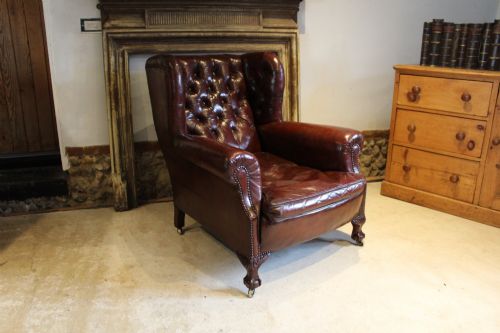
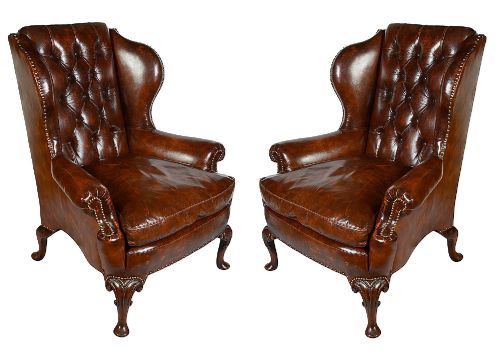
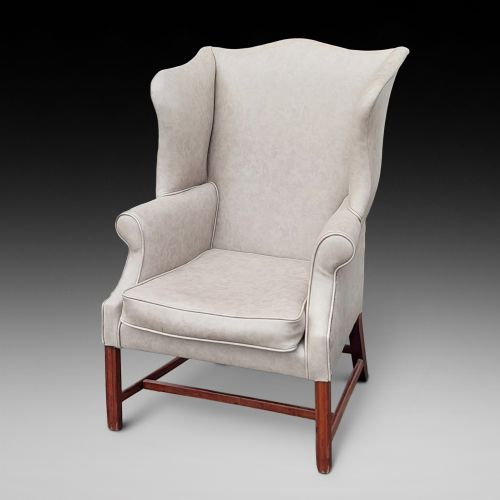
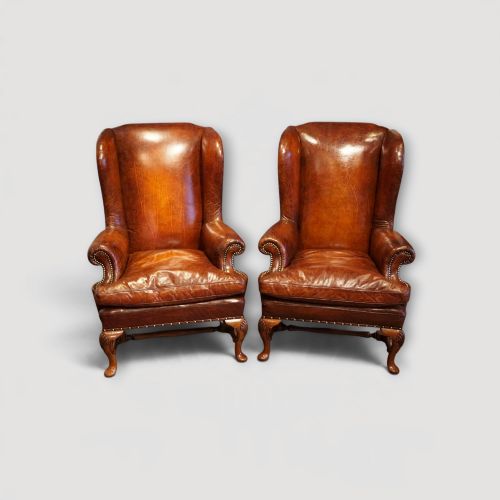
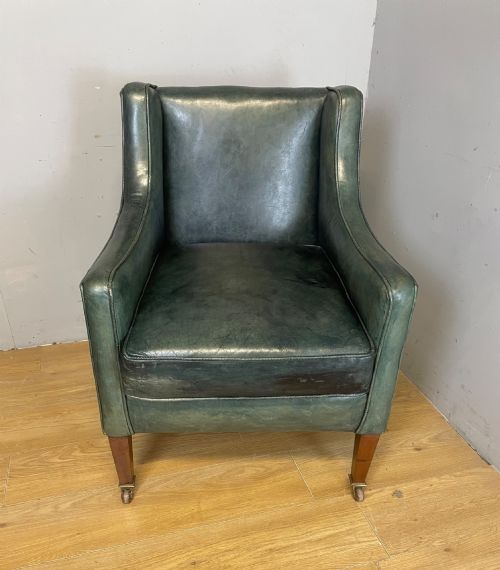
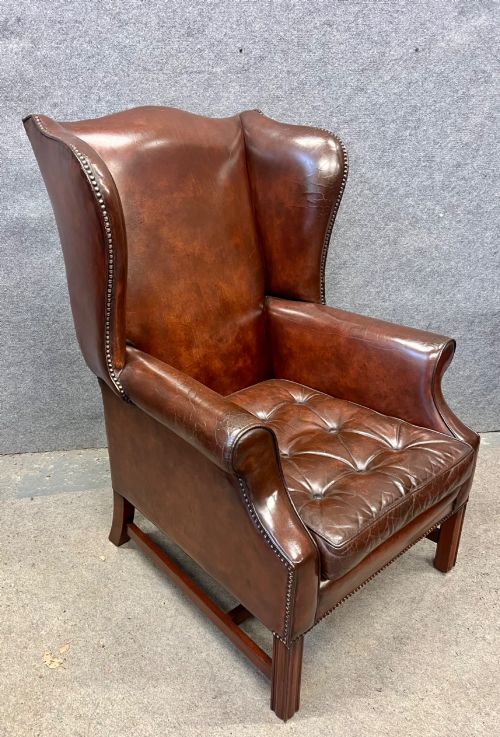
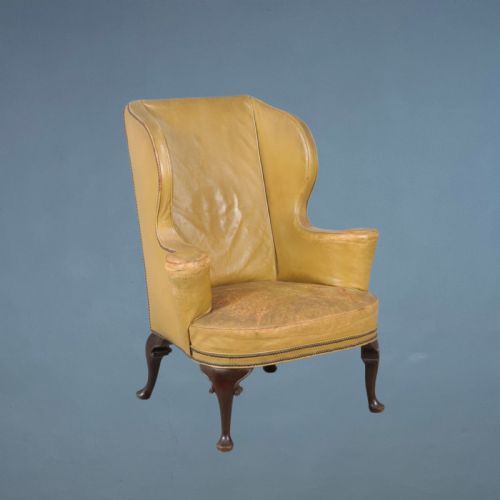
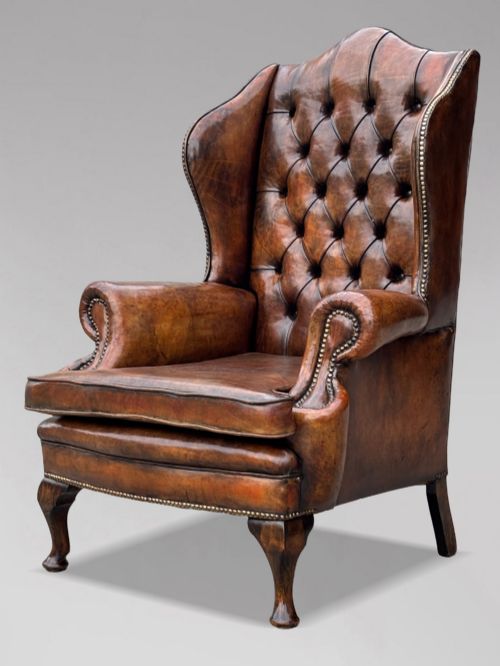
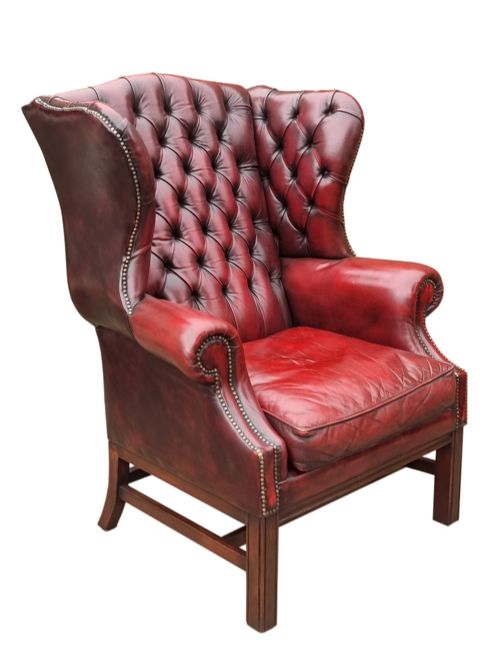
A leather wing armchair is a substantial seat featuring protective side panels designed to block draughts from open fires, spanning periods from the eighteenth century to the twentieth century. These pieces appear in forms such as library chairs, club chairs, and Chesterfield styles, often constructed during revival periods like the Georgian Revival and Queen Anne Revival. The pieces seen most frequently on this page combine traditional upholstery forms with twentieth-century production dates.
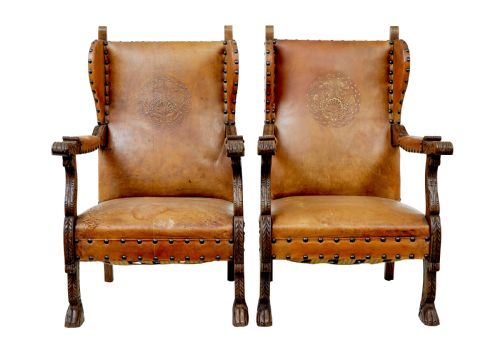
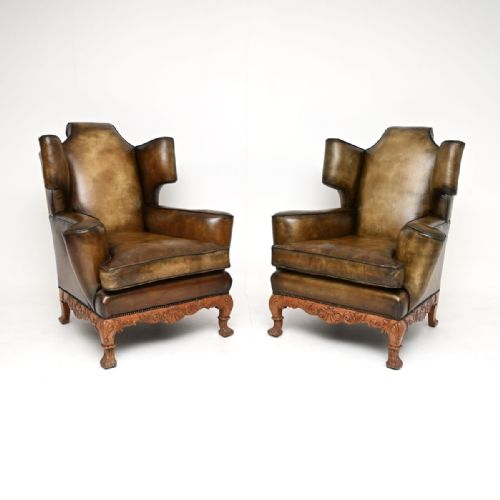
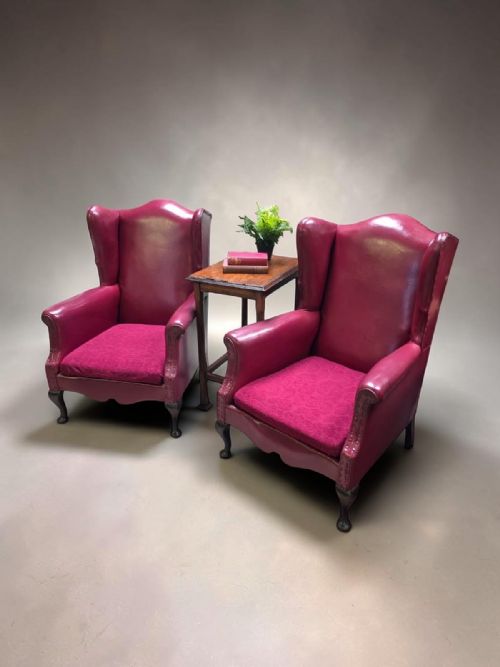
Makers and workshops constructed these seating options using distinct regional styles, incorporating cabriole legs or tapered supports. Examples range from authentic eighteenth-century frames to early twentieth-century interpretations in walnut, mahogany, and oak. Buyers encounter both single armchairs and matched pairs designed for domestic studies or formal reception spaces.
Materials and construction methods
Carpenters built the internal frames using durable timbers such as mahogany, oak, and walnut, ensuring structural integrity beneath the upholstery. Craftsmen then fitted these wooden skeletons with supportive padding and covered them in cattle hide, occasionally using brass detailing or embossed decoration.
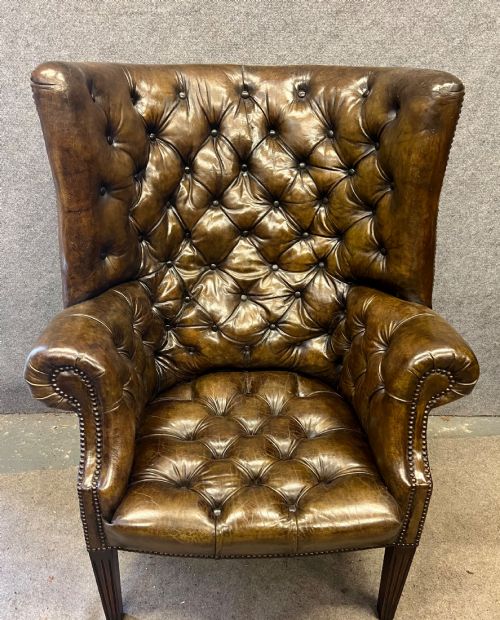
Upholstery techniques frequently included hand-colouring or hand-dyeing the leather surfaces, alongside full buttoning methods to secure the padding. Frames often rested on wooden legs shaped into cabriole or tapered forms, sometimes accompanied by matching footstools.
Leather Wing Armchair Retail Price Guide 2026
Typical asking prices for leather wing armchair among the pieces listed under this phrase on Sellingantiques today, from the lower quarter to the upper quarter. They describe what is for sale here now, not the wider market.
Listings feature items spanning the eighteenth, nineteenth, and twentieth centuries, utilising mahogany, walnut, oak, and brass alongside leather.
Quality and craftsmanship variations
The distinction between ordinary and exceptional examples rests in the depth of hand-craftsmanship applied to the leather and the timber frame. Superior pieces display carefully finished hides with natural patination, whilst lesser examples show uniform modern treatments.
Structural refinement also separates the ranges, evident in the carving of walnut or mahogany legs and the precision of the buttoning work. Original eighteenth-century and nineteenth-century items exhibit traditional joinery that differs from twentieth-century revival production.
The Leather Wing Armchair Glossary
- Cabriole leg
- A furniture leg that curves outward at the knee and tapers inward to an ankle, common on eighteenth-century and revival seating.
- Wingback
- An armchair style featuring characteristic side panels attached to the arms to shield the sitter from draughts.
- Chesterfield
- A traditional upholstered seating style typically characterised by deep buttoning and rolled arms covered in leather.
- Patina
- The surface sheen and softening of tone developed on leather and wood through age and handling.
- Buttoning
- An upholstery technique where indentations are formed in the padding by pulling buttons deep into the stuffing.
Leather Wing Armchair: Frequently Asked Questions
What is a leather wing armchair?
A leather wing armchair is an upholstered seat featuring protective side panels designed originally to keep out draughts from firesides. These chairs combine wooden frames with leather coverings in various traditional styles.
They appear across multiple centuries, including eighteenth-century originals and twentieth-century revival pieces modelled on earlier designs.
How do I date a leather wing armchair?
Dating relies on examining the timber species, leg design, and the construction methods used within the internal frame. Eighteenth-century models differ in their joinery and proportions compared to Victorian or twentieth-century revival pieces.
Cabinet-making techniques and the specific style of the cabriole or tapered legs offer further clues to the period of origin.
How were these armchairs used historically?
These chairs were placed near firesides in libraries, studies, and drawing rooms to provide warmth and comfortable seating. The characteristic wings trapped heat from the hearth around the sitter's head.
They served as reading chairs and formal seats in domestic interiors throughout the Georgian, Victorian, and Edwardian eras.
How should I care for vintage leather?
Vintage leather benefits from regular dusting and occasional treatment with appropriate leather conditioners to prevent the hide from drying out. Keeping the material away from direct heat sources and strong sunlight preserves the natural finish.
Gentle cleaning maintains the surface texture and the characteristic patination acquired over decades of use.