


Leather Top French Desk
A leather top french desk brings refined writing surfaces and classical proportion into a room, joining practical utility with decorative grace.
Leather Top French Desk
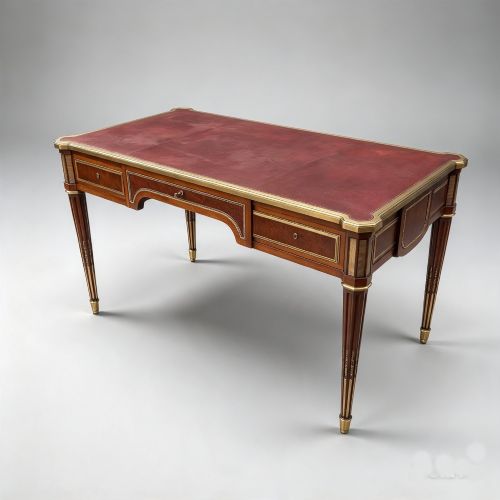
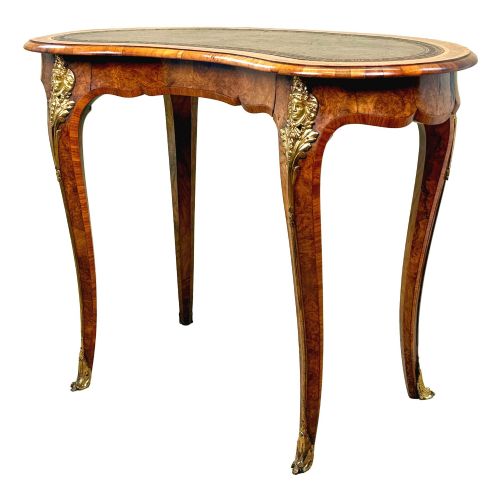
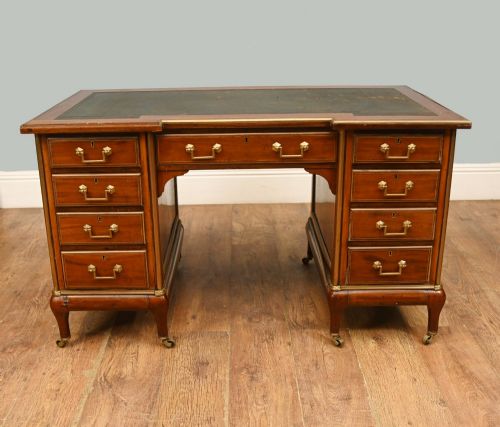
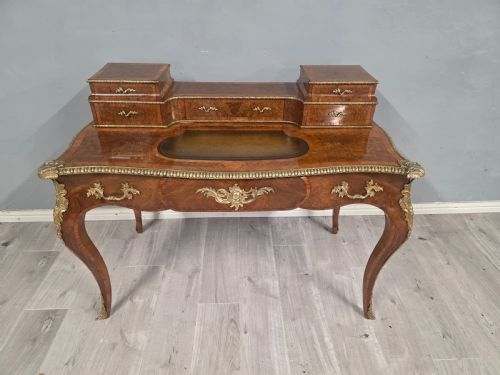
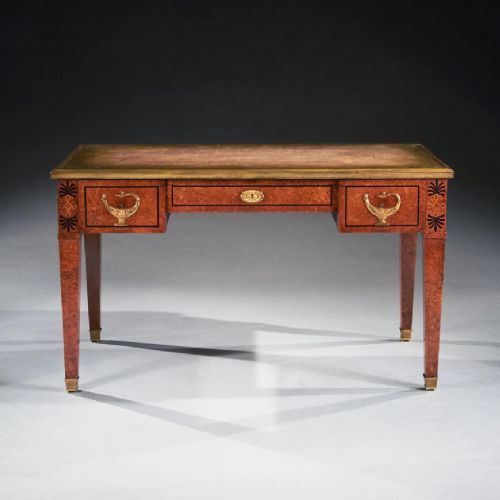
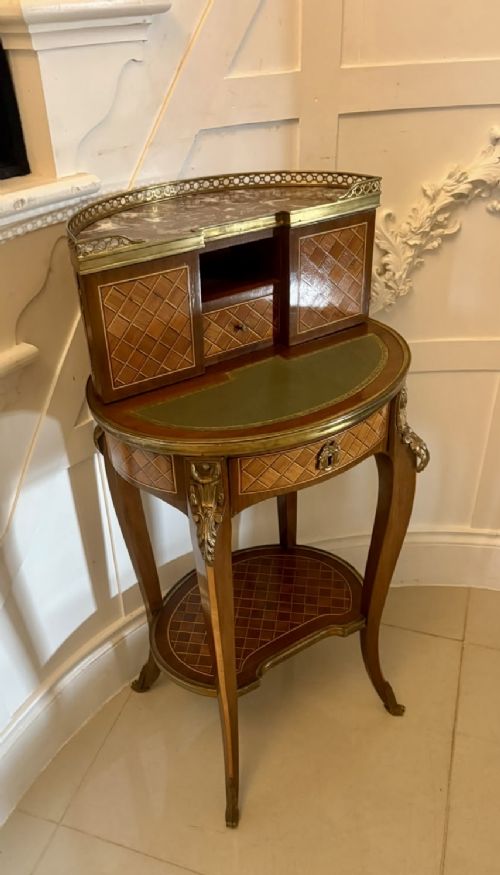
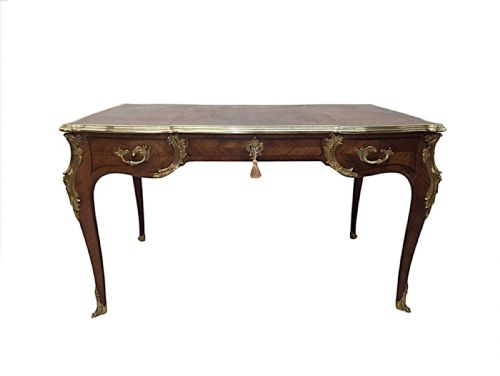
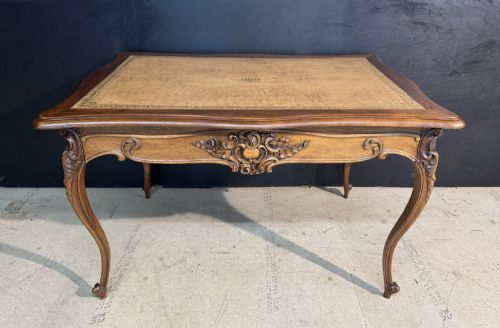
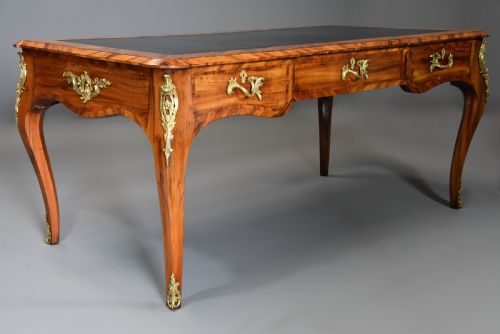
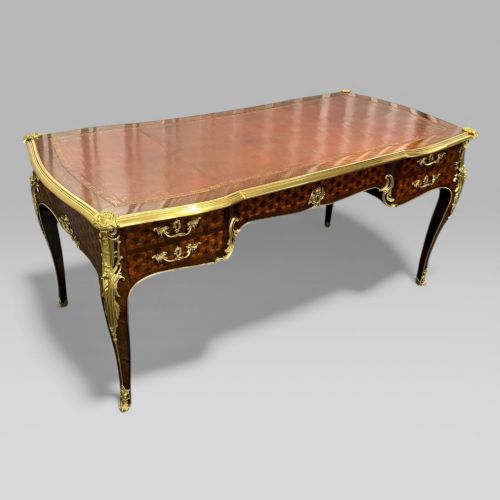
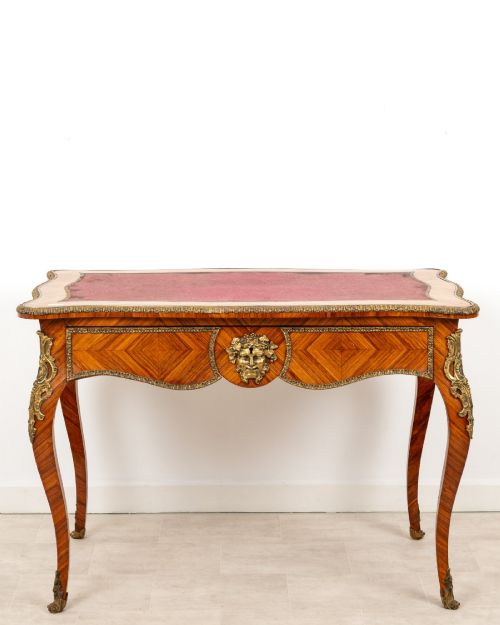
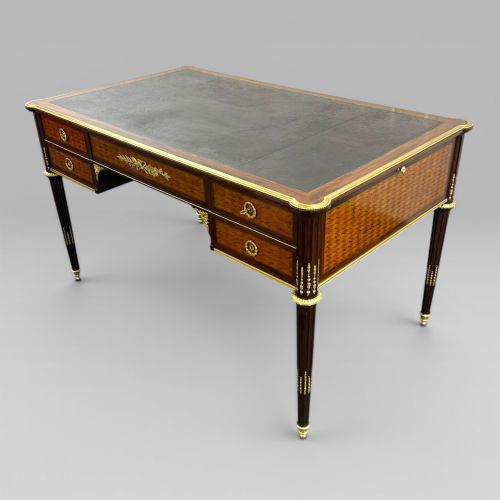
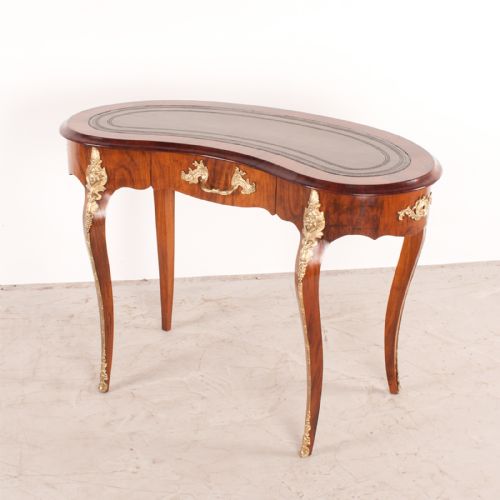
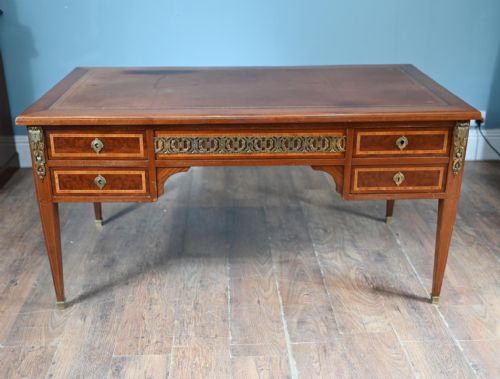
A leather top french desk encompasses freestanding bureau plat tables, kidney-shaped writing surfaces and bureau de dame forms originating primarily across the nineteenth century.
The pieces you meet most often on this page date from the Victorian era and the later decades of the nineteenth century, reflecting revival tastes in Louis XV and Louis XVI styles.
These writing tables serve as central room pieces rather than wall furniture, finished on all sides with inset leather writing panels intended for daily correspondence.
Materials and construction
Cabinet makers built these desks upon carcases of mahogany, walnut or oak, overlaid with decorative veneers including kingwood, rosewood, tulipwood and satiné.
Cast ormolu and gilt bronze mounts frame the corners, drawer edges and legs, while tooled leather inserts define the writing surfaces.
Leather Top French Desk Retail Price Guide 2026
Typical asking prices for leather top french desk among the pieces listed under this phrase on Sellingantiques today, from the lower quarter to the upper quarter. They describe what is for sale here now, not the wider market.
Some desks hide secret side drawers for storing inkwells away from prying eyes.
Craftsmanship and design
The distinction between standard production and top work lies in the crispness of the gilt bronze mounts and the precision of the parquetry or marquetry patterns.
Master makers executed fluid curves in the wood and mounted fire-gilt bronze with secure mechanical fit, whereas lesser examples rely on stamped brass and simpler timber framing.
François Linke·Edwards and Roberts·Donald Ross·Maurice Dufrêne
The Leather Top French Desk Glossary
- Bureau plat
- A freestanding writing table fitted with one or more drawers across the frieze. These tables traditionally stood in the centre of a room rather than against a wall.
- Ormolu
- Gilt bronze mounts applied to furniture to accent corners, legs and drawer borders. The technique involves coating copper alloy with a layer of finely ground gold mercury amalgam.
- Parquetry
- Geometric wood inlay forming patterned surfaces such as cubes or chequers. Craftsmen used contrasting timber veneers to create optical depth on the desk top.
- Marquetry
- Pictorial or curvilinear wood inlay depicting floral or scroll motifs. This technique differs from parquetry through its use of flowing organic shapes rather than geometric grids.
- Bureau de dame
- A small ladies writing desk often featuring delicate cabriole legs and fitted compartments. These pieces emerged during the eighteenth century and remained popular in nineteenth-century revivals.
Leather Top French Desk: Frequently Asked Questions
How do I identify Louis XV style?
Louis XV style furniture relies on asymmetrical curves, cabriole legs and naturalistic scrollwork. The overall silhouette avoids straight lines in favour of flowing contours.
Ormolu mounts on these pieces typically echo plant forms and organic motifs.
Are these desks finished on the back?
Freestanding bureau plat and writing tables are finished on all sides so they can float in open spaces. The rear mimics the front drawer arrangement.
This all-around finish distinguishes them from standard writing desks meant for placement against walls.
What wood is kingwood?
Kingwood is a dense tropical timber with a dark violet-brown colour marked by lighter golden stripes. Cabinet makers valued it for high-end veneered surfaces.
It appears frequently on nineteenth-century revival desks alongside ormolu mounts.