



Leather Top Chest
A leather top chest brings robust character and practicality to any room, offering fitted storage wrapped in rich hide.
Leather Top Chest
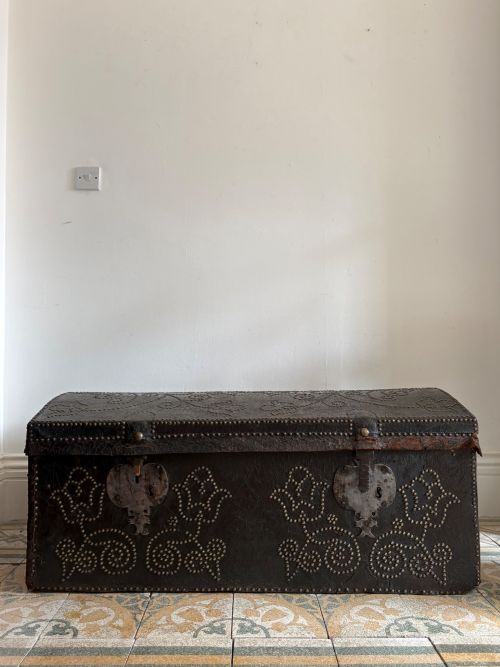
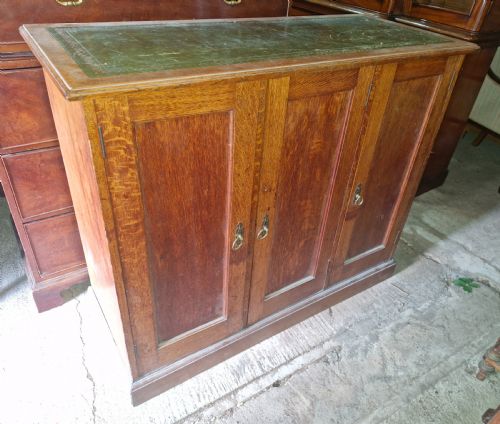
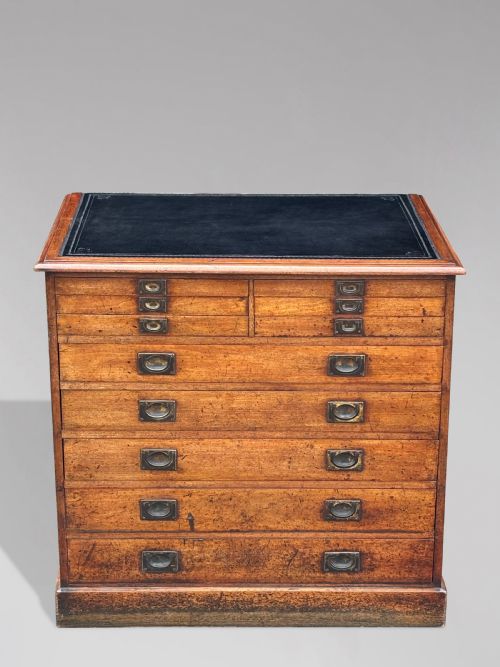
A leather top chest combines sturdy timber construction with a durable hide surface, serving as practical storage or a writing surface. When searching for a leather top chest, buyers encounter utilitarian campaign pieces, refined Georgian desks, and travel trunks from the eighteenth and nineteenth centuries.
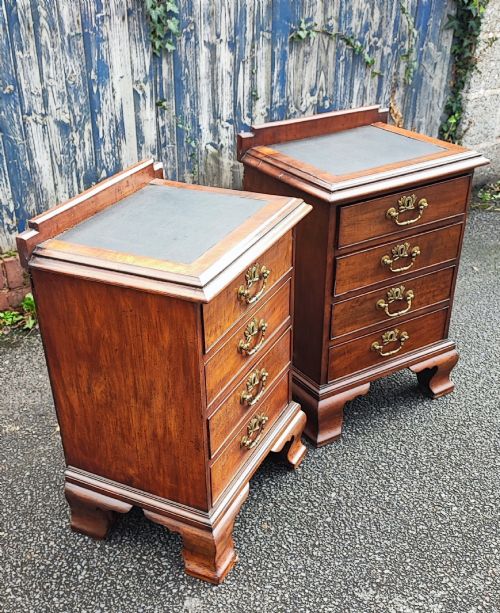
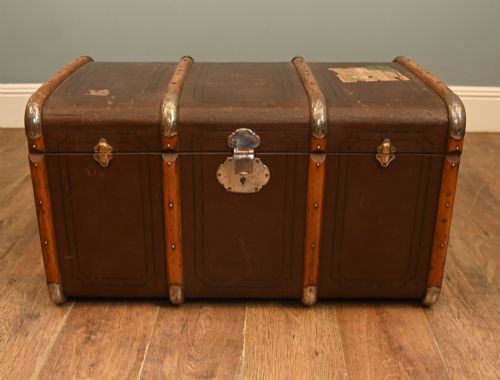
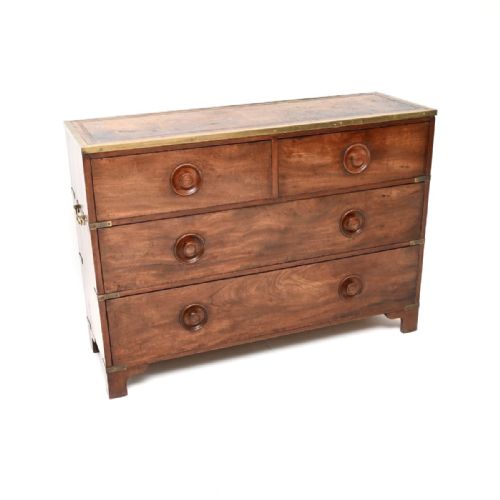
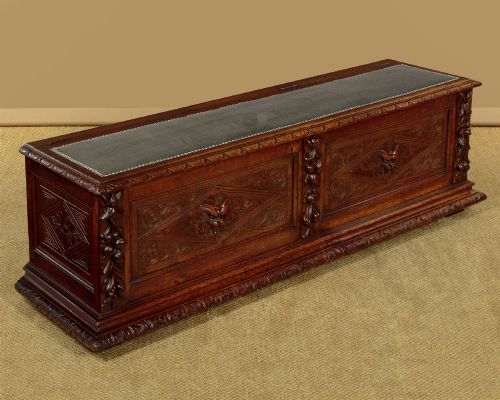
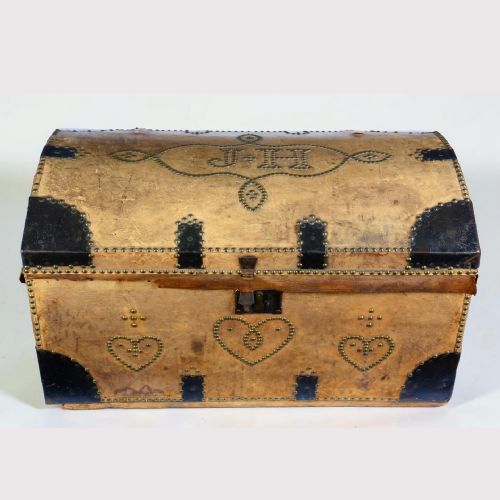
The selection ranges from mahogany military campaign chests of drawers to Spanish domed marriage coffers and compact bedside cabinets. These pieces originate from Victorian, Georgian, and Regency periods, utilising materials suited for travel and domestic display.
Most examples merge functional storage with decorative leather binding, brass studwork, and iron hardware. The form adapts from travelling luggage to stationary bedroom furniture, maintaining a distinct tactile quality.
What varies in quality
Quality rests in the integrity of the timber framing and the original condition of the leather hide. Superior examples feature fine secondary woods, dovetail joinery, and well-preserved surface tooling rather than replaced materials.
The standard of metalwork distinguishes standard storage from finer commissions, evident in heavy cast brass carry handles, locks, and precise stud spacing. Maker attribution through stamps or inscriptions also elevates the standing of a piece.
Leather Top Chest Retail Price Guide 2026
Typical asking prices for leather top chest among the pieces listed under this phrase on Sellingantiques today, from the lower quarter to the upper quarter. They describe what is for sale here now, not the wider market.
Listings span from the seventeenth century through the Art Deco era, encompassing campaign furniture, writing boxes, and travel trunks.
Arthur Wannop·Chapple and Sons·Aux Etats Unis of Paris·Louis Vuitton·Finnigans of London
The Leather Top Chest Glossary
- Campaign chest
- A sectional furniture form designed for military officers on the move, featuring brass corners and recessed handles.
- Dome top
- A curved lid construction on trunks and coffers, often reinforced with wooden ribs and metal studs to shed water.
- Studwork
- Rows of decorative brass or iron tacks securing leather hide to the wooden carcase while providing a patterned border.
- Hide
- Untanned or tanned animal skin used as a tough, tactile exterior covering for trunks and travel luggage.
- Coffer
- A large heavy box used for storing valuables, typically fitted with a hinged lid and robust carry handles.
Leather Top Chest: Frequently Asked Questions
How were leather top chests used?
These pieces served multiple functions from domestic storage to military transport on campaigns. Officers utilised modular chests for clothing and documents while travelling.
In homes, similar forms acted as travelling luggage, blanket chests, or bedside tables. The reinforced leather tops provided a durable surface that withstood heavy use.
What woods are found inside?
Makers utilised sturdy timbers such as mahogany, oak, walnut, and pine for the main structure and internal drawers. The choice of wood depended on whether the piece was intended for military travel or domestic display.
Secondary woods like pine often appear in the less visible sections of campaign furniture and travelling trunks. Hardwoods provided the structural resilience needed for frequent relocation.
How do I date a leather chest?
Dating relies on examining construction methods, wood types, and metal hardware styles. Eighteenth-century examples often feature dome tops with heavy iron mounts and Spanish or Dutch origins.
Victorian and Regency pieces frequently display recessed brass campaign handles and mahogany or burr elm carcases. Maker stamps and interior paper labels also provide precise chronological markers.
How do I care for antique leather?
Preserving antique hide requires maintaining stable humidity levels and avoiding direct sunlight. Gentle cleaning removes surface dust without stripping the historic finish.
Leather dressings should be used sparingly and only when the material shows signs of dryness. Protecting the natural surface ensures the longevity of the hide.