
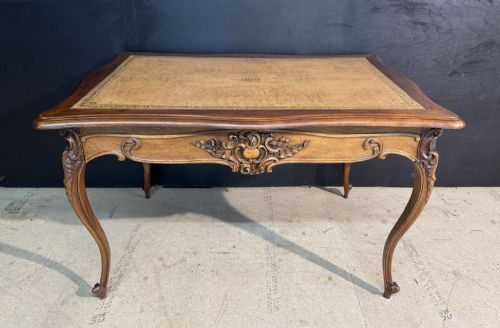
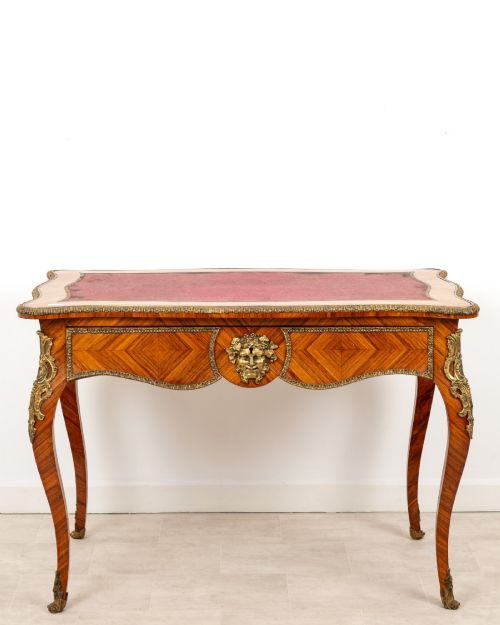
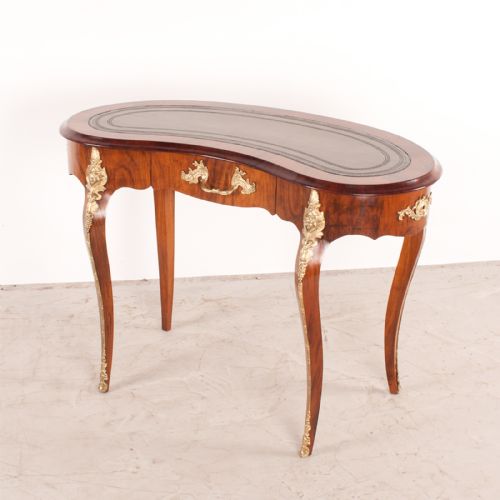
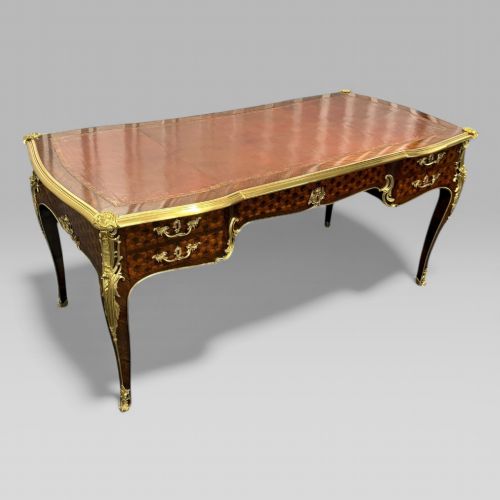

Leather Top Bureau Plat
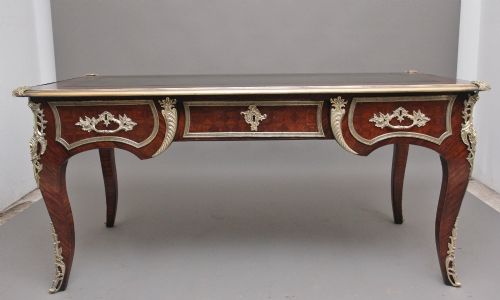
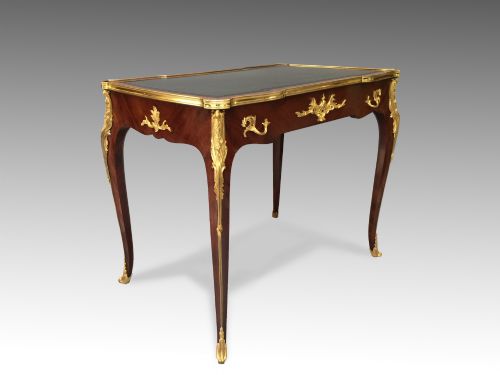
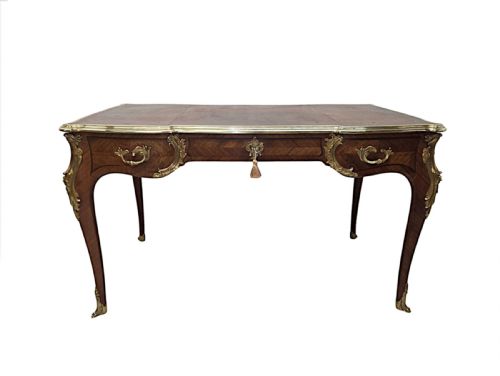
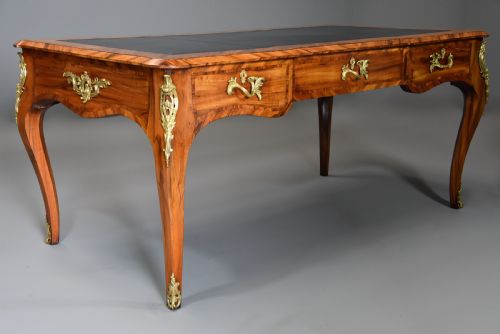
These leather top bureau plat desks are freestanding writing tables designed for the centre of a room, combining fine timbers with decorative metal mounts.
Leather Top Bureau Plat
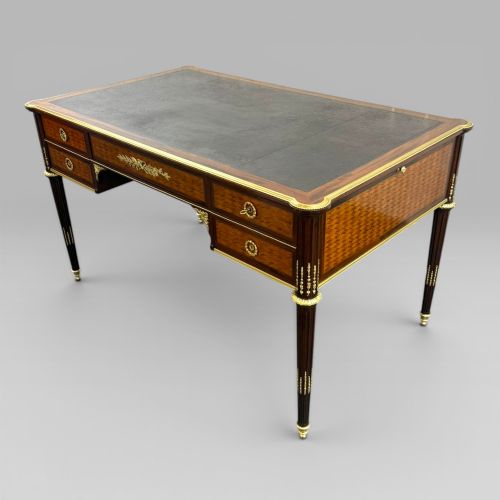
A leather top bureau plat serves as a freestanding writing desk, traditionally placed in the middle of a room rather than against a wall. The pieces listed under this search phrase span the nineteenth and twentieth centuries, with significant representation from the Victorian era and the years around eighteen eighty.
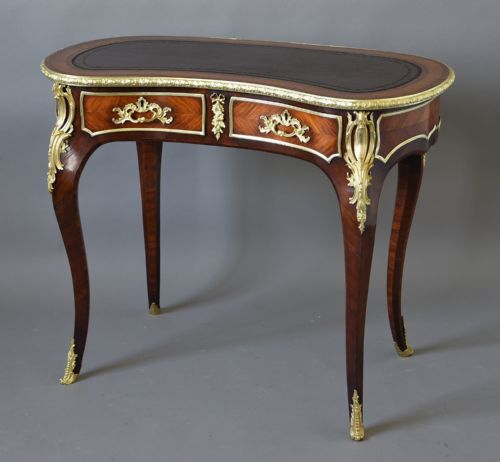
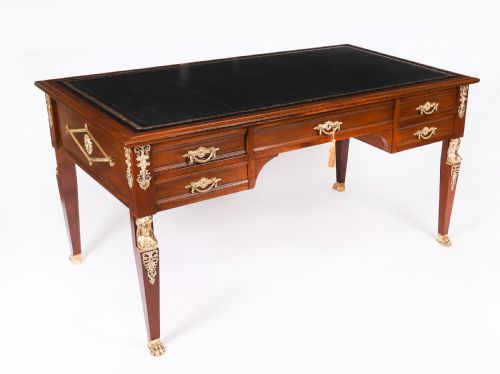
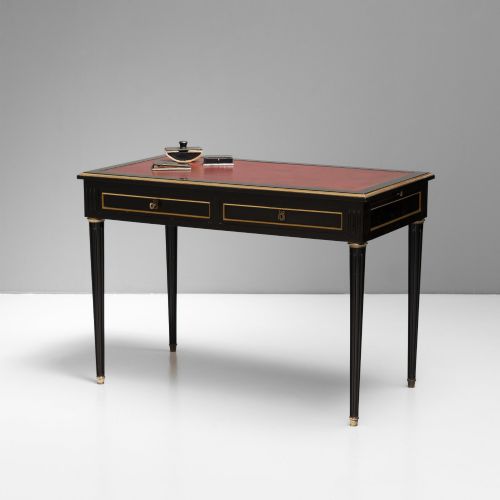
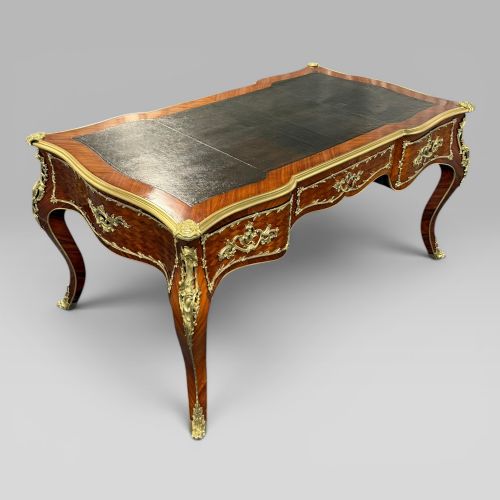
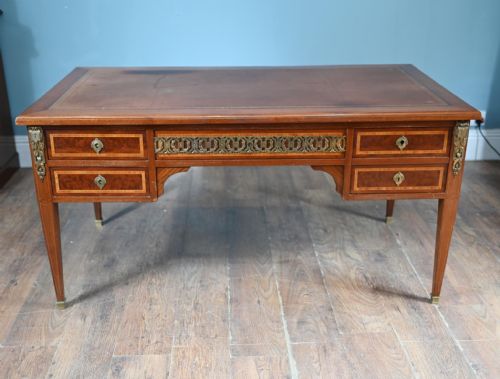
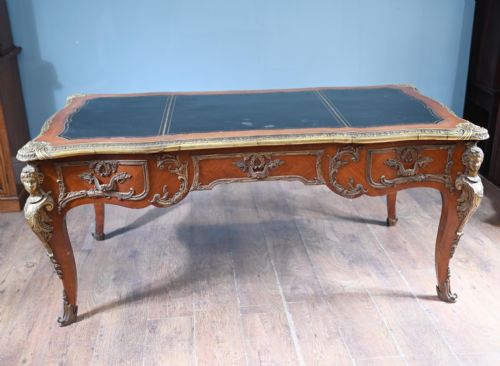
Most examples follow French design precedents, predominantly appearing in Louis XV and Louis XVI revival styles, alongside French Empire and Directoire interpretations. Makers constructed these desks as writing tables, kidney-shaped tables, and serpentine fronted desks using timbers such as kingwood, mahogany, walnut, and burr walnut.
Materials and Construction
Craftsmen built these desks using foundational woods like mahogany and walnut, frequently applying decorative veneers of kingwood, tulipwood, and rosewood in parquetry and marquetry patterns. They integrated inset leather writing surfaces into the top boards, bordered by gilt tooling.
Mounts and decorative elements cast in ormolu and gilt bronze accent the corners, legs, and drawer edges of the timber frames. Cabinetmakers also utilised brass and bronze hardware to complete the structural and decorative assembly.
Listings for this phrase include nineteenth century desks featuring kingwood veneers, ormolu mounts, and kidney-shaped writing tables from the Victorian period.
Defining Quality
The standard of a leather top bureau plat depends significantly on the precision of the timber veneers and the crispness of the cast metal mounts. Finer examples display intricate parquetry or marquetry alongside heavily chased ormolu details that fit flush against the wood contours.
Signatures or stamps from documented makers like François Linke or retail firms such as Edwards and Roberts elevate an individual desk. The selection of superior cabinet timbers, such as figured burr walnut or rich kingwood, further separates standard production pieces from exceptional ones.
François Linke·Edwards and Roberts·Gillows
The Leather Top Bureau Plat Glossary
- Bureau plat
- A freestanding writing table, typically fitted with drawers and a leather inset top. This form originated in France and remains the primary subject of this guide.
- Ormolu
- Gilded bronze used for decorative mounts and accents on furniture. The technique involves applying a gold amalgam to a bronze base.
- Parquetry
- Geometric patterns formed by fitting small pieces of wood veneer together. Cabinetmakers applied this technique to the surfaces of fine desks.
- Marquetry
- Elaborate pictorial or floral designs created with various wood veneers inlaid into a solid background. It requires considerable skill to execute on curved desk fronts.
- Kingwood
- A dense, richly grained timber imported from South America and frequently utilised in French revival furniture. Its distinctive figure made it a favourite for high-end nineteenth century cabinetmaking.
Leather Top Bureau Plat: Frequently Asked Questions
What is a bureau plat used for?
A bureau plat functions primarily as a writing table or desk. Because these pieces are finished on all sides, owners traditionally place them in the middle of a room rather than against a wall.
Historically, they served for correspondence and administrative tasks. Today, they often function as freestanding library tables or executive desks.
Are these desks strictly French?
Many examples originate from France or follow French design movements such as the Louis XV and Empire styles. However, English workshops also produced comparable library and writing tables.
Craftsmen across Europe adopted these continental forms during the nineteenth century, utilising local timbers alongside imported veneers.
How do I identify the style?
Style identification relies on examining the decorative vocabulary and silhouette of the desk. Louis XV revival pieces feature asymmetrical curves, cabriole legs, and flowing ormolu mounts.
In contrast, Louis XVI and Directoire examples display straight tapered legs, geometric symmetry, and neoclassical bronze ornamentation. Burr walnut and mahogany versions often reflect Victorian or Regency English cabinetmaking.
Can the leather top be replaced?
The leather writing surface is an insert that can be renewed by a specialist restorer when worn. Original leathers often show age, while replacement surfaces utilise traditional goatskin or calfskin with hand-tooled gold leaf borders.
Preserving the original leather is standard practice if the surface remains intact and stable.