
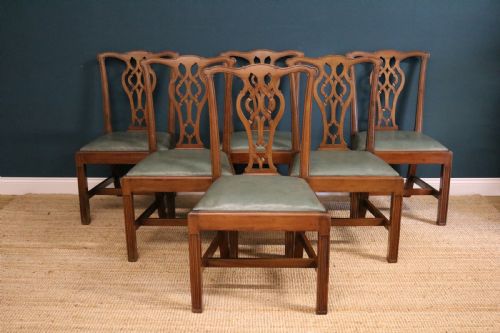
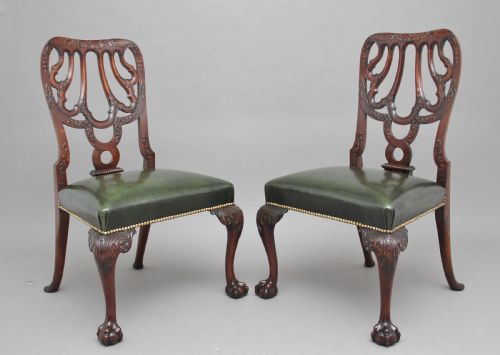


Leather Splat Back Chair
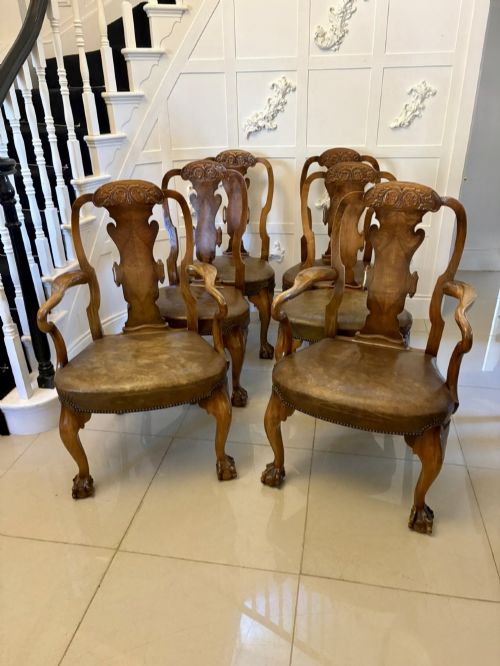
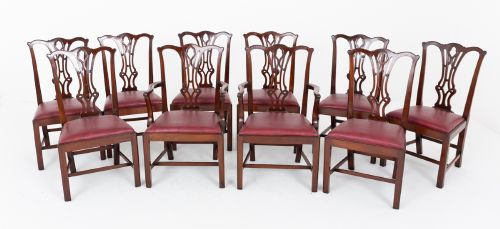
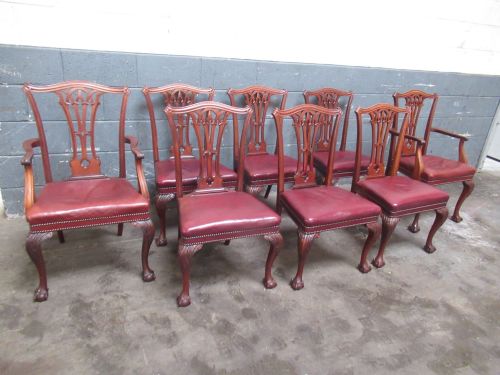
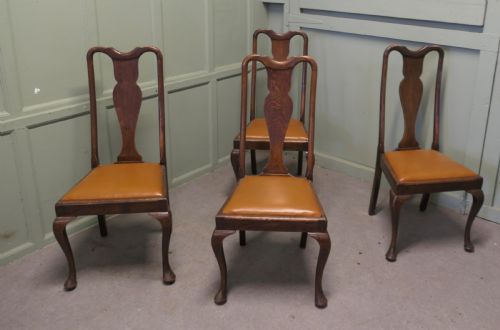
A leather splat back chair brings together timber frames and hide upholstery for a seat that handles daily dining or study.
Leather Splat Back Chair
When you search for a leather splat back chair, you encounter seating built across several centuries, ranging from eighteenth-century originals to later revival pieces. The listings show forms spanning dining chairs, armchairs, side chairs, desk chairs, and corner chairs.
You are most likely to meet mahogany and walnut examples finished in Chippendale style, Queen Anne style, or Georgian revival periods. These pieces serve practical seating roles in dining rooms and studies while showing period craftsmanship.
Materials and construction
The frames rely on hardwoods such as mahogany, walnut, oak, fruitwood, and elm, often shaped into carved splats and sturdy legs. Brass studs frequently secure the padded leather seats to the wooden rails.
Makers shaped the timber using traditional joinery methods to support upright high backs and supportive armrests. Fruitwood inlay and marquetry occasionally add decorative surface detail to the walnut and mahogany structures.
A lone elm corner chair sits quietly among the mahogany set, waiting for a snug spot in a study.
Distinctions in craftsmanship
Finer examples demonstrate crisp hand-carving along the splats and stiles, whereas simpler chairs rely on plain timber profiles. The depth of the relief work on the wooden back panels separates standard production from superior output.
The grade of the timber and the tightness of the joinery dictate the longevity of each frame. Well-executed revival pieces from the nineteenth and twentieth centuries match the structural integrity of older Georgian originals.
William Walker & Sons
The Leather Splat Back Chair Glossary
- Splat
- The vertical wooden strip down the middle of a chair back. It provides structural support and often carries carved decoration.
- Carver
- An armchair designed to sit at the head of a dining table. These feature supportive armrests matching the surrounding side chairs.
- Marquetry
- The art of applying pieces of veneer to a structure to form decorative patterns. This technique appears on walnut high back chairs.
- Stretcher
- A horizontal wooden brace connecting the legs of a chair for added stability. Box stretchers run between all four legs.
Leather Splat Back Chair: Frequently Asked Questions
How do I use these chairs?
These pieces function primarily around a dining table or placed near a desk for seated tasks.
Armchairs and carvers typically sit at the ends of tables, while side chairs line the sides.
How do I date these chairs?
Dating relies on identifying timber species, revival styles, and construction techniques used in the frame.
Eighteenth-century originals differ subtly in joinery and wear patterns from late nineteenth or early twentieth-century revivals.
How do I care for the leather?
Leather upholstery requires gentle cleaning and occasional conditioning to maintain its flexibility.
Keeping the hide away from direct heat sources prevents the material from drying out over time.