
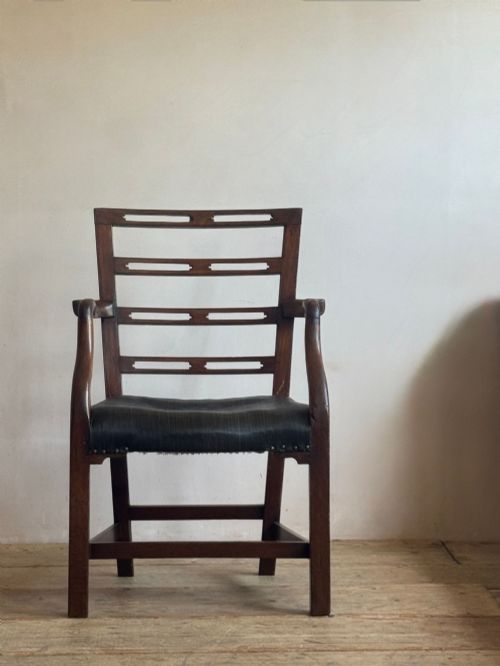
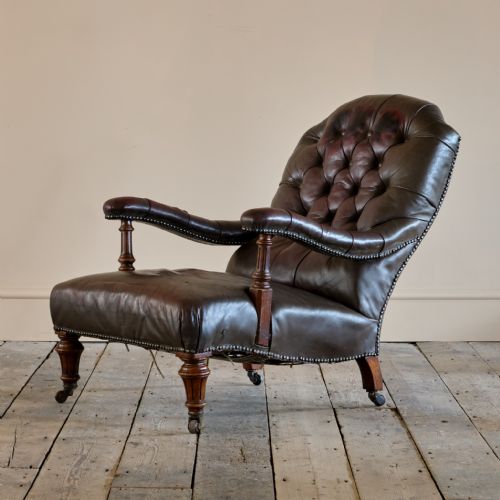

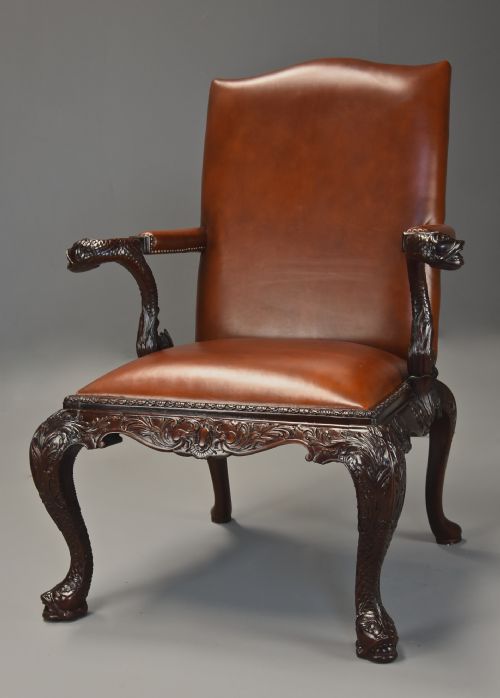


Leather Open Arm Chair
These leather open arm chair examples offer robust construction and tactile comfort, combining supportive timber frames with traditional hide upholstery for daily use.
Leather Open Arm Chair
A leather open arm chair brings together firm timber frames and supple upholstery, functioning as a primary seat for libraries, studies, and drawing rooms. When searching for this phrase, buyers encounter various historical forms, from formal library seating to relaxed fireside models.
The most common versions appearing on this page span the eighteenth, nineteenth, and early twentieth centuries. These encompass Georgian library models, Victorian oak and mahogany pieces, and later Edwardian interpretations.
Framing styles range from formal Gainsborough shapes to regional vernacular pieces like oak shepherds crook armchairs and low studded seating. Many examples feature exposed timber arms, distinguishing them from fully upholstered easy chairs.
Materials and Construction
Makers utilised dense hardwoods for the structural frames, relying predominantly on mahogany, oak, and walnut, alongside occasional birch, beech, and rosewood. These timbers were joined using traditional methods to withstand regular weight and movement.
Upholstery centres on natural leather, frequently secured with brass studs along the borders. Additional materials such as hessian provide interior foundation support within the seat and back structures.
Historic listings include an oversized Welsh oak throne designed specifically for an Eisteddfod gathering.
Assessing Quality and Execution
Quality rests in the proportion of the timber frame and the crispness of any hand-carved ornamentation. Finer examples display harmonious lines and carefully selected wood grain, while simpler vernacular pieces prioritise rustic utility.
The integration of the leather upholstery dictates the finished character, ranging from tightly pulled patinated hide to deep buttoned panels. Superior pieces maintain structural integrity in the open arms and joints through precise joinery.
The Leather Open Arm Chair Glossary
- Gainsborough armchair
- A wide seat with upholstered arms and an open wooden frame, typically dating from the eighteenth century onwards. This form often served at a writing desk or in a library.
- Gothic Chippendale
- A decorative style combining mid-eighteenth-century proportions with pointed arches and fretwork tracery. It appears frequently in chair backs and leg stretchers.
- Biedermeier
- A Central European style from the nineteenth century prioritising utilitarian comfort and clean architectural lines. Pieces in this idiom showcase blonde and figured woods without excessive ornamentation.
- Shepherds crook
- An arm shape curving downward in a continuous line reminiscent of a traditional crook. This profile appears on sturdy vernacular seating.
- Carver armchair
- A dining or desk chair featuring open arms, designed to match a set of standard side chairs. These provide additional elbow support during prolonged sitting.
Leather Open Arm Chair: Frequently Asked Questions
What is a Gainsborough chair?
A Gainsborough chair is a wide, upholstered armchair with open wooden arms designed in the eighteenth century. These seats were originally placed in libraries and studies.
They feature padded seats and backs mounted on a sturdy timber frame, allowing comfortable movement while working or reading.
How do I date an antique armchair?
Dating relies on observing the timber species, joinery techniques, and prevailing decorative styles. Mahogany and walnut gained prominence in different periods, while carving motifs shifted from Gothic tracery to Victorian revival forms.
Hardware such as brass upholstery tacks and internal hessian webbing also provide clues regarding the manufacturing era.
Where were these chairs used?
These armchairs served primarily in formal rooms such as libraries, studies, and drawing rooms. Their open arm design permitted comfortable seating while wearing voluminous historical garments.
Vernacular versions also functioned as fireside seating in larger country houses and halls.
How do I maintain leather upholstery?
Leather upholstery benefits from regular dusting and occasional treatment with appropriate conditioning balms to prevent drying. Keeping the hide away from direct heat sources preserves its suppleness.
Natural patination develops over decades through normal use and careful maintenance.