
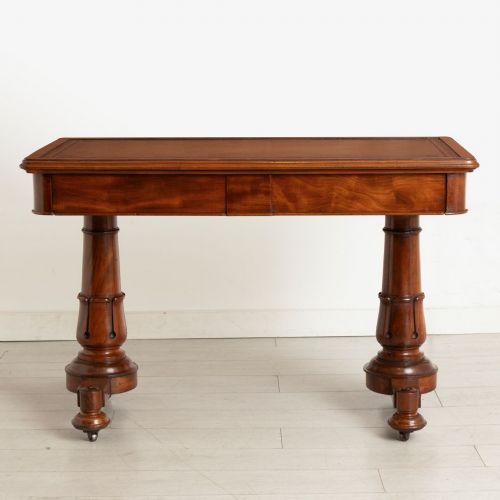
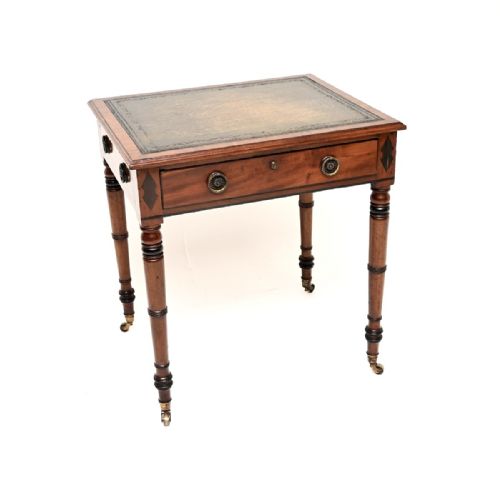
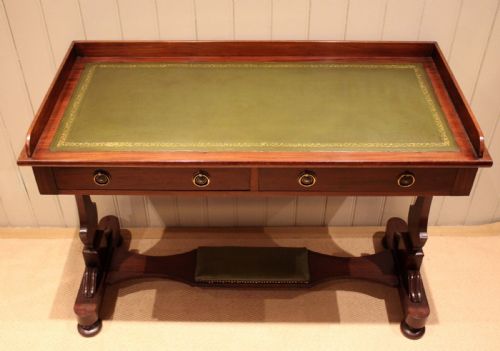
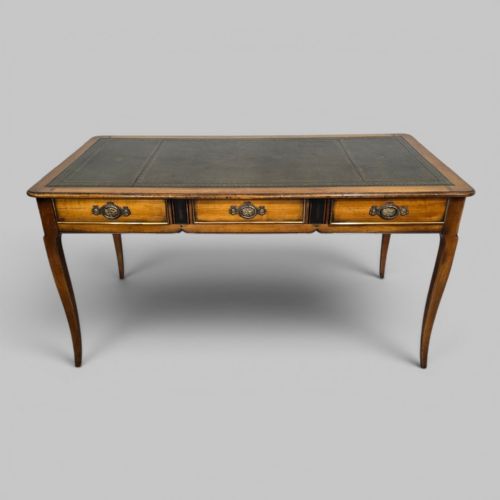


Leather Inset Library Table
A leather inset library table offers a substantial writing surface framed in hide, combining utility with presence in a room.
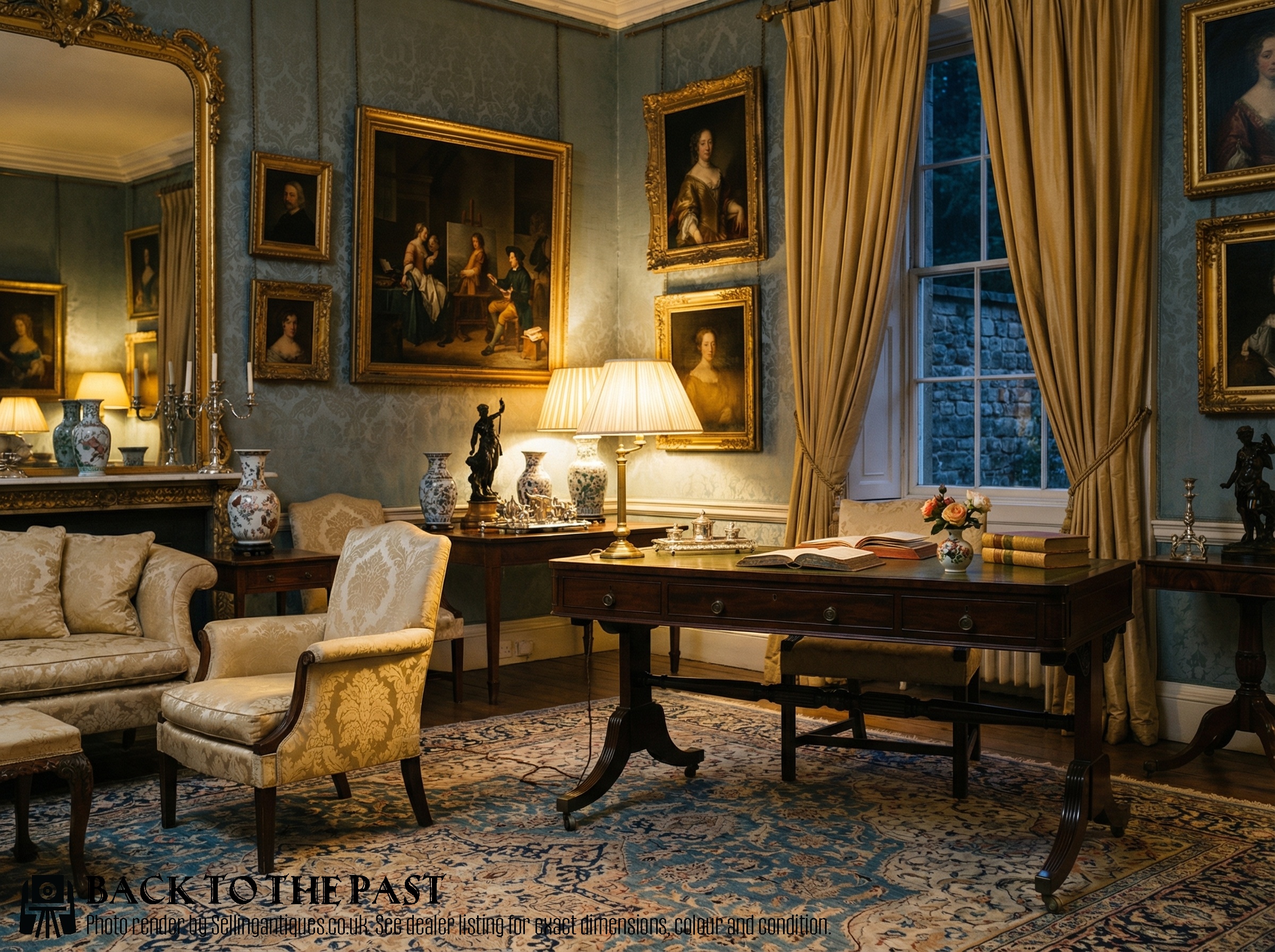
Leather Inset Library Table
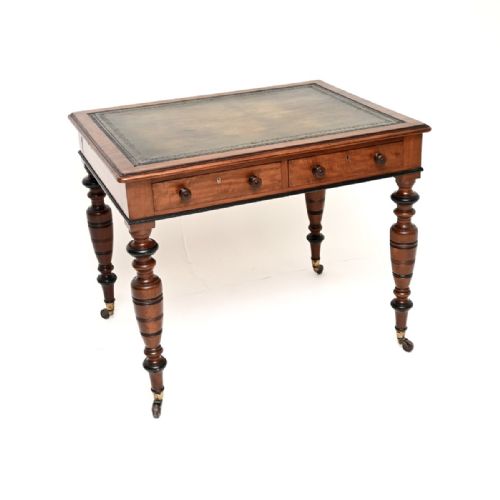
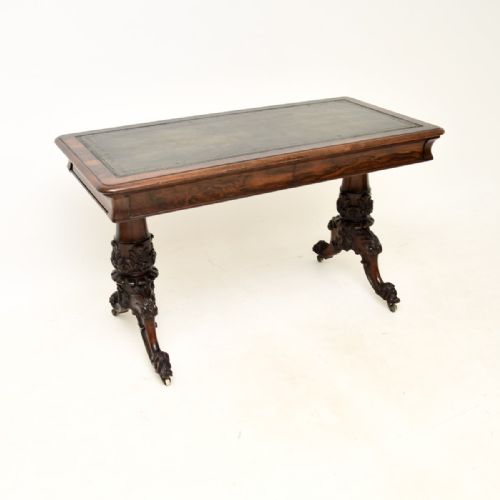
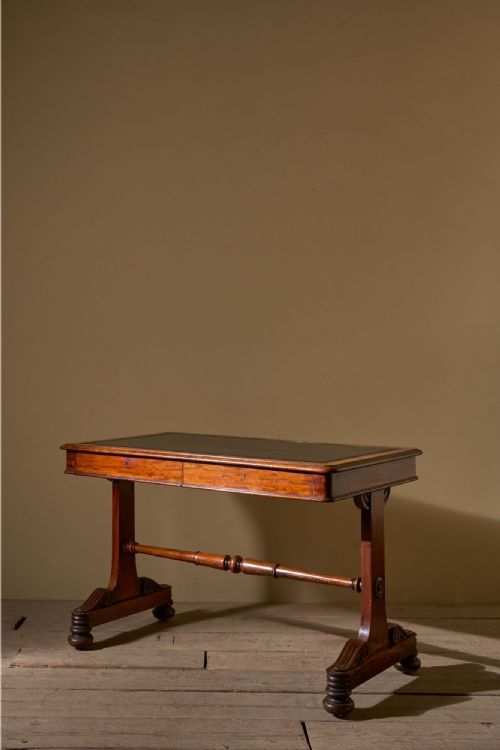
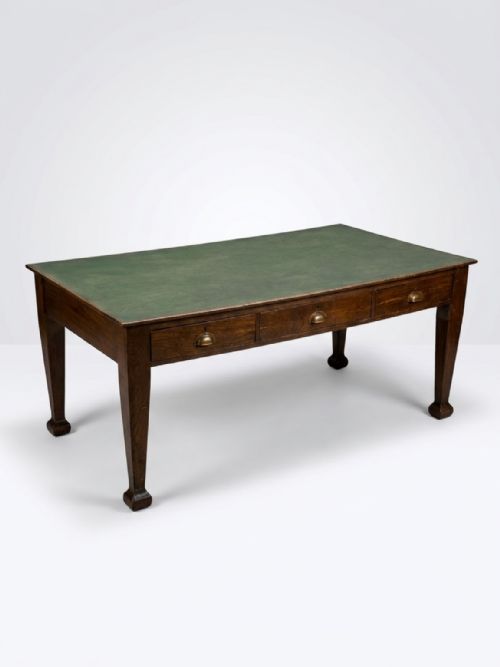
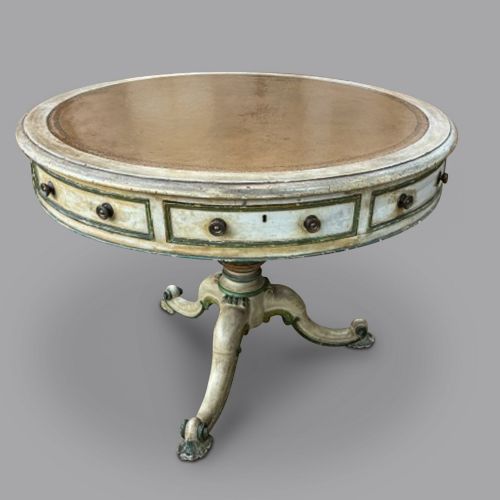
A leather inset library table is a substantial workspace designed for heavy study or administrative use, frequently taking the form of a partners desk, drum table, or writing table. These pieces emerge predominantly from the nineteenth century, spanning the Regency, William IV, and Victorian periods.
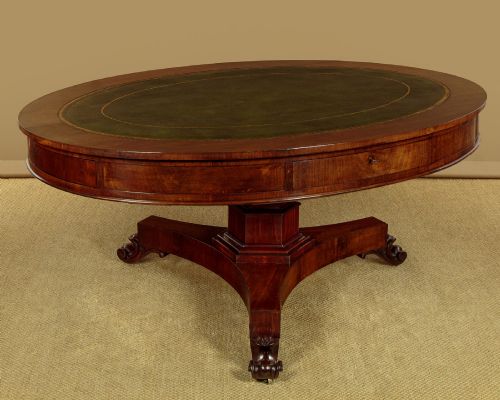
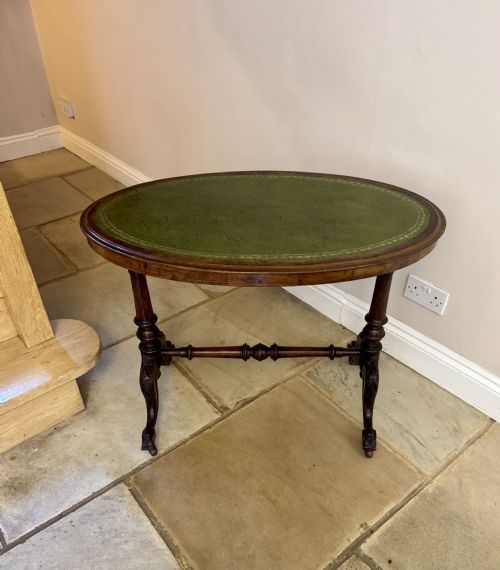
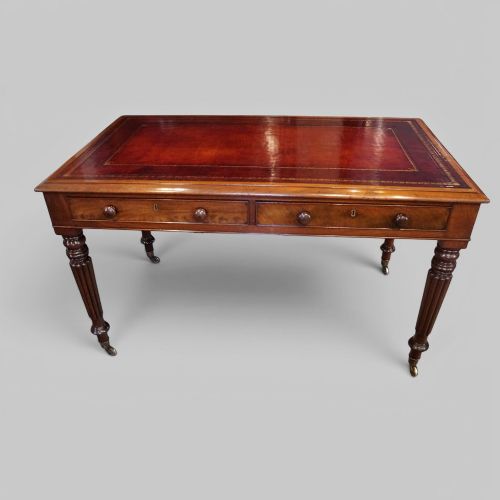
The versions most commonly met on this page are mahogany writing tables and pedestal desks fitted with leather writing surfaces, alongside occasional oak and rosewood drum tables. Makers utilised diverse stylistic influences ranging from Georgian and Chippendale to French Provincial and Arts and Crafts.
The inventory includes specialised forms such as kneehole desks and octagonal centre tables, showing how nineteenth-century cabinet makers adapted the writing table for different room layouts and functional requirements.
Materials and Technique
Construction relies heavily on dense hardwoods such as mahogany, oak, walnut, and rosewood, often selected for structural integrity and richly grained surfaces. Cabinet makers combined solid timbers with fine veneers, occasionally employing burr walnut or painted wood finishes.
Writing surfaces are set with leather, complemented by brass fittings such as drawer pulls, castors, and inset tooling. Joinery techniques varied from traditional drawer construction to pedestal frameworks capable of supporting heavy literary and writing materials.
The listings demonstrate a strong representation of Victorian and Regency mahogany writing tables alongside oak partners desks.
Craftsmanship and Proportion
Quality separates through the integrity of the timber selection and the refinement of the carving, evident in pieces designated as exhibition quality or fine examples by recorded makers. The balance of proportions between the timber frame and the leather insert defines the visual success of the piece.
Higher grade tables display thoughtful execution in secondary details, such as drawer linings, brass hardware, and the precision of the leather tooling surrounding the writing surface. The presence of original fitted elements and well-preserved secondary woods distinguishes standard utility desks from superior examples.
Johnstone and Jeanes·Rumney and Love·Howard and Son·James Shoolbred
The Leather Inset Library Table Glossary
- Partners desk
- A large double-sided desk designed so two people can work facing each other simultaneously. These often feature drawers and cupboards on both opposing faces.
- Drum table
- A circular library table containing a frieze of drawers beneath a round top. They frequently rotate on a central pillar supported by splayed legs.
- Pedestal desk
- A heavy freestanding writing desk comprising two supporting pedestals of drawers beneath a main work surface. They provide substantial storage capacity.
- Frieze
- The horizontal band situated immediately beneath the top surface of a table, typically housing one or more drawers. It often carries decorative mouldings or mahogany veneers.
- Inlay
- A decorative technique where contrasting materials such as lighter woods are fitted into the surface of the primary timber. This creates geometric or pictorial patterns.
Leather Inset Library Table: Frequently Asked Questions
What is a leather inset library table?
A leather inset library table is a traditional workspace featuring a flat timber top centered with a hide or leather writing panel. These pieces served as functional desks for reading, correspondence, and estate management in nineteenth-century homes.
They appear in various formats including rectangular writing tables, circular drum tables, and double-sided partners desks. The leather insert provided a smooth, durable surface for writing with ink quills and steel nibs.
How do I use one today?
These tables function effectively as executive desks, writing surfaces, or central display tables in studies and living spaces. Their generous proportions and drawer storage make them practical for modern administrative tasks and laptop use.
Purchasing a library table introduces a commanding central focal point to a room. They pair well with traditional leather armchairs or contemporary seating, blending historical character with daily utility.
How do I tell Victorian from Regency?
Regency tables, dating from the early nineteenth century, frequently exhibit classical proportions, rosewood or mahogany timbers, and elegant sabre legs or brass-toed pillar supports. Their design vocabulary draws heavily on Greek and Roman revival motifs.
Victorian pieces tend to be heavier and more robust, often incorporating elaborate carved details, pedestal banks of drawers, and darker mahogany or walnut finishes. The introduction of specific aesthetic movements later in the century also brought Arts and Crafts influences into desk production.
What are partners desks?
Partners desks are large double-sided library tables designed for two people to sit opposite one another. They incorporate drawers and cupboards accessible from both sides of the piece.
These desks were originally commissioned for estate offices, banks, and dual-occupant studies. Their symmetrical construction ensures they look balanced when placed in the middle of a room rather than against a wall.