


Leather Dining Armchairs
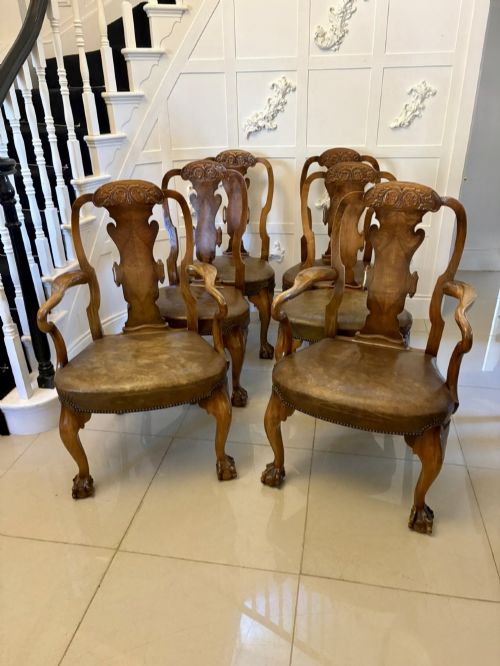
Leather dining armchairs bring substance to a room, offering comfortable seating shaped by centuries of cabinet making and upholstery traditions.
Leather Dining Armchairs
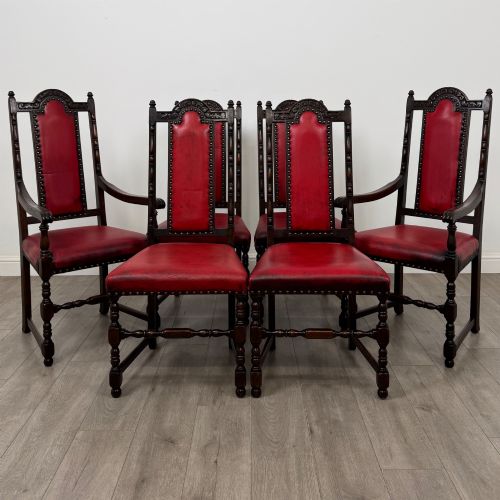
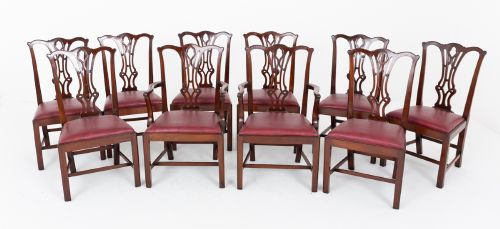
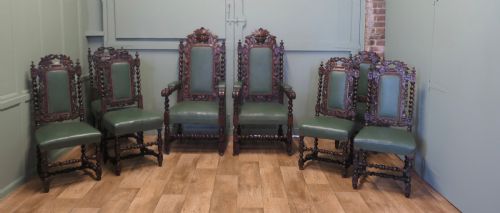
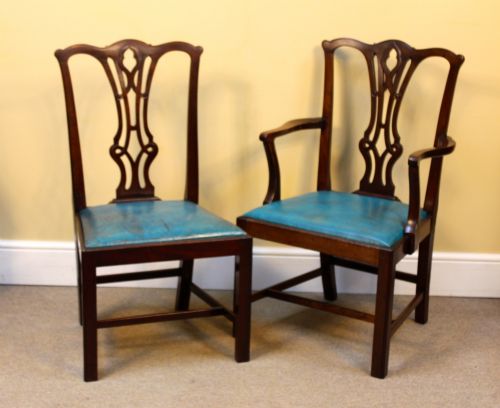
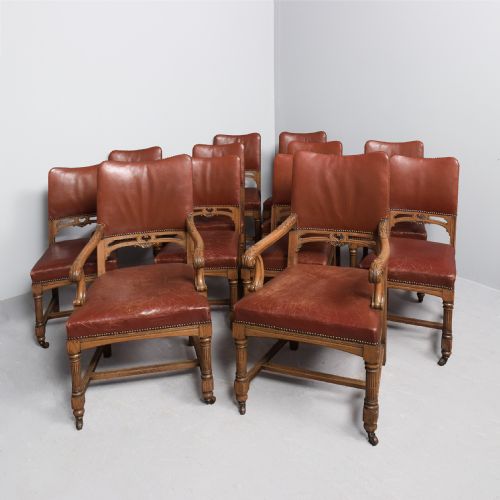
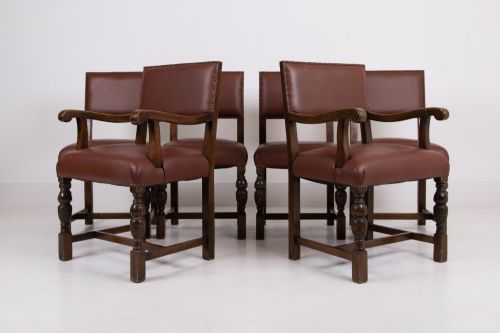
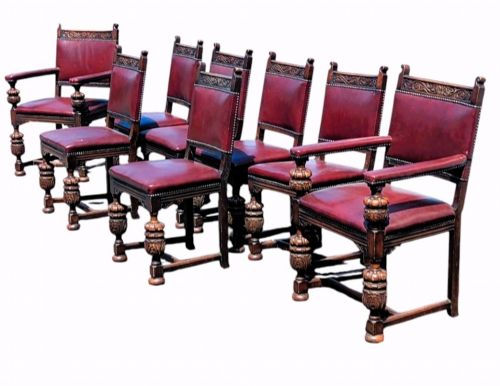
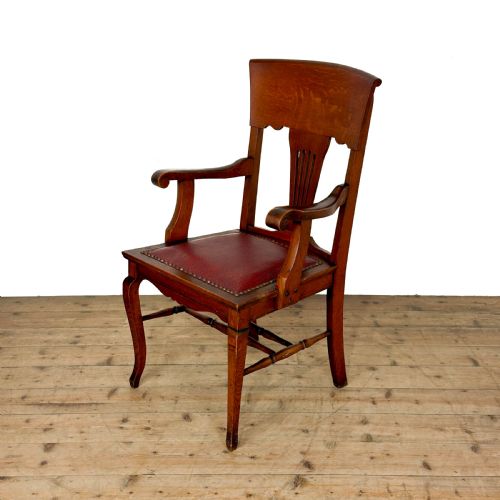
Leather dining armchairs span periods from the eighteenth century through the Edwardian era, taking forms such as carvers, elbow chairs, and open armchairs. You will frequently encounter mahogany or oak frames produced in revival styles like Chippendale or Jacobean, alongside Victorian and Regency interpretations.
The selection ranges from individual armchairs to large dining sets that include matching carvers alongside single chairs. Originating from English, French, and Portuguese workshops, these pieces combine supportive armrests with upholstered leather seats or backs.
Makers utilised timber frames to anchor seating intended for formal dining rooms and studies. The resulting chairs demonstrate regional stylistic shifts, moving from George III proportions to later Victorian and Edwardian interpretations.
How they were made
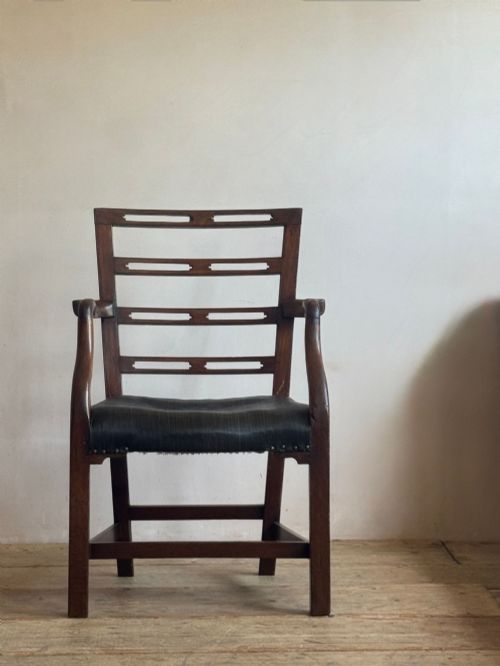
Cabinet makers constructed the frames primarily from solid mahogany, oak, and walnut, often shaping the timber into carved arms, scroll details, and ladder-backs. These structural elements provided the rigidity necessary for daily dining use.
Upholsterers integrated leather hides using brass studs or decorative tacks to secure the material directly to the wooden seat frames or backrests. Selected pieces feature hand-dyed finishes in tan, red, green, or black tones.
Giltwood, fruitwood, and satinwood inlay appear on specific examples to accent the primary timber framework. Joinery techniques relied on traditional mortise and tenon construction to ensure the armchairs withstood sustained weight.
One determined Victorian dining set managed to include twelve oak chairs, ensuring nobody ever had to sit on the floor.
What varies in quality
The standard of carving on the wooden frames distinguishes basic seating from exceptional examples, with crisp execution of ball-and-claw feet, ribbon-backs, or Gothic tracery separating the tiers. Timber selection also dictates grade, where dense grain and well-matched mahogany or walnut elevate the piece.
The integration of the leather upholstery defines another layer of distinction, particularly where hand-dyed hides display depth of colour and careful placement of individual brass studs. Original upholstery schemes hold distinct interest compared to later replacements.
Structural integrity of the arm joints and legs governs day-to-day durability. Chairs retaining their original timber patination and tight joinery sit at the upper end of the scale.
Lamb Of Manchester·Shoolbred
The Leather Dining Armchairs Glossary
- Carver chair
- A dining chair fitted with armrests, historically placed at the head of a dining table. These pieces often matched a larger set of single chairs.
- Chippendale style
- A furniture design idiom inspired by Thomas Chippendale's mid-eighteenth-century pattern books, characterised by interlaced ribbon backs and cabriole legs. Revival versions appeared in abundance during the nineteenth and early twentieth centuries.
- Scroll arm
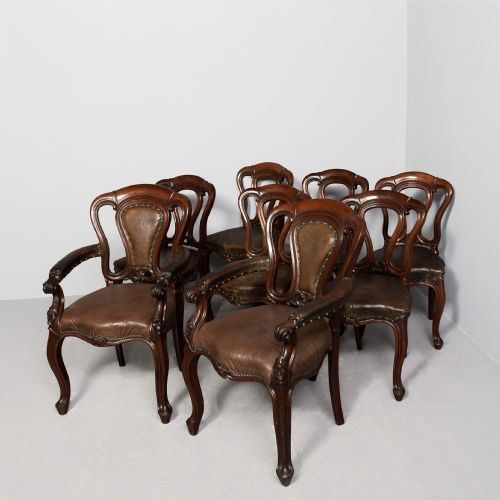
- An armchair armrest carved into an inward-curling spiral shape. This form appears frequently on Regency and Victorian mahogany seating.
- Shield back
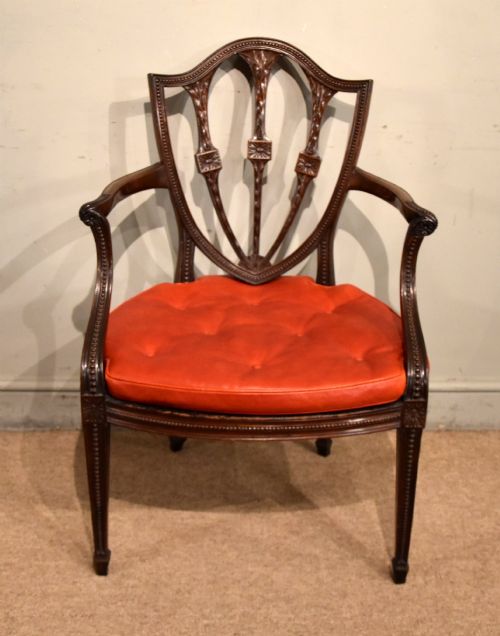
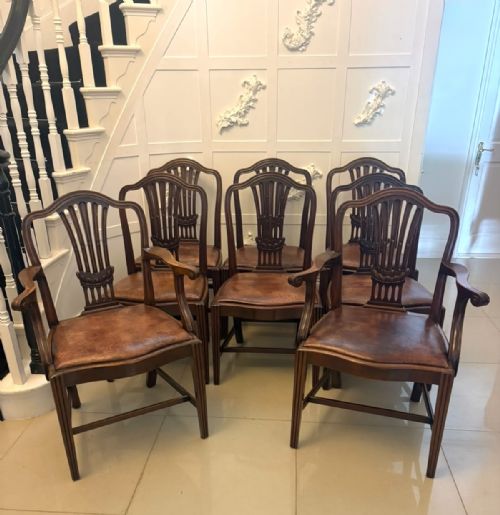
- A chair back shaped in the outline of a heraldic shield, popularised during the Hepplewhite period. Examples frequently incorporate carved splats within the timber frame.
- Embossed leather
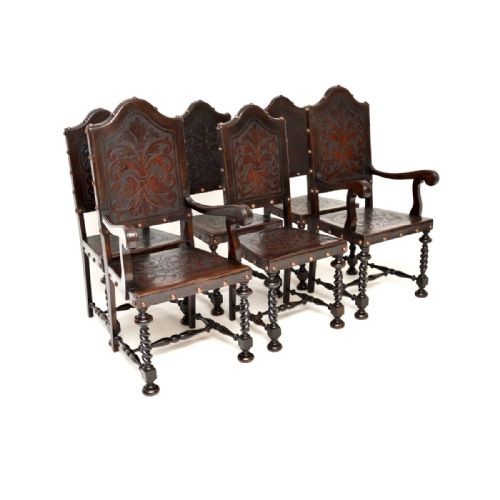
- Leather stamped with raised patterns or designs using metal dies. Portuguese and continental workshops utilised this technique on seat panels.
Leather Dining Armchairs: Frequently Asked Questions
What is a carver chair?
A carver chair is an armchair designed specifically for dining use, traditionally placed at either end of a dining table. These seats feature structural armrests to provide additional support.
Within dining sets, makers typically produced two carvers to accompany a larger number of armless side chairs.
How do I identify a Chippendale style chair?
Chippendale style chairs feature distinct design elements such as carved cabriole legs, ball-and-claw feet, and pierced splats in the backrest. Many examples seen today date from Victorian or later revival periods.
The idiom draws upon eighteenth-century proportions and intricate woodwork.
Were leather seats original to these chairs?
Leather served as a primary upholstery material for dining armchairs across the Georgian, Victorian, and Edwardian eras. Hides were fastened with brass studs directly onto the wooden frames.
Surviving examples often display either period-appropriate leather or later replacement upholstery.
How do I care for antique leather upholstery?
Antique leather requires maintenance to prevent the hide from drying out or cracking over time. Gentle cleaning preserves the natural patination and hand-dyed colour.
Placing chairs away from direct heat sources helps maintain the stability of both the leather and the underlying timber frame.