


Library Tub Armchairs
Library tub armchairs are sturdy seating options designed for long hours of reading, most commonly encountered here in nineteenth-century mahogany and leather.
Library Tub Armchairs
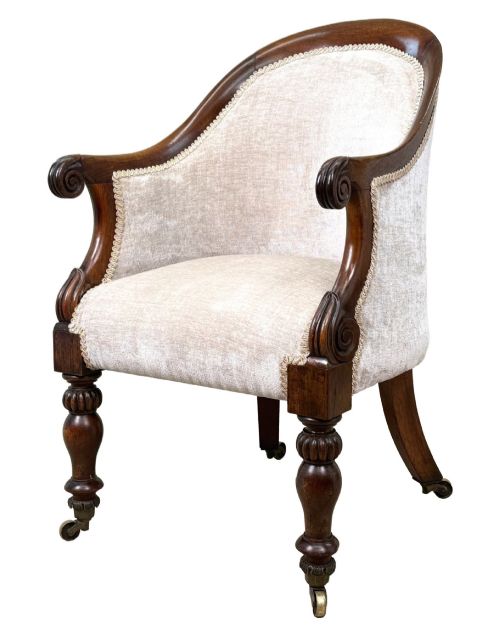
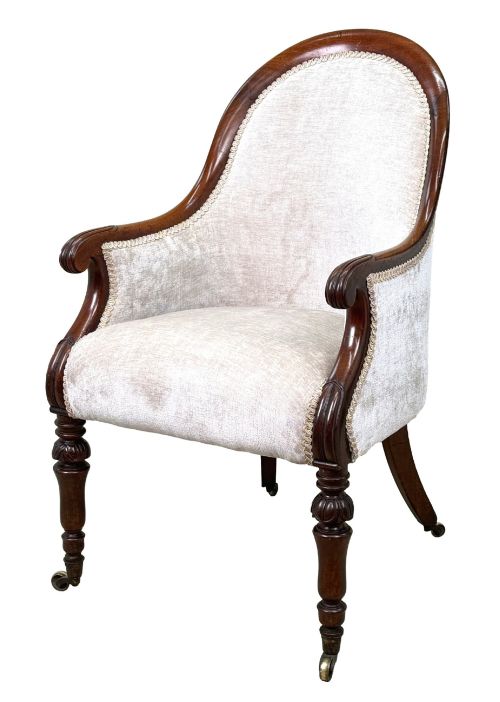
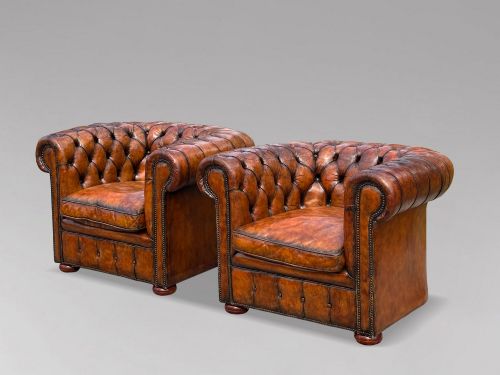
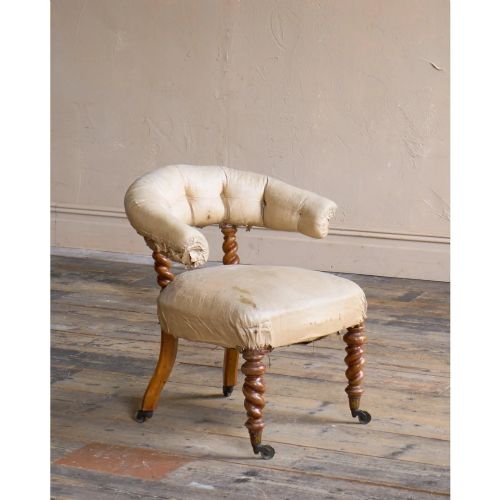
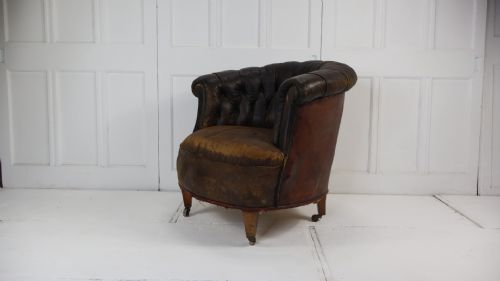
Library tub armchairs provide enclosed, supportive seating suited for writing desks and reading rooms. The form encompasses low, curved backs that wrap around the sitter, merging seamlessly into the arms.
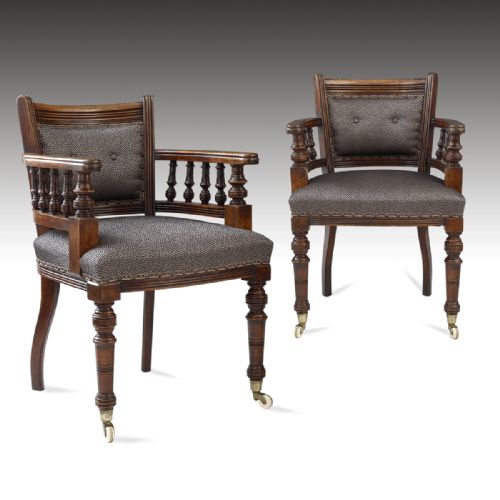
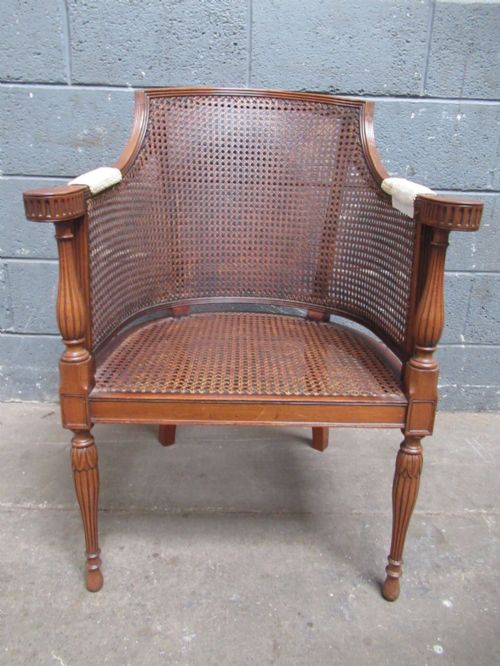
The selections span from the Regency period through the Edwardian era and into the Art Deco years. Mahogany, oak and walnut form the primary wooden frames, frequently paired with leather upholstery or cane panels.
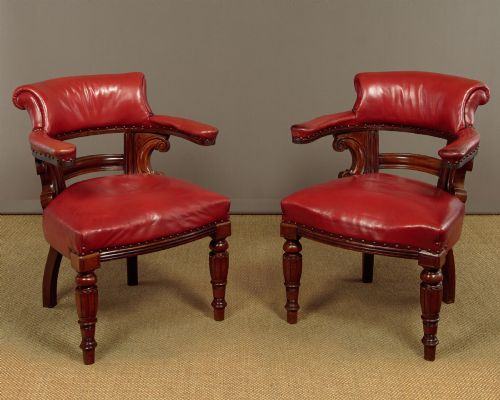
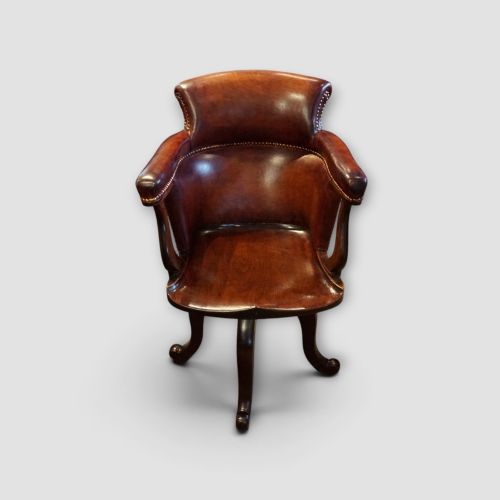
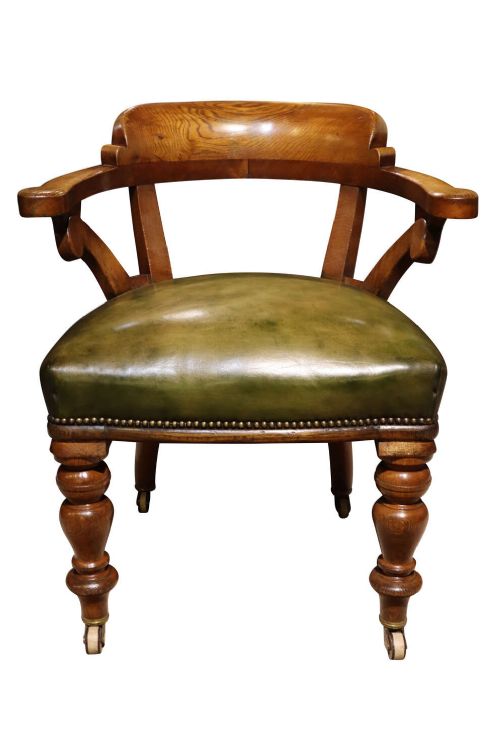
Desk chairs and captain's chairs appear alongside traditional tub shapes within these listings. Makers adapted the enclosed seating concept for functional workspaces as well as private libraries.
How they were made
Cabinetmakers constructed the frames using solid hardwoods such as mahogany, oak, walnut and rosewood. Joinery relied on traditional mortise and tenon techniques to withstand daily shifting and weight.
Upholsters integrated durable materials including cattle hide, velvet, fabric and woven cane for seats and backrests. Brass details, such as inlay and castors, added functional accents to Regency and Victorian examples.
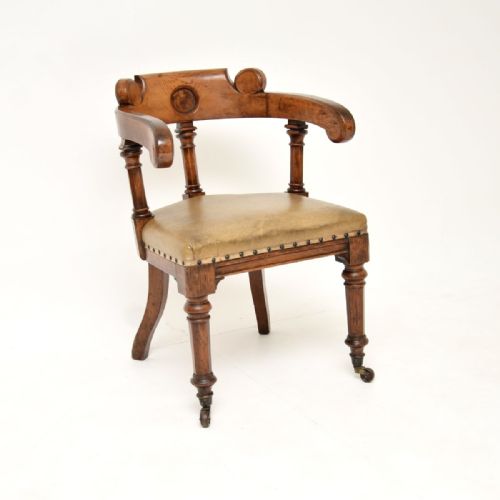
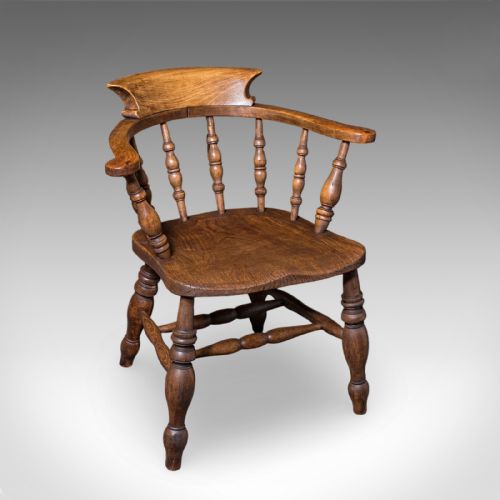
Smoker's bow chairs offered country house readers a sturdy refuge complete with a curved wooden embrace.
What varies in quality
The refinement of the timber carving and the choice of primary woods determine the baseline standard of a piece. Dense, well-figured mahogany or burr elm indicate superior selection by the original maker.
The execution of secondary details, such as brass inlay, hand-tooled leather borders, and steam-bent wooden frames, separates standard workshop production from exceptional cabinet work.
C. Hindley & Sons·Gillows
The Library Tub Armchairs Glossary
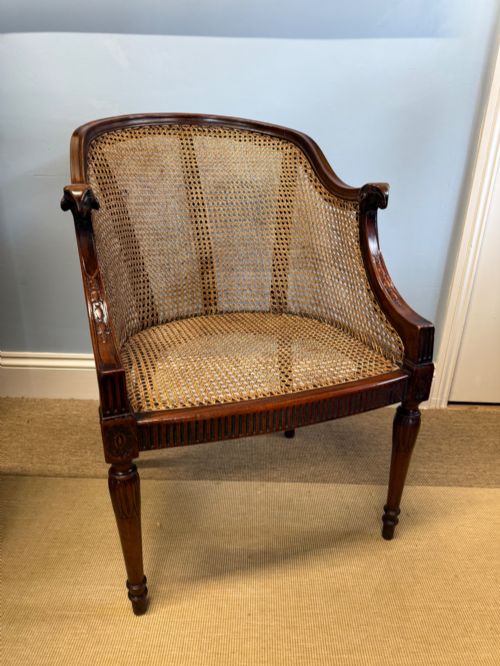
- Bergère
- An enclosed upholstered armchair with wooden framing visible around the sides and back. The panels often feature woven cane work.
- Captain's Chair
- A sturdy wooden armchair with a rounded spindle back resting on a low support structure. These pieces frequently serve double duty at office desks.
- Smoker's Bow
- A low-backed Windsor-style armchair with a continuous curved arm rail. Country houses utilised them extensively as smoking or writing seats.
- Ebonised
- Wood treated with a chemical stain or black finish to imitate expensive ebony. The technique appears frequently on nineteenth-century aesthetic pieces.
- Tub Chair
- An upholstered seating form characterised by a continuous curved back and armrest. The enclosed shape protects the sitter from draughts.
Library Tub Armchairs: Frequently Asked Questions
What defines a library tub armchair?
These seats feature a continuous curved back and armrest enclosing the sitter. They were built for extended periods of reading or writing in private libraries.
Frames typically employ solid mahogany, oak or walnut. Upholstery materials include leather, fabric and woven cane panels.
How do I distinguish Regency from Victorian examples?
Regency pieces often display classical restraint, brass inlay and lighter timber tones. They date from the early nineteenth century.
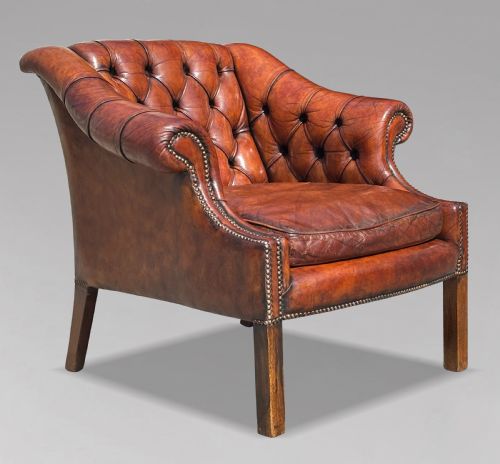
Victorian pieces tend to be heavier and more robust in construction. They frequently incorporate darker woods, buttoned leather and Gothic revival motifs.
Where were these chairs used historically?
Owners placed them beside large writing desks or around reading tables in country house libraries. Their enclosed shape offered shelter from cold draughts in large rooms.
Later Edwardian and Art Deco variations moved into studies and drawing rooms. They adapted to domestic spaces as comfortable seating for private relaxation.
How do I care for leather upholstery?
Leather surfaces benefit from regular dusting with a soft, dry cloth. Avoid placing antique hides near direct heat sources or strong sunlight.
Applying specialised leather balms periodically preserves the suppleness of the material. This prevents cracking across buttoned seats and armrests.
Are desk chairs different from library armchairs?
Desk chairs often incorporate swivel mechanisms or height adjustments for practical office use. Stationary library armchairs prioritise stationary comfort and enclosed seating.
Both forms utilise robust hardwood frames and leather pads. Makers frequently adapted the tub silhouette for both environments.