




Leather Captains Chair Mahogany
A leather captains chair mahogany brings sturdy swivel comfort and traditional presence to a study or office.
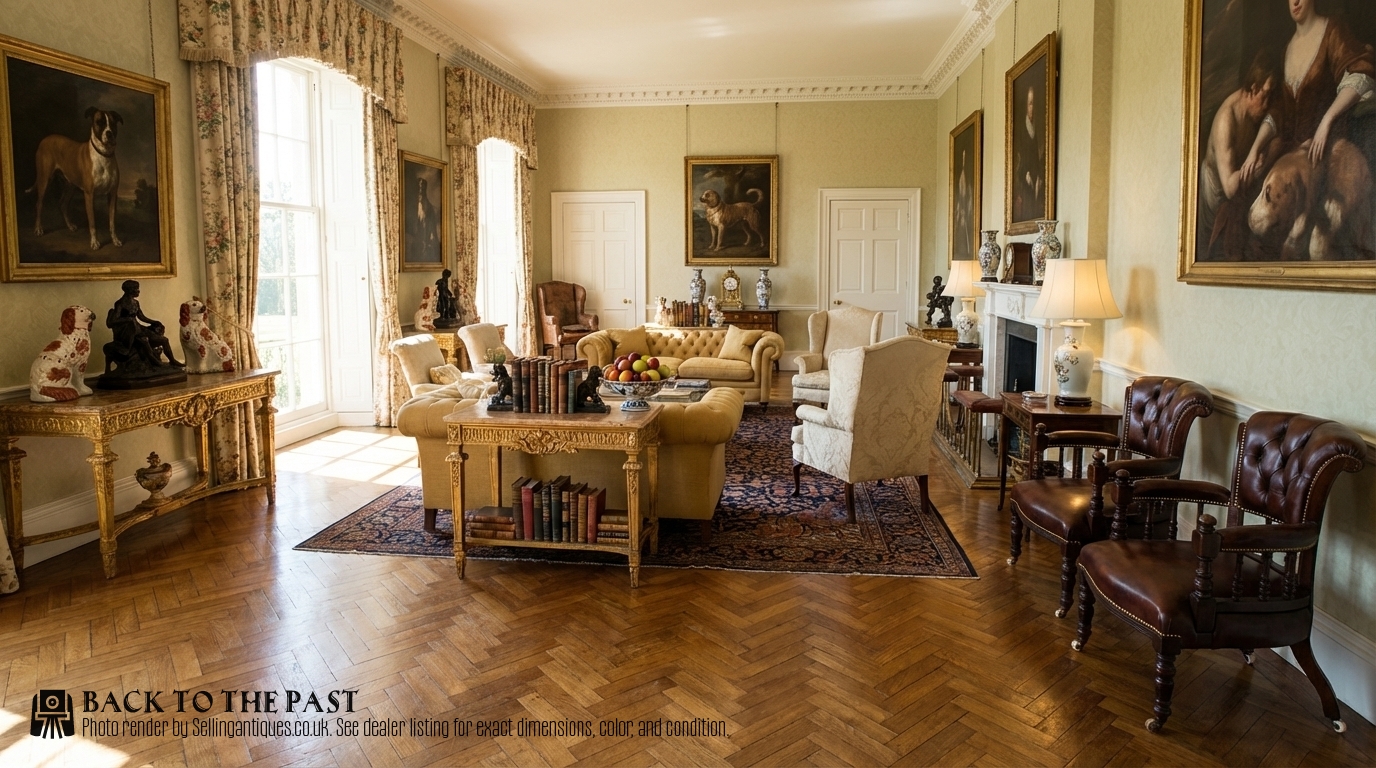
Leather Captains Chair Mahogany
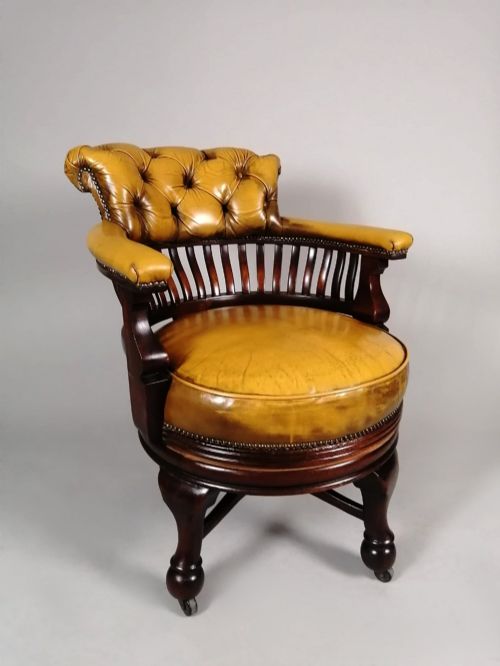
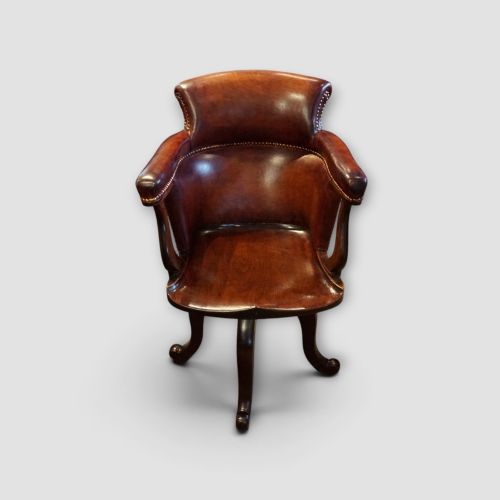
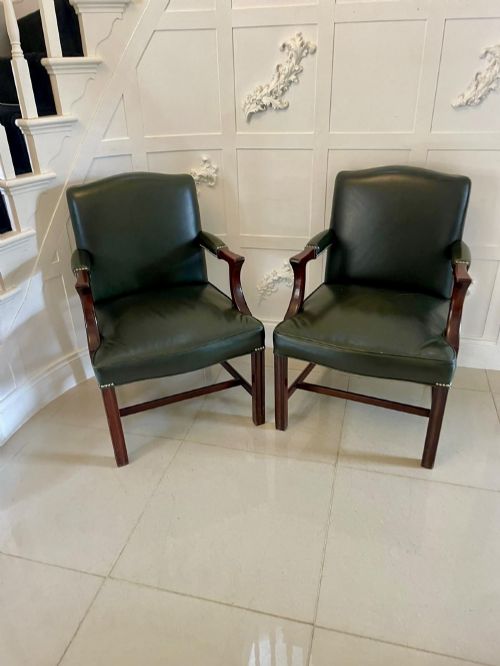
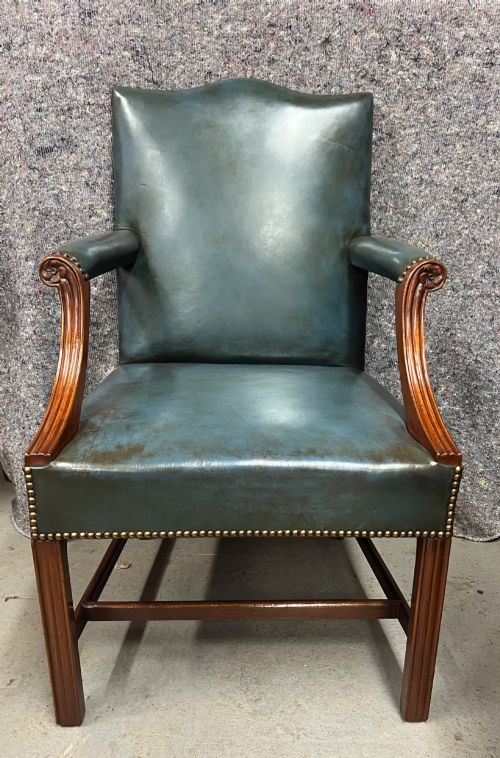
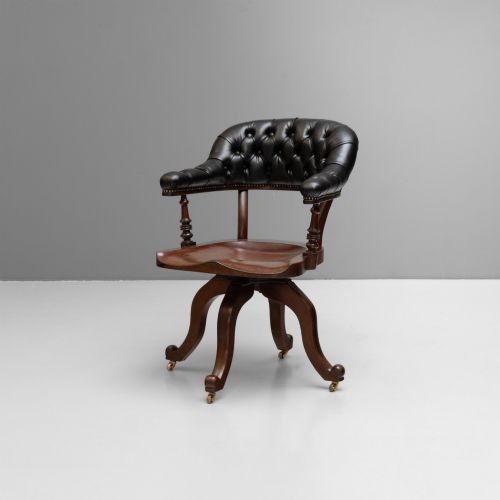
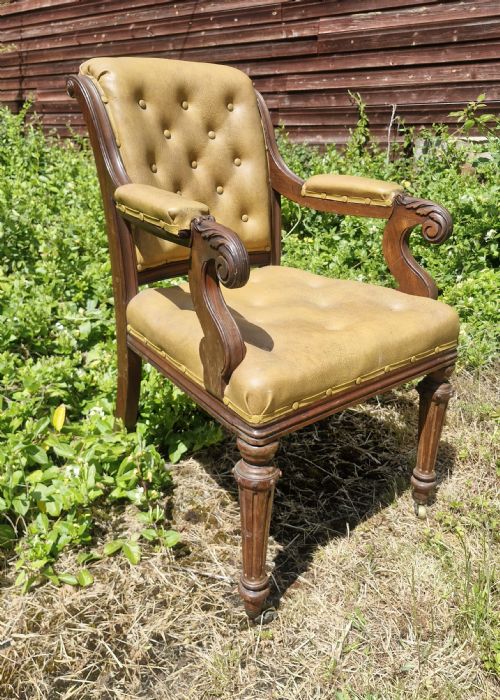
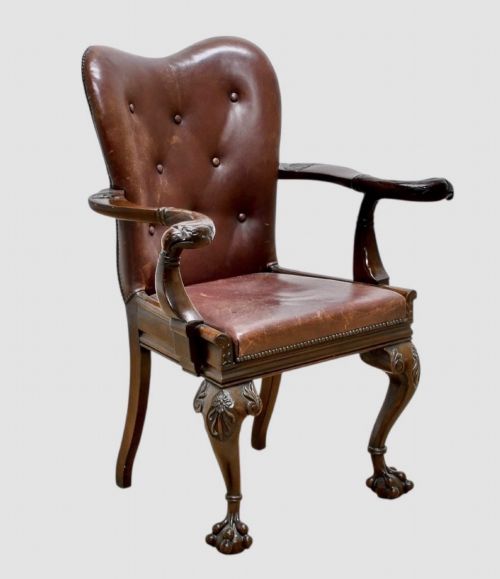
A leather captains chair mahogany is a robust seating form designed for working at a desk or reading in a library. These chairs combine rich hardwood frames with upholstered leather pads, frequently featuring low rounded backs and generous armrests.
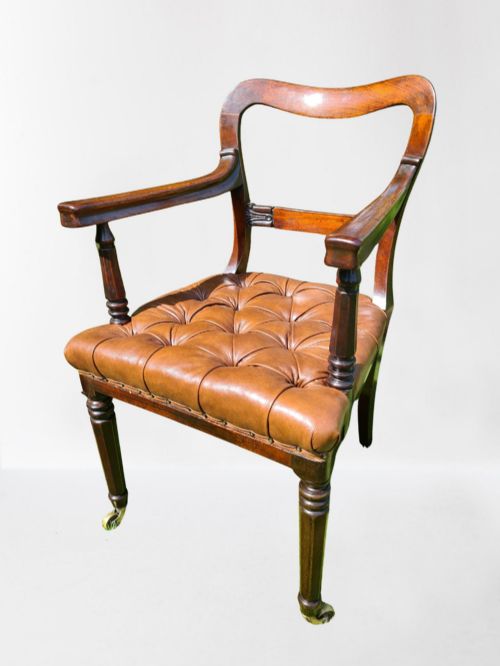
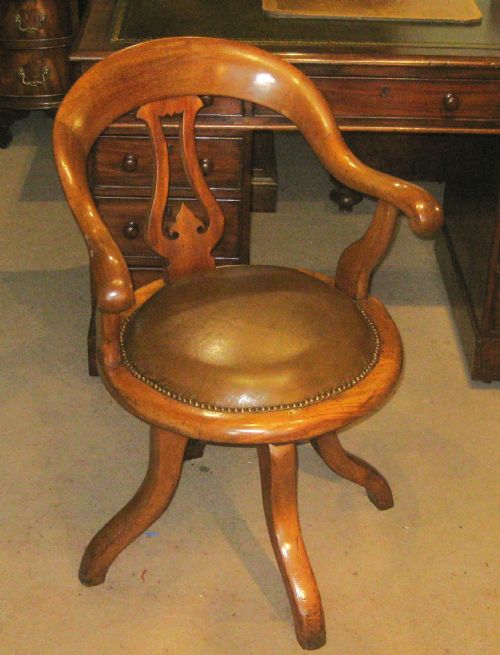
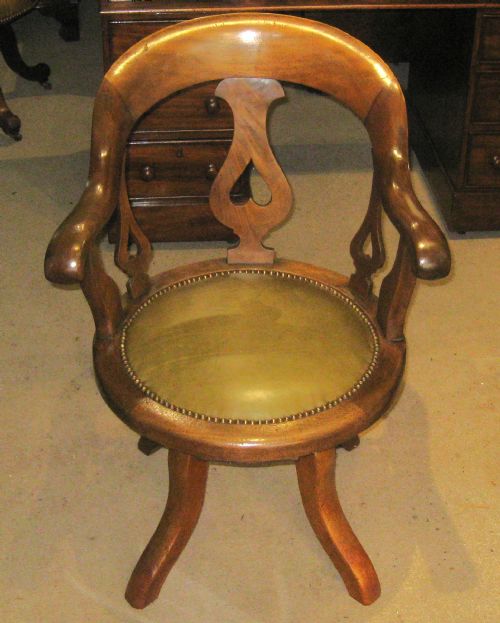
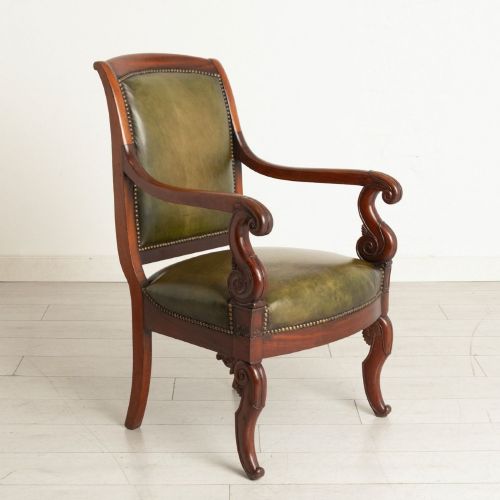
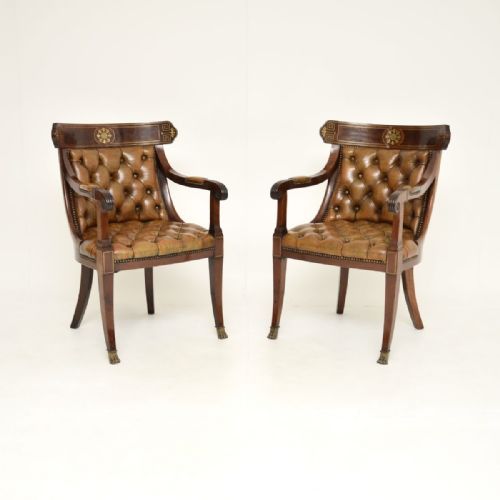
The pieces appearing most often on this page belong to the Victorian and Edwardian periods, alongside earlier Regency examples. Surviving forms range from static library armchairs to complex revolving office chairs mounted on cast iron mechanisms.
Makers produced these chairs to serve practical roles in studies, boardrooms and offices. Over time, their heavy timber construction and durable hide upholstery ensured they survived decades of daily use.
How they were made
Craftsmen built the structural frames primarily from solid mahogany and walnut, occasionally incorporating secondary hardwoods. Carpenters shaped the timber into scroll arms, curved back rails and supporting spindles using traditional joinery.
Workers upholstered the seats and backs in genuine leather, securing the edges with brass nails or studs. Many of the 19th-century revolving variants integrate internal brass and iron swivelling mechanisms to permit movement.
Materials across the selection include solid mahogany, walnut, brass, cast iron and hand-dyed green or red leather.
What varies in quality
Quality rests in the weight and figuring of the mahogany timber and the crispness of any carved details. Superior examples display carefully selected grain patterns and robust frame construction that withstands the stresses of a swivel mechanism.
The integrity of the leather upholstery and the complexity of the revolving hardware also dictate value. Original brass castors, smooth-working iron pivots and hand-dyed leathers distinguish finer workshop production from standard utility office seating.
The Leather Captains Chair Mahogany Glossary
- Mahogany
- A durable tropical hardwood prized for its reddish-brown colour and fine grain. Cabinet makers utilised it extensively for high-quality furniture frames throughout the eighteenth and nineteenth centuries.
- Carver chair
- An armchair designed to match a set of dining or desk chairs, typically featuring open arms. These pieces offer wider proportions than standard chairs to accommodate an individual at a desk.
- Library chair
- A heavy upholstered armchair intended for reading rooms and studies. They prioritize deep cushioning and stable wooden frames over portability.
- Regency
- A British design period spanning the early nineteenth century, characterised by classical influences and clean architectural lines. Furniture from this era often incorporates subtle brass inlays and scrolled woodwork.
Leather Captains Chair Mahogany: Frequently Asked Questions
Are these chairs comfortable for daily use?
These chairs provide supportive seating thanks to their wide proportions and upholstered backrests. Many models feature padded leather seats designed for extended hours at a desk.
Revolving variants allow movement which adapts well to modern office spaces. Their sturdy timber frames ensure dependable daily service.
How do I identify a Victorian example?
Victorian pieces frequently display darker, rich mahogany tones and heavier proportions than eighteenth-century designs. Look for turned wooden spindles and robust scroll arms characteristic of the nineteenth century.
Many Victorian variants also include revolving iron and brass swivel mechanisms. These functional additions became widespread during the mid-to-late nineteenth century.
What is the difference between a library chair and a desk chair?
Library chairs generally focus on relaxed reading postures with lower, wider profiles and plush upholstery. Desk chairs prioritise upright posture and often incorporate swivel bases for mobility.
Both types utilise mahogany frames and leather upholstery, blurring distinctions in practical office settings. Many antique examples serve interchangeably in modern studies.
How should I care for the leather upholstery?
Maintain the leather by keeping the surface clean from dust using a soft dry cloth. Periodic conditioning prevents the hide from drying out over time.
Avoid placing the chair in direct sunlight to protect the original dye and finish. Gentle treatment preserves the natural patina of antique hide.