
Leather Arm Chair
When you search for a leather arm chair, you enter a lineage of seating built for private studies, libraries and firesides.
Leather Arm Chair
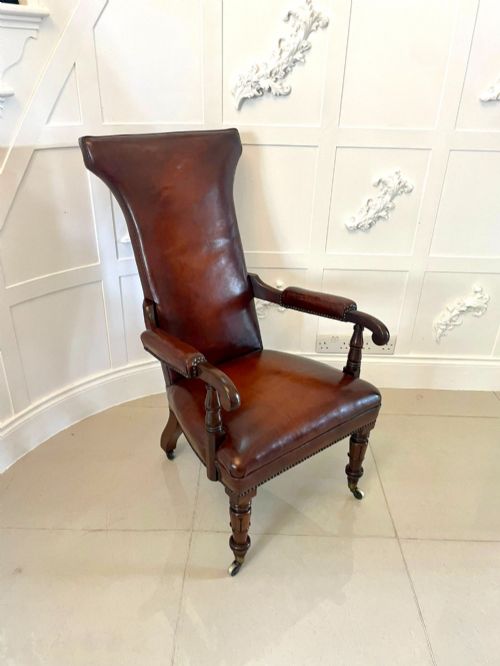
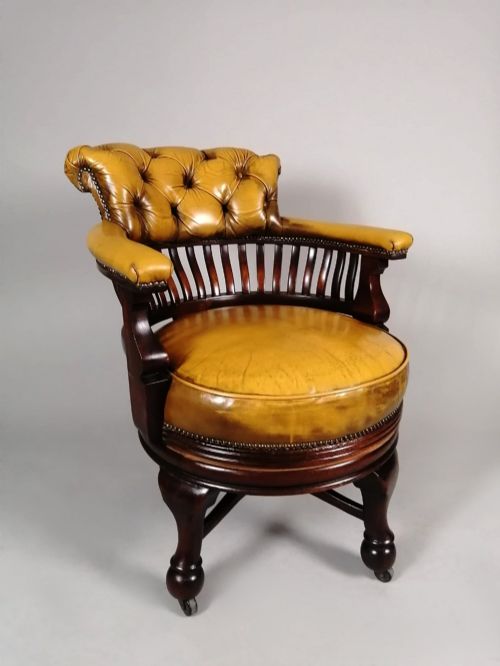
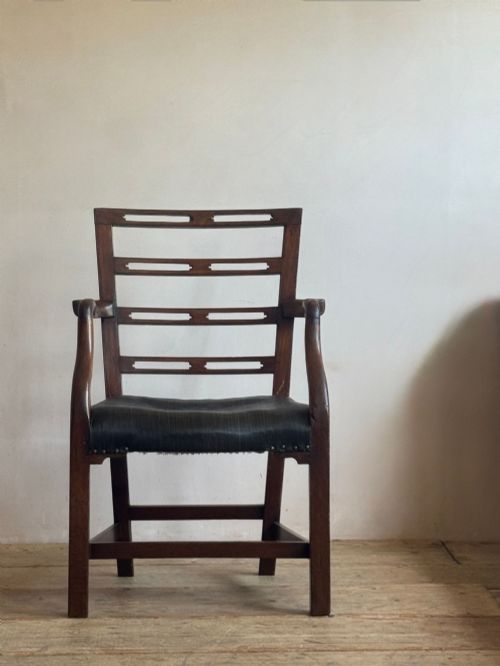
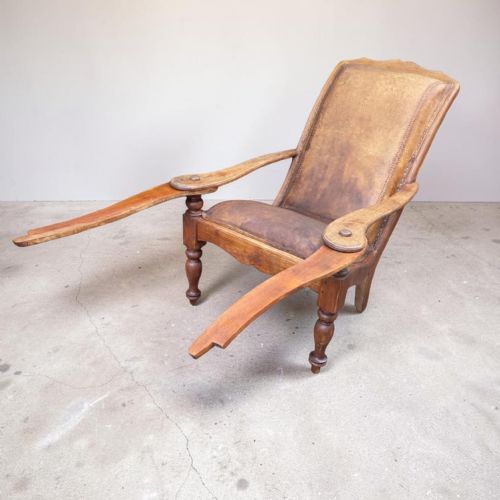
A leather arm chair encompasses a broad sweep of functional seating designed for reading, working and relaxing, stretching from early Georgian library forms to robust Edwardian desk chairs and 1930s club models. The pieces you meet most often on this page belong to the Victorian and Edwardian eras, alongside sturdy mahogany and oak desk armchairs built for nineteenth and early twentieth-century offices.
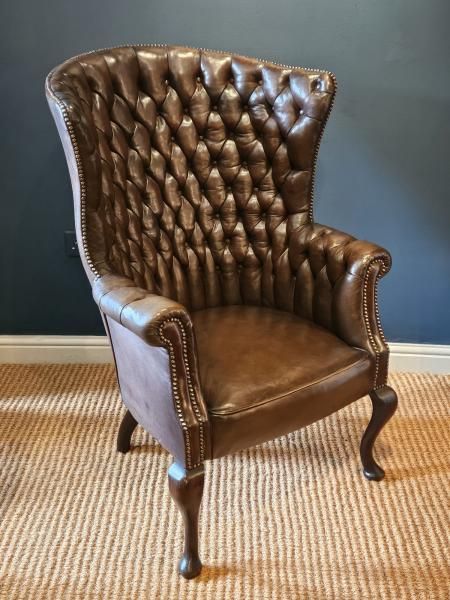
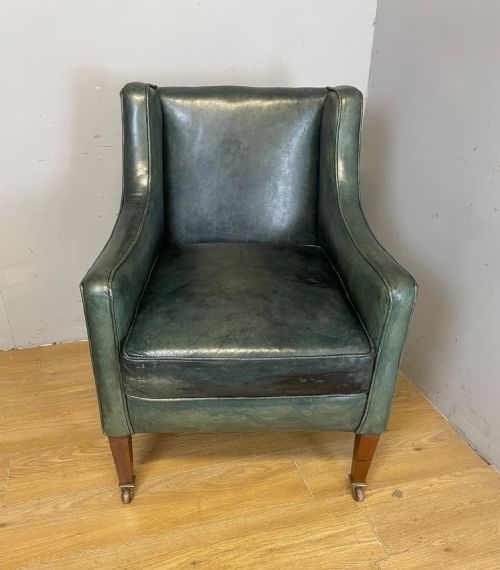
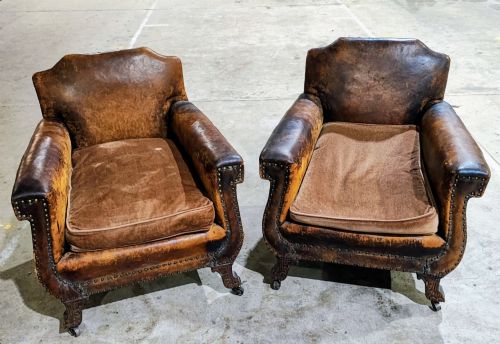
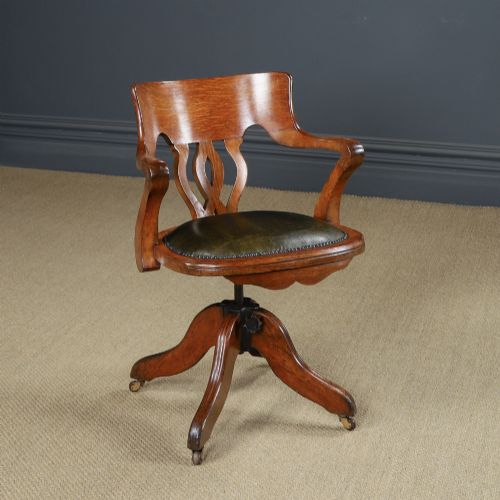
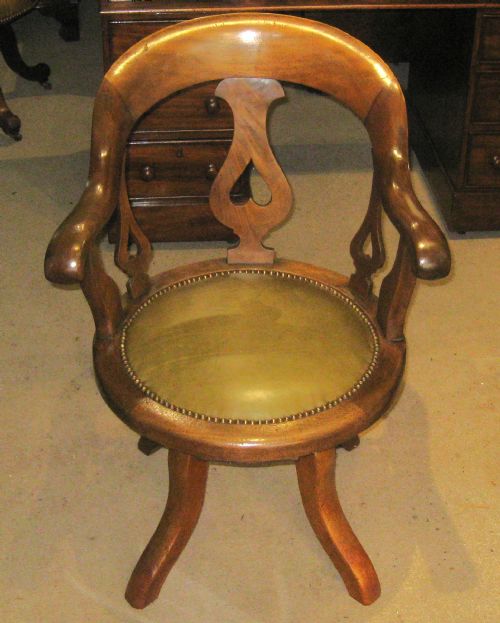
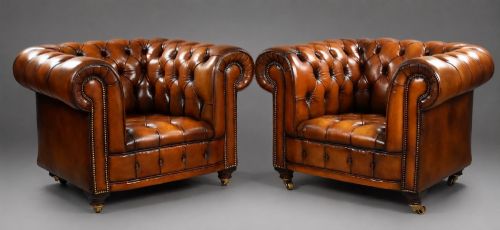
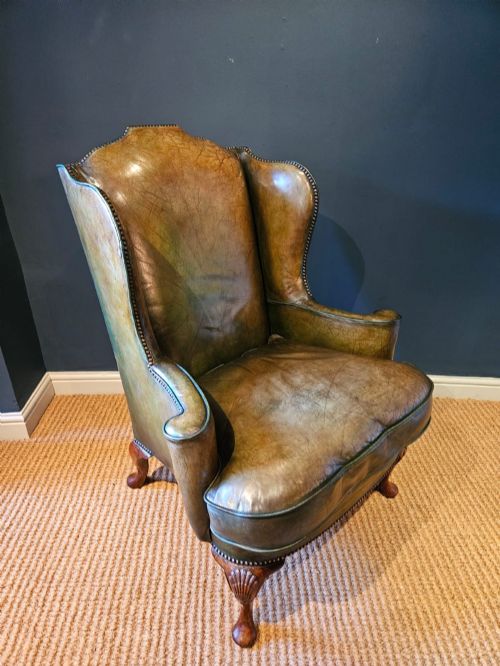
The selection ranges from upright swivel chairs with green leather seats to deep wing backs and low club armchairs upholstered in brown and tan hides. Many follow traditional English or Georgian revival patterns, while others display the cleaner lines of Art Deco or the distinctive wood frames of Scandinavian Biedermeier design.
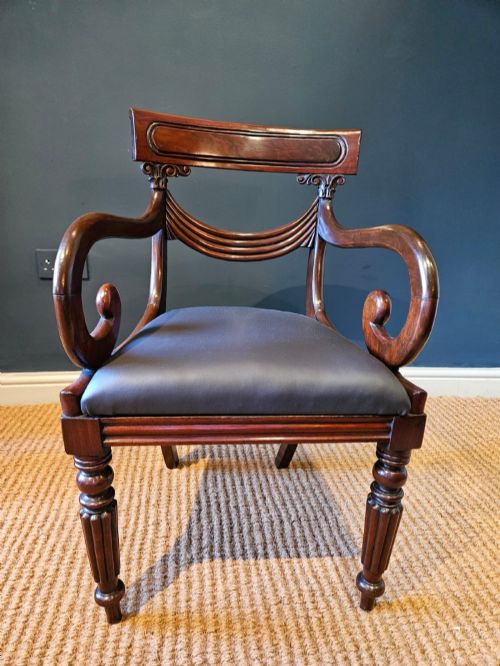
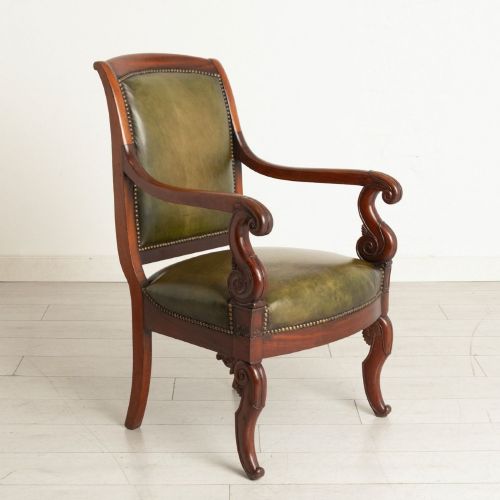
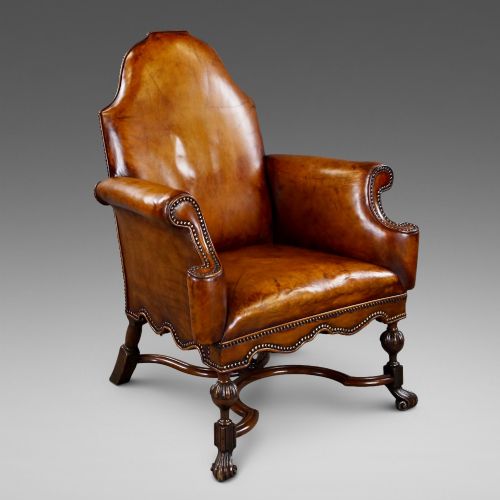
Whether configured as a library chair with scroll arms or a revolving desk chair supported by brass castors, each piece balances solid timber framing with hard-wearing animal hide. The function dictates the silhouette, moving from stately high-backed reading seats to adjustable office furniture.
How they were made
Makers constructed the primary frames of these armchairs using dense native and imported timbers, predominantly mahogany, oak, walnut and beech, selected for their structural rigidity and capacity to hold carved details. Joinery relied on traditional mortise and tenon methods, ensuring the chair bodies could withstand the heavy daily use associated with libraries and studies.
Upholstery involved stretching durable cattle leather over webbed foundations and horsehair stuffing, secured by hand-hammered brass or iron tacks and occasionally finished with deep buttoning. Swivel and desk variants incorporated complex iron and brass mechanical fixings underneath the seat platforms to permit height adjustment and smooth rotation.
Several Victorian desk chairs incorporate hidden brass castors designed to let nineteenth-century clerks glide swiftly between ledger shelves.
What varies in quality
The distinction between ordinary and exceptional examples rests upon the integrity of the timber frame, the depth of carving, and the quality of the upholstery hide. Superior chairs utilise dense, highly figured mahogany or quarter-sawn oak with crisp, hand-carved mouldings that retain their sharpness along the scroll arms and cabriole legs.
In higher-grade specimens, the leather exhibits a rich natural grain that has developed a deep, uniform patina through decades of gentle conditioning rather than artificial distressing. The underlying mechanical components on revolving desk chairs also indicate grade, with heavier brass mechanisms and robust iron spindles separating workshop masterpieces from mass-produced commercial output.
S&H Jewell·Warings·Gordon Russell·WM Heywood Chair Co
The Leather Arm Chair Glossary
- Gainsborough chair
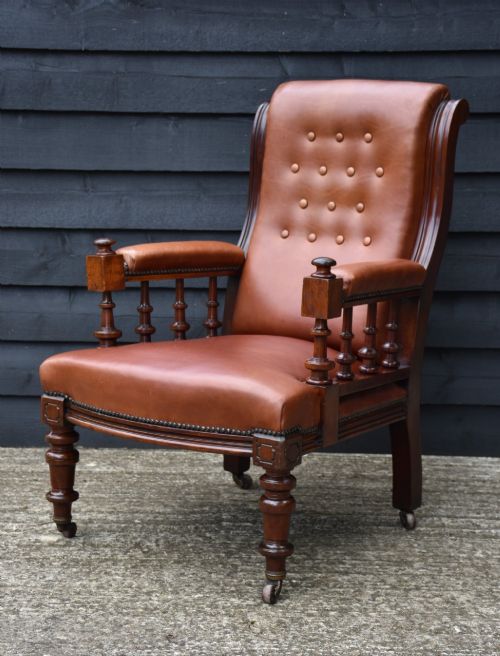
- A type of open-arm desk or library chair featuring an upholstered back and seat, padded armrests, and short cabriole or moulded legs usually terminating in castors. First appearing in the mid-eighteenth century, these chairs remain prized for study and library interiors.
- Carver chair
- A term used for an armchair that matches a set of dining side chairs, historically positioned at the head of the table for the head of the household. They share stylistic details with their companion chairs but add supportive wooden or upholstered armrests.
- Patina
- The lustrous surface sheen and softening of colour developed on wood and leather over long periods of handling, light exposure and polishing. Collectors value genuine patina as a sign of age and careful preservation.
- Cabriole leg
- A furniture leg that curves outward at the knee and tapers inward toward the foot, mimicking the shape of an animal's limb. This form was widely utilised across Georgian and revival-style seating.
- Scroll arm
- An armchair arm shaped into an outward or inward-curling scroll profile, often carved from solid mahogany or oak. This design provides ergonomic hand support while adding a sculptural element to the frame.
Leather Arm Chair: Frequently Asked Questions
How do I distinguish a Victorian desk chair from an Edwardian one?
Victorian desk chairs generally employ heavy, dark mahogany or walnut frames with dense carvings and traditional buttoned upholstery. They often feature robust wooden sub-frames beneath the rotating seat mechanism.
Edwardian examples tend to introduce lighter oak or beech timbers, sometimes utilising bentwood components and simpler turnings. The mechanisms on Edwardian office chairs are frequently more advanced, incorporating exposed iron spindles and adjustable height screws.
What is a club armchair?
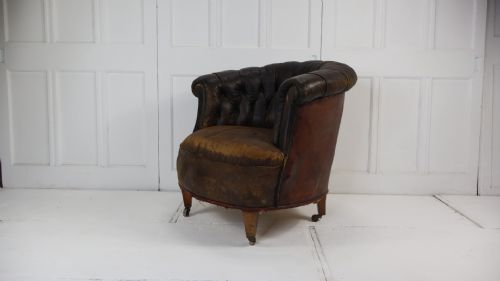
A club armchair is a deep, low-slung seat upholstered entirely in thick leather, designed for comfort and relaxation in smoking rooms and studies. Originating in France during the early twentieth century, these chairs feature generous padded armrests and sprung seat bases.
Unlike upright desk chairs, club chairs prioritize casual lounging over formal posture. They appear frequently in Edwardian and Art Deco variations.
Are revolving desk chairs suitable for daily modern use?
Many antique revolving desk chairs function well in contemporary workspaces, provided the mechanical spindle and undercarriage remain stable and secure. The solid timber construction often outperforms modern manufactured alternatives in sheer durability.
However, buyers should note that antique seat heights are frequently lower than modern standard office dimensions. Testing the physical proportions against a modern desk is recommended before daily use.
How should I care for antique leather upholstery?
Antique leather requires gentle cleaning with a soft, dry cloth to remove dust, followed by occasional application of specialised leather balsam or wax to maintain suppleness. Avoid harsh modern chemical cleaners and keep the chairs away from direct heat sources and strong sunlight.
Maintaining a stable room humidity helps prevent the natural hide from drying out and cracking over time. Regular, light conditioning preserves the original finish and deepens the patina safely.