





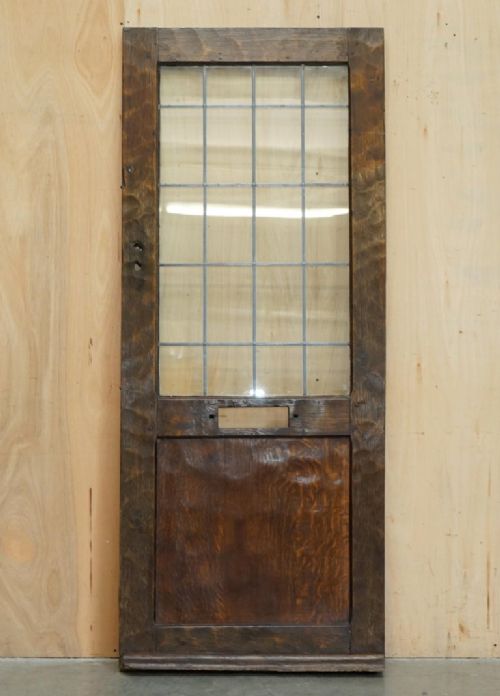


Leaded Oak Door
These leaded oak door pieces combine sturdy timber frames with glazed panels held together by metal cames, offering a practical way to display books while keeping dust at bay.
Leaded Oak Door
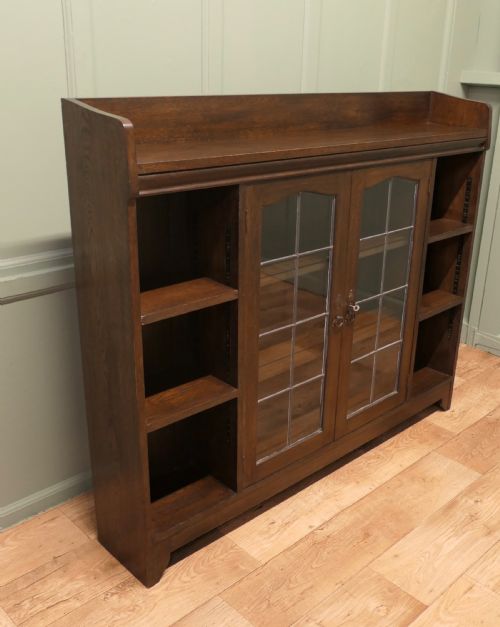
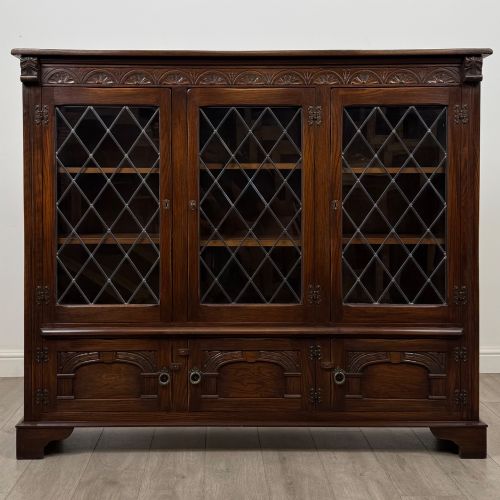
When you search for leaded oak door, you encounter a selection of furniture focused primarily on bookcases, display cabinets, and sectional barrister units alongside occasional architectural doors. The listings span from the late nineteenth century through the Edwardian period and into the nineteen-twenties and nineteen-thirties, showing strong influences from Arts and Crafts and Jacobean Revival styles.
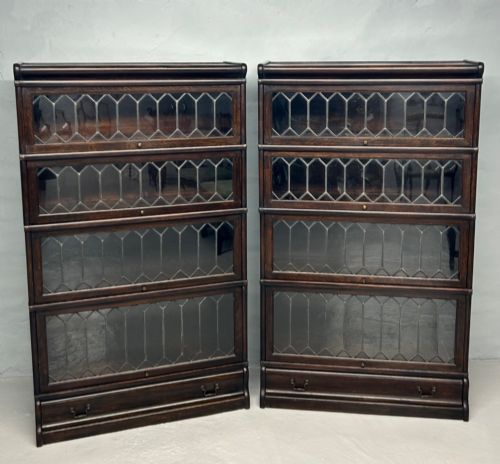
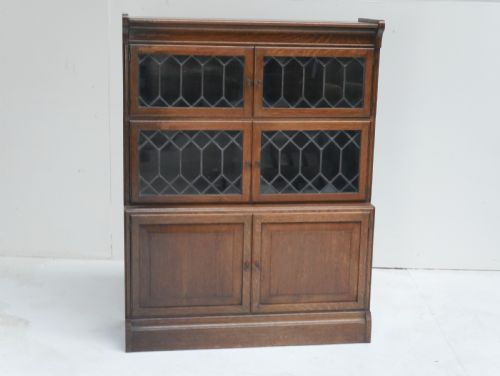
Most examples function as storage for libraries or studies, constructed with glazed sections that reveal the contents inside while protecting them. You find modular stacking units alongside tall standing cabinets and two-door cupboards, reflecting how domestic storage evolved to suit changing architectural spaces over several decades.
How they were made
The primary structural material across these pieces is oak, selected for its durability and prominent grain, sometimes finished in light tones, limed treatments, or heavier carved finishes. Glazing is integrated using lead cames to join individual glass panes into geometric or stylistic patterns, occasionally supported by brass or iron hardware.
Joinery techniques range from traditional mortise and tenon frames in earlier nineteenth-century and Edwardian pieces to sectional stacking mechanisms seen in barrister cabinets from the early twentieth century. Cabinets often incorporate brass handles and hinges that complement the dark or light oak framework.
Robert Mouseman Thompson leaves a carved wooden signature critter tucked away on his woodwork, ensuring a tiny woodland creature oversees your library.
What varies in quality
The distinction between standard and superior pieces rests on the weight of the timber, the complexity of the leaded glass patterns, and the integrity of the original hardware. Fine examples show crisp carving, well-matched oak boards, and robust mechanical stacking actions rather than simplified modern replacements.
Proportion and stylistic coherence also dictate value, with items adhering strictly to Arts and Crafts or Jacobean Revival ideals commanding more attention than generic utilitarian cupboards. The preservation of original glass panes without cracks in the lead matrix remains central to the overall integrity of any cabinet.
Globe Wernicke·Minty·Robert Mouseman Thompson·Liberty
The Leaded Oak Door Glossary
- Came
- A slender strip of cast lead with a grooved profile used to hold panes of glass together in leaded windows and doors. These strips form the structural grid that supports the glazing.
- Barrister bookcase
- A stacking bookcase featuring glazed doors that lift and slide inward above each shelf. This design allowed lawyers to transport or expand their libraries easily.
- Jacobean Revival
- A nineteenth and twentieth-century design style emulating the heavy, carved oak furniture of the early seventeenth century. It frequently appears in cabinets and bookcases from the Edwardian era.
- Limed oak
- Timber treated with a specialised finish that leaves a white pigment in the open pores of the wood. This technique lightens the appearance of the oak while accentuating its grain.
Leaded Oak Door: Frequently Asked Questions
What periods do these pieces come from?
The pieces span the late nineteenth century, the Edwardian era, and the nineteen-twenties and nineteen-thirties. You will find items representing Arts and Crafts and Jacobean Revival design movements.
Most examples date from the early decades of the twentieth century, reflecting a period when modular office furniture and glazed display cabinets gained widespread domestic popularity.
How do sectional barrister bookcases work?
Sectional barrister bookcases consist of individual stacking tiers, each featuring its own glazed door that lifts and slides back into the cabinet. This modular construction allowed owners to add shelves as their book collections grew.
Users can separate the units for transport or rearrange the configuration to fit different ceiling heights within a room.
How should I clean leaded glass?
Clean leaded glass gently using a soft cloth and a mild, non-ammonia window cleaner sprayed onto the cloth rather than directly onto the glass. This prevents moisture from seeping behind the lead cames and damaging the underlying putty.
Avoid pressing too hard against the glass panels, as the lead cames can bend under excessive pressure over time.
Where were these cabinets used?
These cabinets primarily served in studies, libraries, and offices to store reference books while keeping dust away from delicate paper bindings. Larger display cabinets were also placed in dining rooms for tableware.
Today, they function equally well in modern living spaces for organising books, ceramics, and personal collections.