



1920s Oak Door
A 1920s oak door brings solid timber craftsmanship and interwar character to an interior.
1920s Oak Door
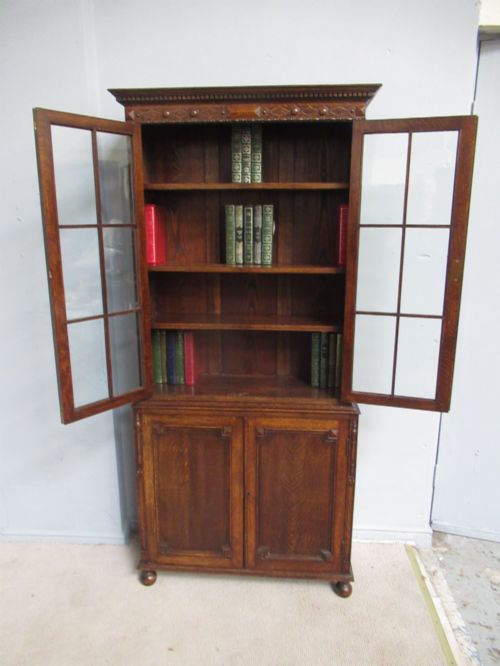
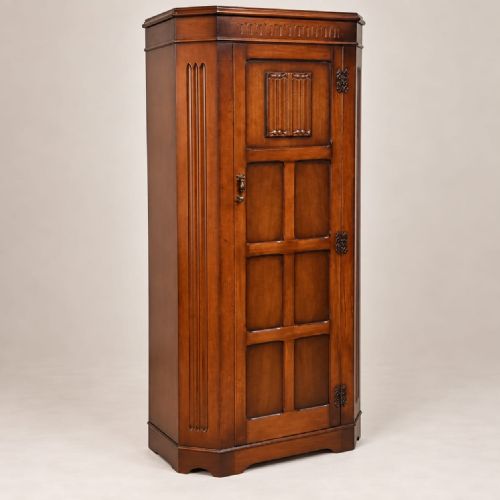
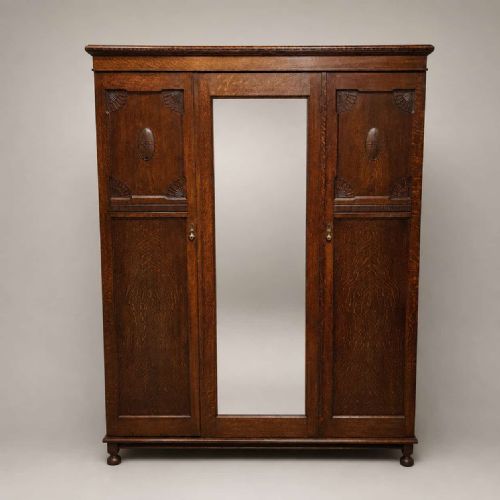
A 1920s oak door represents the sturdy domestic carpentry of the interwar period, though buyers searching this phrase will frequently encounter related oak furniture pieces such as wardrobes, bookcases, and cupboards sharing the same era.
The material palette spans solid oak, limed oak, and light oak, often combined with glass, brass, metal, lead, and iron elements.
Makers and workshops of the time drew upon Jacobean Revival, Art Deco, Gothic Revival, and Arts & Crafts styles, producing both plain functional panels and decorative glazed doors.
How they were made
Construction relied upon solid oak timbers, sometimes treated with a limed finish or kept in a natural light tone to suit the taste of the interwar decades.
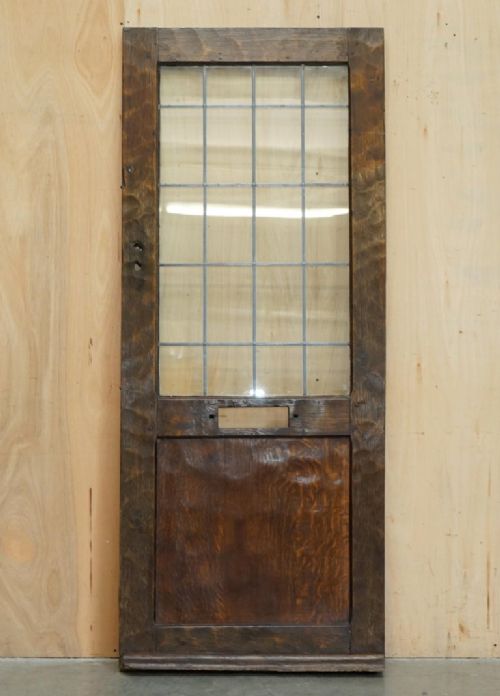
Glazing panels utilised clear or leaded glass, supported by fitted brass, iron, and metal hardware that secured the heavy wooden frames.
A solitary mouse carved into the timber marks the workshop of Robert Mouseman Thompson.
What varies in quality
The distinction between standard examples and finer pieces lies in the weight of the solid timber and the presence of specialist decorative treatments such as liming or carved details.
Hardware quality also separates the output, with substantial brass and iron fittings indicating higher grade manufacturing standards than basic utility ironmongery.
Heals of London·Robert Mouseman Thompson
The 1920s Oak Door Glossary
- Limed oak
- A timber finish created by applying a white pigment into the open grain of oak to lighten its appearance. This technique gained popularity during the interwar period.
- Jacobean Revival
- A decorative style mimicking seventeenth-century English design using heavy proportions and dark or waxed finishes. It appears frequently in 1920s cabinetwork.
- Leaded glass
- Small panes of glass held together by narrow strips of lead within a window or door frame. This method provides structural rigidity and decorative pattern.
- Solid oak
- Timber milled entirely from natural oak trees rather than constructed from veneered composite boards. It offers durability and weight.
1920s Oak Door: Frequently Asked Questions
What styles define a 1920s oak door?
Interwar joinery draws upon several distinct design movements, mixing traditional motifs with modern utility.
Examples incorporate Jacobean Revival panels, Arts and Crafts simplicity, and occasional Art Deco geometric lines.
Are these doors made of solid oak?
Most surviving examples utilise heavy solid timber construction to withstand daily domestic use.
Lighter shades and limed finishes appear alongside natural grain treatments.
How do I care for antique oak?
Regular dusting with a dry cloth protects the timber finish from moisture damage and surface wear.
A light application of appropriate wax maintains the lustre of the oak without buildup.
What hardware accompanies these doors?
Original pieces feature functional metalwork including brass handles, iron hinges, and leaded glazing bars.
These metal elements reflect the utilitarian and decorative standards of the interwar workshop.