
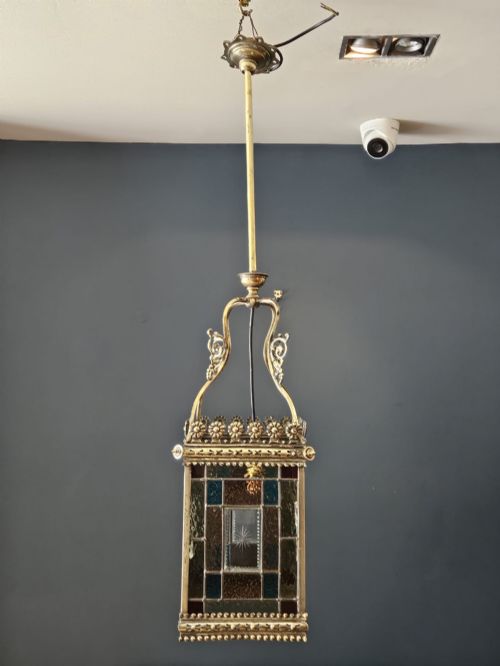
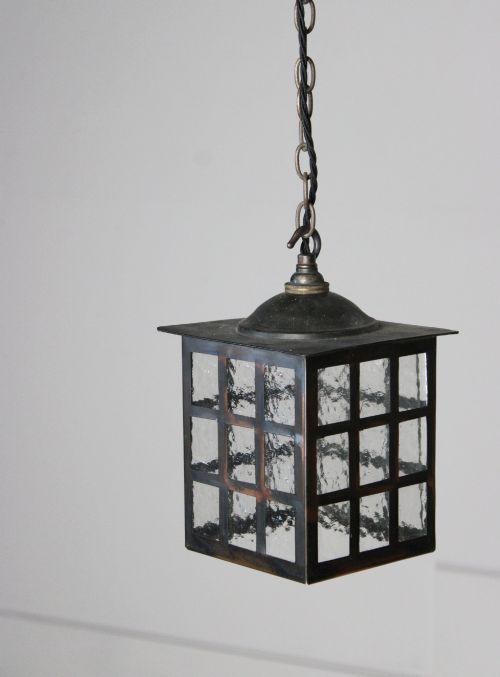
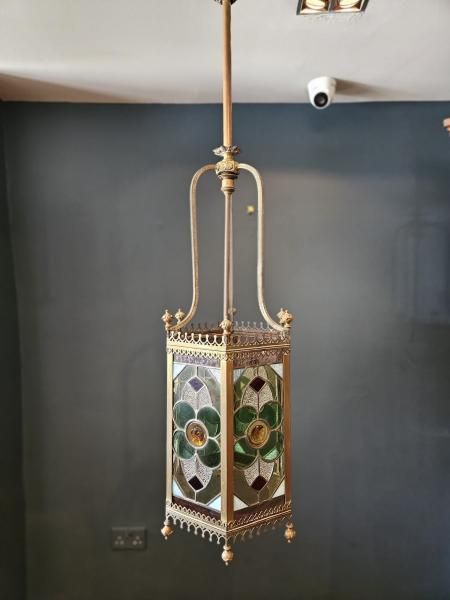
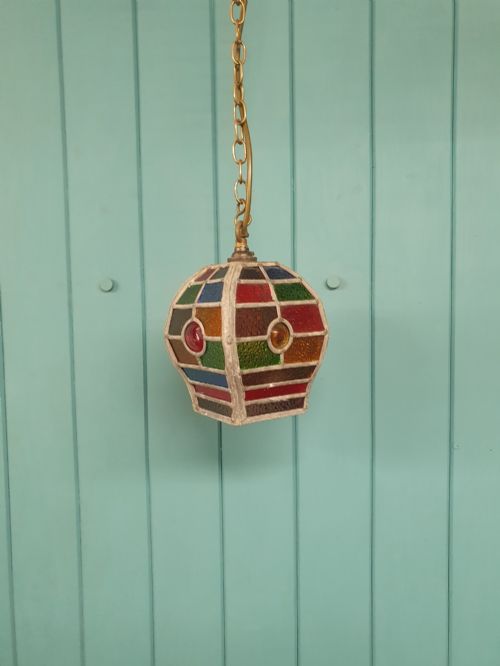


Leaded Glass Pendant
A leaded glass pendant brings brilliant colour and historic weight to an entranceway or hall.
Leaded Glass Pendant
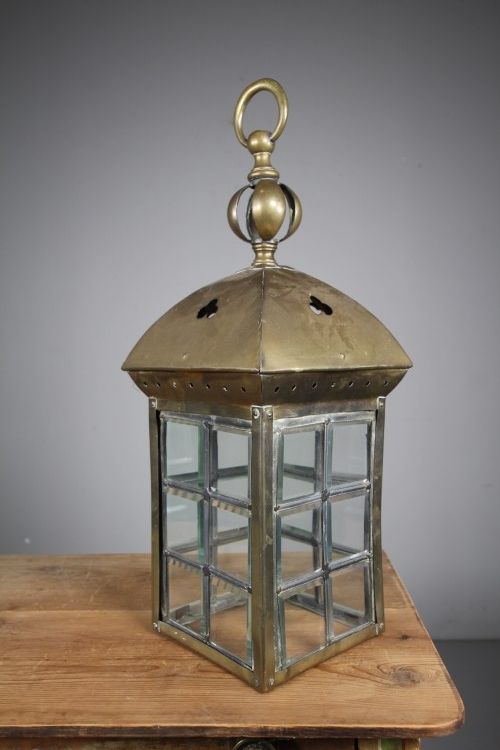
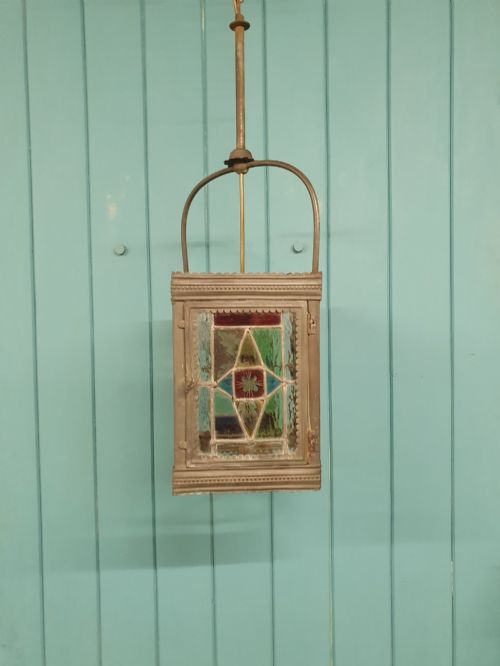
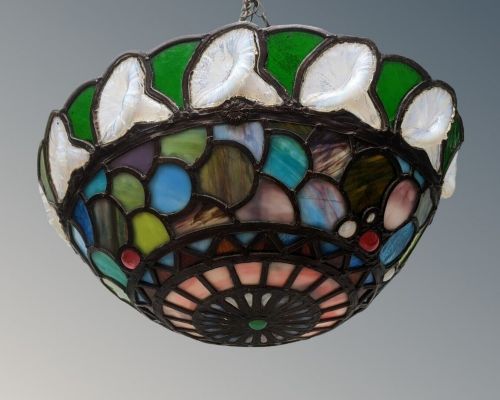
When you search for leaded glass pendant, you look at hanging light fittings designed to illuminate halls, porches and rooms with panels of glass held together by metal cames. The selection centres on lanterns and pendant lights from the Victorian, Edwardian and early twentieth-century periods.
Victorian and Gothic Revival examples appear frequently, alongside Arts and Crafts designs and French porch lanterns. Most pieces utilise brass, copper or wrought iron frames to secure the coloured or stained glass panels.
The forms range from compact hall lights to larger ceiling lanterns. Buyers often find examples styled in the manner of nineteenth-century Gothic design or associated with the Arts and Crafts movement.
How they were made
The construction relies on joining individual pieces of glass using lead cames, soldered at the joints to form rigid panels. These panels are then fitted into structural metal frameworks made from brass, copper or iron.
Heavier frames utilise wrought iron or cast brass to support substantial leaded glass shades, while domestic hall lanterns employ lighter brass or copper sections to frame the glass. Stained, coloured and cobalt blue glass varieties provide the chromatic depth seen across the periods.
The listings show pieces spanning from the Victorian era and the eighteen-eighties through to nineteen-twenty Edwardian designs.
What varies in quality
Quality rests in the precision of the metalwork and the integration of the glass panels within the frame. Heavier gauge metals and robust soldering at the lead joints separate sturdy architectural lanterns from lighter domestic fixtures.
The character of the glass itself dictates the visual distinction between pieces. Richly coloured stained glass, deep cobalt hues and complex geometric or Gothic lead lines elevate a pendant beyond standard commercial production.
The Leaded Glass Pendant Glossary
- Came
- A slender grooved strip of lead, zinc or copper used to hold together pieces of stained or leaded glass in a window or lantern. The joints are soldered to secure the entire assembly.
- Gothic Revival
- An architectural and decorative style popular during the nineteenth century, drawing inspiration from medieval forms, pointed arches and heavy metalwork. Pieces in this style often feature ecclesiastical motifs.
- Arts and Crafts
- A design movement valuing traditional craftsmanship, simple materials and honest construction. Lanterns from this tradition emphasise hand-wrought metal frames and structural clarity.
- Hall Lantern
- A hanging light fixture specifically designed for entrance halls and corridors. These pieces typically feature enclosed glass panels to protect the candle or bulb from drafts.
Leaded Glass Pendant: Frequently Asked Questions
Where should I hang a leaded glass pendant?
These lanterns suit high-ceilinged entrance halls, stairwells and porches where their coloured glass panels can catch natural light. They provide a strong focal point upon entering a room.
Ensure the hanging height allows adequate clearance beneath the fitting. Heavier iron and brass frames require secure ceiling fixings.
How do I date a leaded glass pendant?
Examine the metal type, the construction of the frame and the style of the glass panels. Victorian and Gothic Revival pieces often feature heavy brass or iron castings.
Edwardian and later Arts and Crafts examples tend to utilise simpler copper or brass frames with lighter lead cames. Comparing the stylistic motifs to documented periods helps narrow the timeframe.
Are these pendants suitable for modern wiring?
Most antique lanterns are adapted to accept standard electrical lamp holders while retaining their original frames. Rewiring should be carried out by a qualified professional to ensure safety.
Keep in mind that older fittings may require careful handling during installation due to the weight of the glass and metal.
How do I clean leaded glass?
Wipe the glass panels gently with a soft cloth and a mild, non-abrasive cleaner. Avoid harsh chemicals that could damage the solder or discolour the lead cames.
Take care around older soldered joints, as excessive pressure can loosen the glass within the metal channel.