
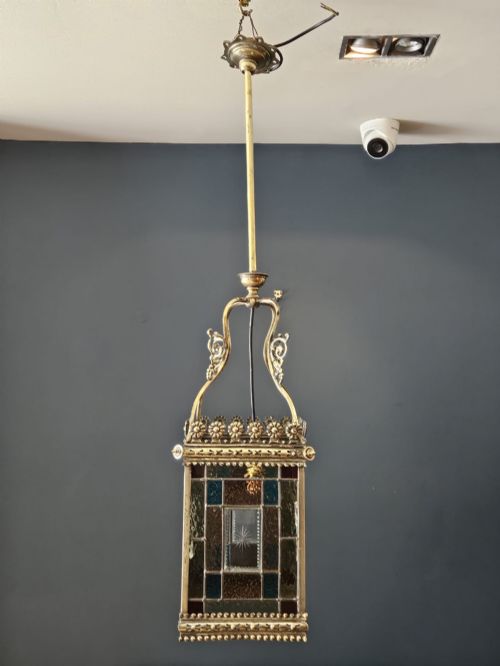
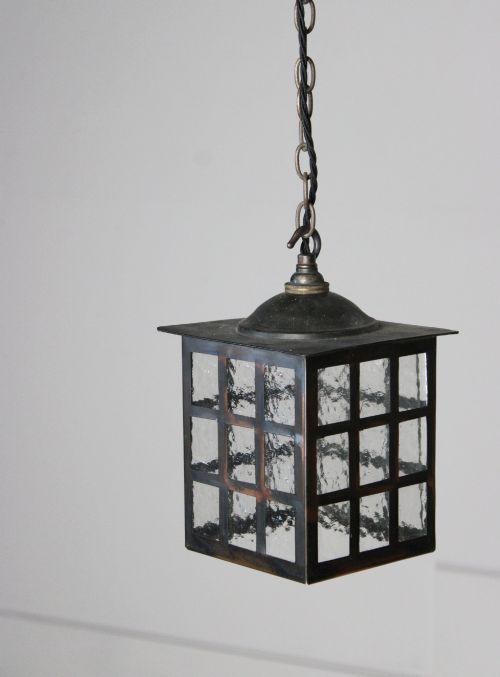
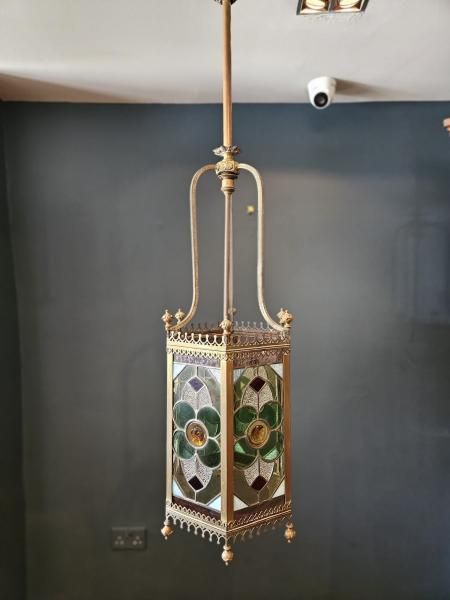
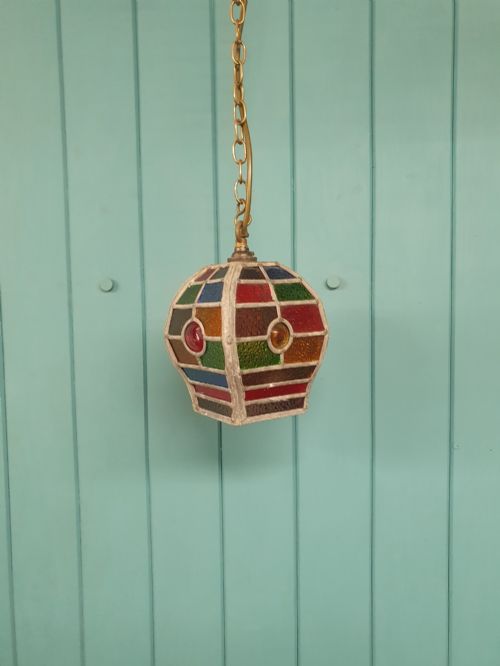


Leaded Glass Lantern Light
These leaded glass lantern light pieces bring period illumination and decorative craftsmanship to entrance halls and porches.
Leaded Glass Lantern Light
When you search for leaded glass lantern light, you are looking at overhead hanging fixtures designed to illuminate hallways, porches and vestibules with architectural character. These pieces range from compact porch fixtures to substantial hall lanterns intended for high ceilings.
The versions most likely to be met on this page date from the Victorian and Edwardian eras, spanning the nineteenth and early twentieth centuries. They appear in forms such as pendant lights, ceiling lights and traditional hall lanterns.
Origins represented in these items include English and French examples, with designs drawing on domestic vernacular styles as well as more formal historical revivals. Each piece provides overhead illumination through glazed panels held within sturdy metal framing.
How they were made
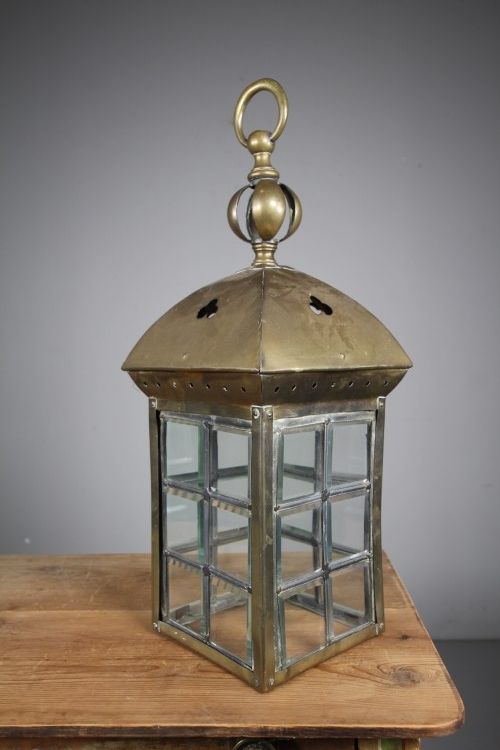
Construction relies on structural metal frames fashioned from brass, copper, wrought iron or standard iron to support the weight of the hanging assembly. These frames are assembled using traditional joining methods appropriate to each workshop.
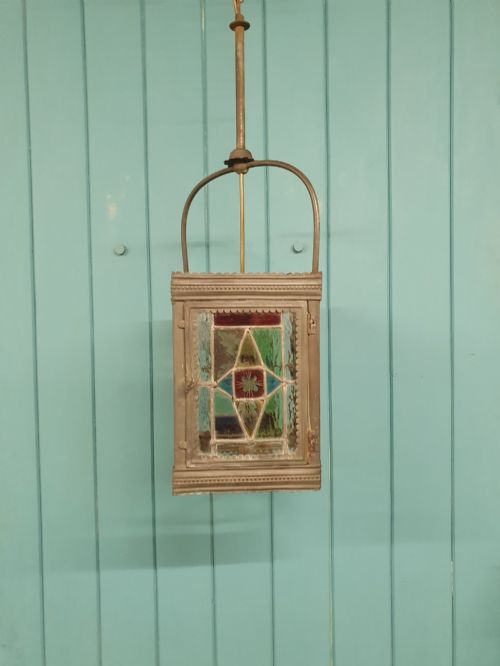
Panels of glass, leaded glass or stained glass are fitted precisely into the metal framework to enclose the light source. Artisans use lead cames to hold smaller pieces of glass together within the lantern body, creating geometric or decorative patterns.
Every porch lantern has spent a century politely ignoring generations of slamming front doors.
What varies in quality
The distinction between tiers of work rests on the substance of the metal framing and the complexity of the glazing. Heavier gauge brass, wrought iron or copper structures demonstrate greater structural integrity than lighter commercial alternatives.
Design ambition also separates examples, particularly where decorative styles such as Gothic Revival or Arts & Crafts influence the metalwork and stained glass composition. Finer execution is evident in the precision of the lead cames and the depth of the glass colour.
The Leaded Glass Lantern Light Glossary
- Came
- A grooved strip of lead used to hold pieces of glass together in a window or lantern. These strips are soldered at the joints to form a rigid network.
- Hall lantern
- A hanging light fixture traditionally placed in an entrance hall or corridor. They are enclosed on all sides to protect the flame or bulb from drafts.
- Gothic Revival
- An architectural and decorative style drawing inspiration from medieval forms. Pieces in this manner often feature pointed arches and heavy ecclesiastical detailing.
- Pendant light
- A single light fixture that hangs from the ceiling by a cord, chain or metal rod. In older interiors, these were adapted from gas or candle fittings.
Leaded Glass Lantern Light: Frequently Asked Questions
Where should a hall lantern hang?
These fixtures are traditionally placed in entrance halls, corridors and covered porches where they provide direct overhead illumination. They suit spaces with sufficient ceiling height to allow clearance beneath the hanging chain or bracket.
Positioning them centrally ensures balanced light distribution upon entering a property. Smaller examples work well in compact vestibules while larger versions anchor wider hallways.
How do I identify a Victorian lantern?
Victorian examples typically feature robust brass frames, sometimes combined with coloured glass or explicit Gothic Revival styling. The metalwork often displays heavier casting and traditional joining techniques characteristic of nineteenth century metalworking.
Examining the construction of the frame and the type of glass used helps distinguish these pieces from later Edwardian or twentieth century reproductions.
What is leaded glass?
Leaded glass consists of individual pieces of glass joined together using lead cames to form a decorative panel or enclosure. This technique allows lanterns to display geometric or multi-coloured designs while maintaining structural rigidity.
The method dates back centuries and remains central to the manufacture of traditional decorative lighting.
Are these lights wired for electricity?
Most antique lanterns found on the market have been adapted for modern electrical use while retaining their original exterior housing. Rewiring allows them to function safely with contemporary electrical standards.
Buyers should inspect the internal lamp holder to confirm compatibility with standard modern bulbs and household circuits.