


French Gothic Pendant Light
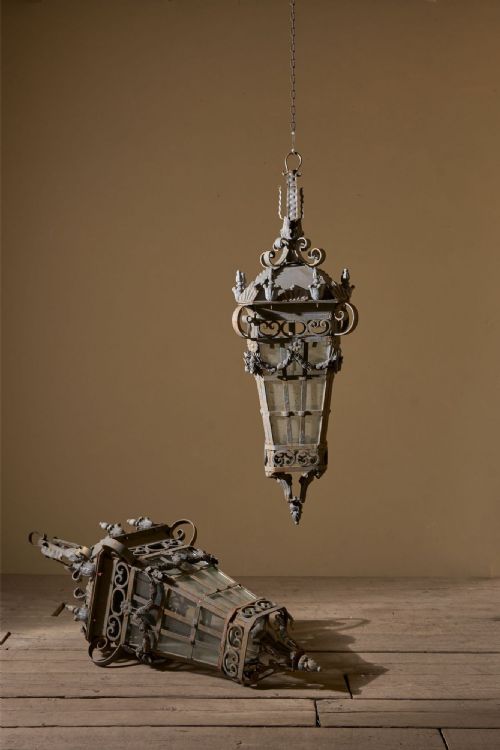
When you handle a French gothic pendant light, you meet heavy wrought iron, glass panels and ecclesiastical forms that bring medieval weight to a hallway.
French Gothic Pendant Light
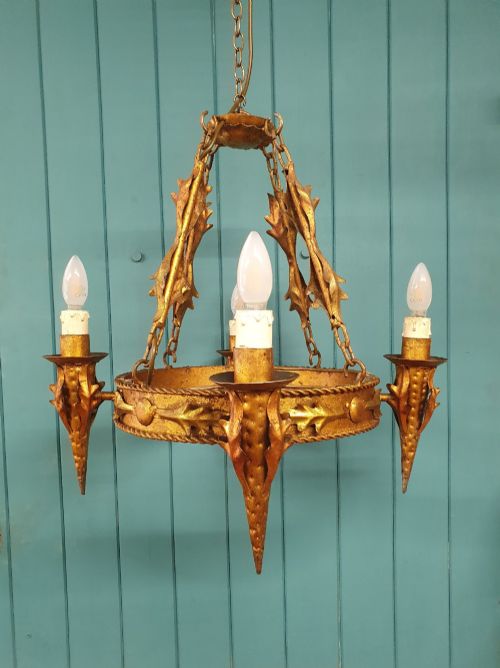
A french gothic pendant light combines medieval ecclesiastical design with domestic hanging illumination, appearing primarily as hall lanterns, hanging lanterns, and chandeliers. Buyers seeking this aesthetic will most frequently encounter sturdy iron and brass frames suspended from ceilings, often incorporating glazed panels or open candelabra arrangements.
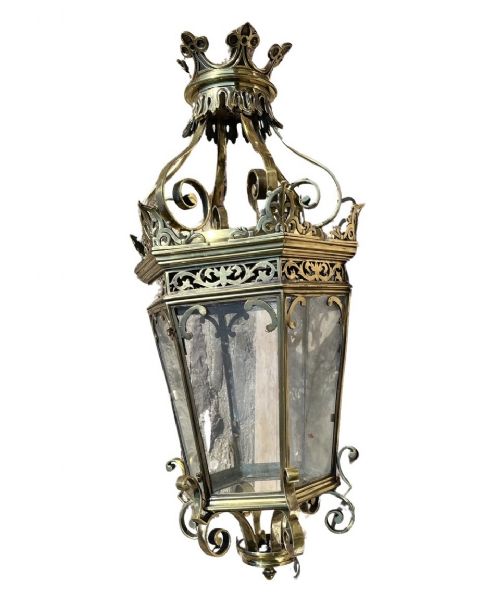
The pieces on offer span the nineteenth century and the early twentieth century, including Victorian gothic, Edwardian, and Arts and Crafts interpretations. Forms range from simple geometric brass lanterns to large, decorative wrought iron hall lanterns with doors and coronet detailing.
Origins trace back to French chateau and Beaux-Arts traditions, translating architectural cathedral motifs into domestic lighting fixtures. These lights serve as striking focal points in entrance halls and stairwells, where their substantial presence commands attention.
Materials and construction methods
Makers relied heavily on forged wrought iron and cast brass to form the structural skeletons of these hanging fixtures, frequently adding gilt metal or bronze finishes for decorative emphasis. These robust metals provided the necessary strength to support large frames without bending under their own weight.
Windows and panels within the lanterns utilised stained glass, leaded glass, or zinc, diffusing the interior light through coloured or textured panes. Skilled artisans soldered lead cames around glass segments or fitted zinc frames to secure the transparent sections tightly against the metal chassis.
Some hall lanterns feature tiny operable doors, originally designed so servants could reach inside with a taper to light the candles.
Judging the quality of construction
Quality reveals itself in the crispness of the ironwork and the hand-forged detail of decorative hinges, latches, and coronets. Superior examples display meticulous attention to metal joins and balanced proportions, whereas simpler pieces rely on standard commercial casting.
The integration of the glass panels distinguishes finer items from ordinary production. Precisely cut stained or leaded glass that fits snugly within the metal rabbets indicates careful workshop assembly rather than hurried manufacturing.
The French Gothic Pendant Light Glossary
- Coronet chandelier
- A circular crown-like hanging light fixture that suspends candles or bulbs beneath an ornate upper corona. This form draws directly from medieval ecclesiastical headwear and European nobility styling.
- Leaded glass
- Individual panes of glass held together by strips of lead called cames. These came networks create intricate geometric or floral patterns across lantern panels.
- Wrought iron
- Iron that has been heated and hammered into shape by hand by a blacksmith. This material yields a fibrous texture and slight irregularities unique to each forged piece.
- Gilt brass
- Brass that has been coated with a thin layer of gold leaf or gilt wash. The technique imparts a rich, reflective metallic sheen that resists tarnishing over decades of use.
French Gothic Pendant Light: Frequently Asked Questions
Where should I hang a gothic lantern?
These fixtures suit high-ceilinged entrance halls, stairwells, and landings where their vertical drop and heavy metal frames have room to breathe. They work particularly well in period properties or rooms with architectural character.
Ensure the ceiling height accommodates the total drop of the chain and lantern body so the piece hangs safely above head height while remaining a visual centrepiece.
How do I wire an old lantern?
Most antique lanterns require modern rewiring to meet current safety standards before installation. A qualified electrician can thread modern flex through the original chains and fit appropriate lamp holders inside the frame.
Original internal fittings are typically replaced or adapted while preserving the exterior metal and glass structure entirely intact.
Are these lights purely French?
The designs draw heavily upon French chateau, Beaux-Arts, and Gothic Revival aesthetics popular across Europe during the nineteenth and early twentieth centuries. Makers interpreted these continental styles with local materials and workshop traditions.
While design roots trace to France, surviving pieces often reflect the broader European Arts and Crafts movement as well.
How do I date these fixtures?
Dating relies on examining the combination of materials, construction marks, and stylistic clues such as Arts and Crafts influences or Victorian Gothic proportions. The presence of zinc, leaded glass, and wrought iron helps narrow the period to the nineteenth or early twentieth century.
Comparative study of coronet chandeliers and hall lanterns reveals subtle shifts in decorative tastes across these decades.