

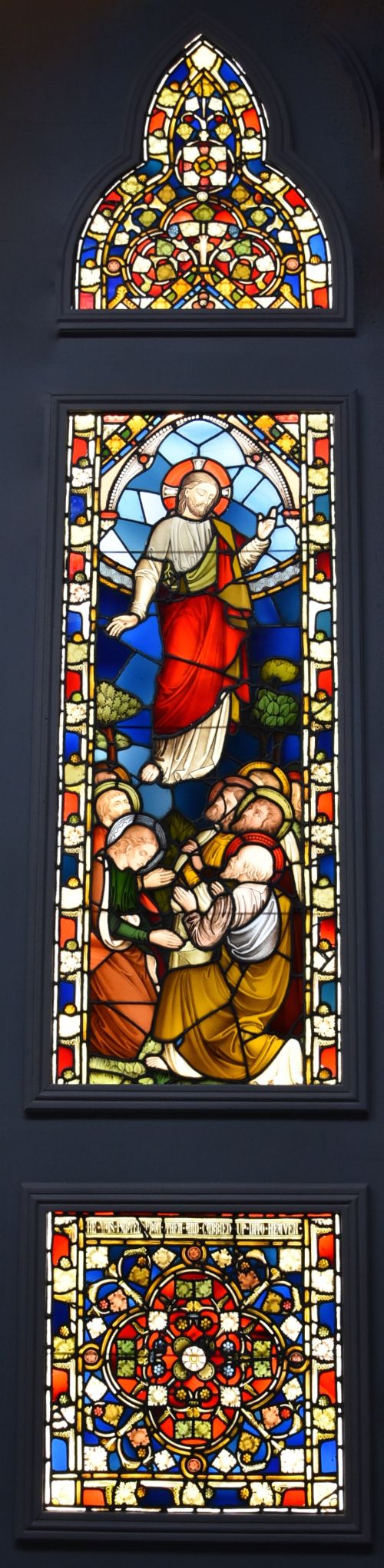


Leaded Glass Church Window
Leaded glass church window pieces bring devotional imagery and architectural history directly into domestic interiors through coloured glass and lead work.
Leaded Glass Church Window
A leaded glass church window brings architectural salvage from religious buildings into domestic spaces. These pieces emerge from periods spanning the mid nineteenth century through to nineteen hundred, encompassing Victorian, Edwardian and Gothic Revival styles.
Buyers encounter architectural salvage in several distinct forms, including arch top shapes, triptychs and rectangular panels. The selection ranges from architectural formats with square or diamond panes to painted religious scenes depicting figures like Saint Anthony and countryside landscapes.
How they were made
Glass panels are assembled using lead cames to hold individual pieces together within timber frameworks. Pine and general timber structures provide the supporting frames for these architectural elements.
Visual detail relies upon applied enamel and hand painting directly onto the glass surfaces. This technique produces figurative religious narratives and pastoral scenes within the leaded matrix.
Leaded Glass Church Window Retail Price Guide 2026
Typical asking prices for leaded glass church window among the pieces listed under this phrase on Sellingantiques today, from the lower quarter to the upper quarter. They describe what is for sale here now, not the wider market.
Listings feature periods from eighteen fifty to nineteen hundred, encompassing Victorian, Edwardian and Gothic Revival styles alongside nineteenth century architectural salvage.
What varies in quality
Quality separates simple geometric glazing from elaborate hand painted figurative work. Windows depicting complex religious iconography or specific scenes demonstrate greater artistic execution than standard diamond or square paned variants.
Scale and format dictate the ambition of the piece, moving from standard rectangular panels to large scale triptychs and arch top configurations. The integration of period timber frames adds structural integrity and architectural context.
The Leaded Glass Church Window Glossary
- Came
- A slender grooved rod of lead used to hold together pieces of glass in a window. These strips form the rigid grid that supports the entire composition.
- Triptych
- A picture or relief carving on three panels, typically hinged together side by side and used as an altarpiece. In glass, this format organises large devotional narratives across three vertical sections.
- Arch Top
- A window design featuring a curved upper section above a rectangular body. This architectural shape softens the vertical lines of ecclesiastical salvage.
- Gothic Revival
- An architectural style that began in the mid eighteenth century and drew inspiration from medieval design. It influences the pointed arches and religious motifs seen in nineteenth century panels.
Leaded Glass Church Window: Frequently Asked Questions
How are leaded glass church windows hung?
These architectural pieces require secure wall mounting or custom steel bracket support to bear their substantial weight. Hanging them in front of existing light sources allows natural daylight to illuminate the glass.
Professional installation ensures the timber frame and lead matrix remain structurally stable over time. Many owners choose window placement to maximise the impact of the painted enamel colours.
What periods do these windows come from?
The available pieces originate from the nineteenth century, including specific dates such as eighteen fifty, eighteen sixty and eighteen ninety alongside nineteen hundred. Victorian and Edwardian examples represent the dominant eras.
Gothic Revival aesthetics heavily influence the design vocabulary across these chronological brackets. Dating relies upon the stylistic execution of the painted scenes and the framing materials used.
What subjects appear on painted panels?
Religious figures and narrative scenes form a core category, including specific depictions of Saint Anthony and general devotional subjects. Other examples feature hand painted countryside scenes and farmhouses.
Alternative panels eschew figurative art entirely in favour of geometric patterns using square or diamond panes. Both pictorial and abstract variants serve as striking architectural focal points.
What materials make up these windows?
Construction combines glass, stained glass and enamel with lead cames holding the individual pieces in place. Timber and pine wood provide the primary framing materials for the panels.
This combination of metal, mineral and wood creates durable architectural fragments. The interplay between timber surrounds and coloured glass defines the physical presence of each item.