

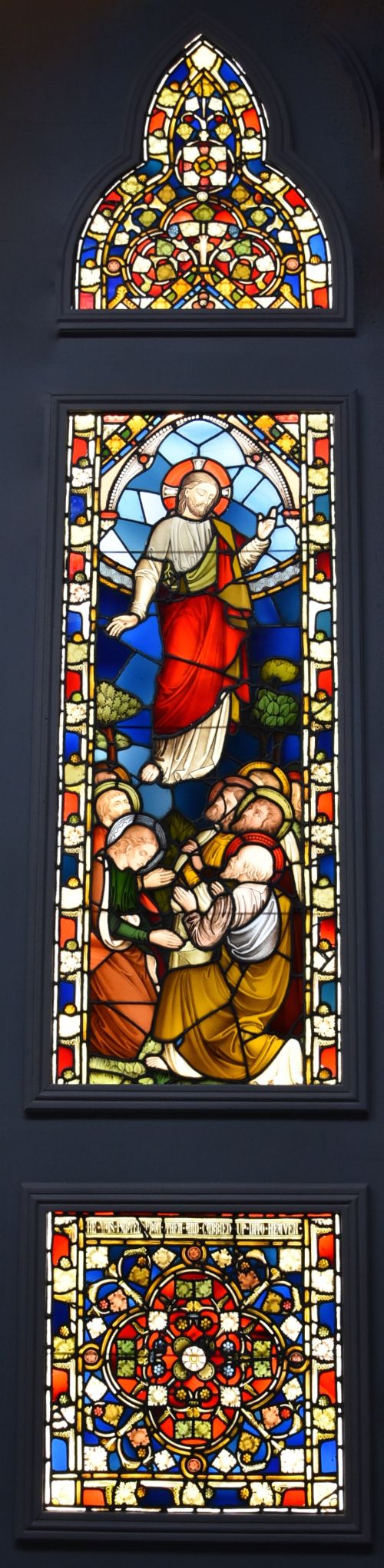


Victorian Church Window
These Victorian church window panels and mirrors bring striking Gothic Revival form and rich coloured glass into modern interiors.
Victorian Church Window
When you search for a victorian church window, you encounter architectural salvage originating from ecclesiastical buildings, mostly dating through the nineteenth century. These pieces encompass stained glass panels, arched mirrors framed in polished oak or carved pine, and large ecclesiastical tracery panels.
The versions most frequently met on this page combine leaded or painted glass with robust wooden framing in the Gothic Revival style. They range from simple diamond-pane arch tops to elaborate triptychs and hand-painted religious scenes created around eighteen ninety.
Makers and craftsmen of this period utilised structural timber and traditional glazing techniques to build robust windows and mirrors that defined sacred spaces. Today, collectors repurpose these architectural fragments as wall mirrors or freestanding decorative panels to anchor interior spaces.
How they were made
The construction of these pieces relies heavily on lead cording to hold intricate arrangements of glass pieces together securely. Artisans combined clear, coloured, and mirror glass with painted pictorial details depicting religious or pastoral scenes.
Woodworking forms the structural backbone of these windows and mirrors, utilising solid oak, pine wood, and carved architectural elements. Frames often feature Gothic Revival details and arch top profiles shaped by hand from dense timber.
Victorian Church Window Retail Price Guide 2026
Typical asking prices for victorian church window among the pieces listed under this phrase on Sellingantiques today, from the lower quarter to the upper quarter. They describe what is for sale here now, not the wider market.
Materials recorded in current inventory include lead, stained glass, mirror glass, pine wood, oak, and traditional paint.
What varies in quality
The distinction between standard architectural salvage and superior pieces lies in the complexity of the glazing and the artistry of the painted details. Hand-painted religious or farmhouse scenes executed with fine brushwork elevate a simple leaded window into a notable decorative artwork.
Timber selection and carving depth determine the structural integrity and visual weight of the frame. Polished oak and deeply carved pine tracery panels demonstrate superior craftsmanship compared to plain utility framing.
The Victorian Church Window Glossary
- Tracery
- The stonework or timber framing supporting glass in a window, especially the decorative intersecting ribs in the head of an arch. This structural element provides the characteristic ecclesiastical silhouette seen in salvaged panels.
- Triptych
- A picture or carving on three panels, typically hinged together side by side and used as an altarpiece. In stained glass, this format creates a monumental scale suited for large architectural spaces.
- Gothic Revival
- An architectural movement that began in the mid-nineteenth century, drawing inspiration from medieval design. It manifests in pointed arches, ribbed vaults, and ornate window tracery.
- Lead cording
- Flexible lead strips shaped in an H-profile used to join individual pieces of glass in a window. Skilled glazing relies on precise cording to support complex geometric and figurative designs.
Victorian Church Window: Frequently Asked Questions
How do I hang a heavy church window mirror?
These large wooden frames require professional wall anchors fixed directly into structural studs. The weight of the timber and glass demands robust hardware to ensure secure mounting.
Position the piece at eye level where natural light can pass through or reflect off the surface, enhancing the architectural details of the frame.
Are these windows waterproof for outdoor garden use?
Original nineteenth-century lead and timber construction is typically intended for interior architectural display rather than external weather exposure. Moisture can degrade the traditional putty and weaken the lead cording over time.
Keep these pieces indoors to preserve the delicate painted details and prevent the wooden frames from warping or rotting.
How can I date a Gothic Revival window?
Dating relies on examining the timber species, the style of the leadwork, and any accompanying documentation from the nineteenth century. Pieces range from eighteen fifty examples with simple diamond panes to eighteen ninety works featuring hand-painted scenes.
Stylistic shifts from strict medieval revival to Edwardian decorative touches help narrow down the period of manufacture.
Can I clean stained glass safely?
Use a soft, dry microfibre cloth to gently remove dust from the glass and lead surfaces without applying heavy pressure. Avoid harsh chemical cleaners that might strip hand-painted pigments or damage aged timber frames.
Inspect the lead cording periodically to ensure the individual glass segments remain stable within the structural framework.