



Late Victorian Windsor Chairs
Late Victorian Windsor chairs are sturdy domestic seats that combine robust regional timber framing with comfortable saddle seats for daily use.
Late Victorian Windsor Chairs
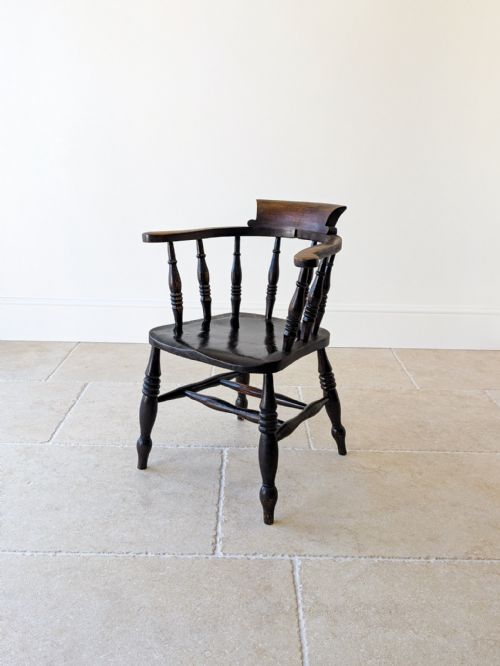
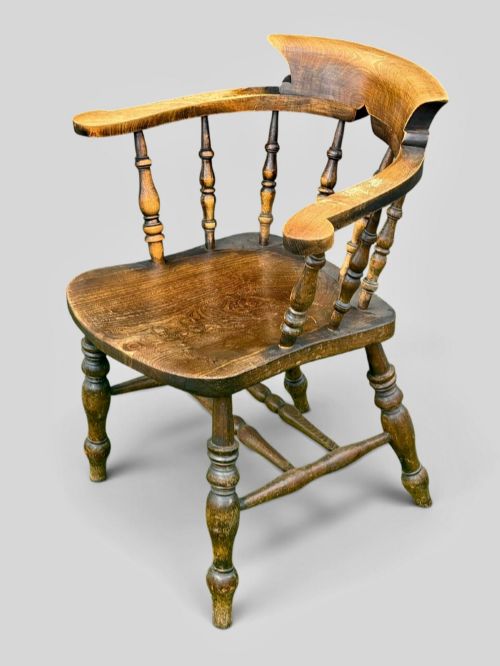
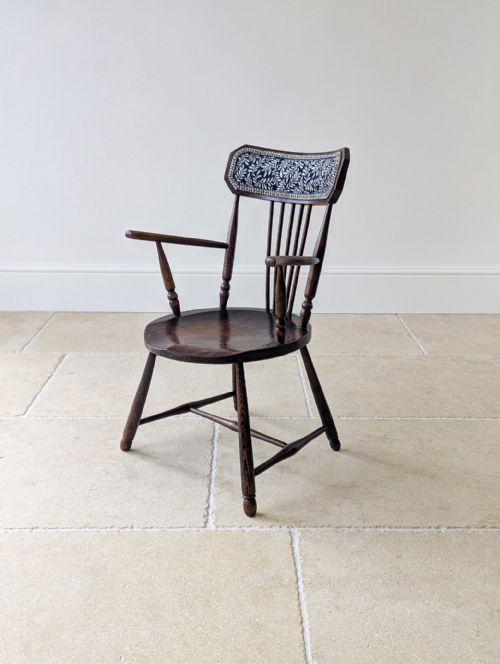
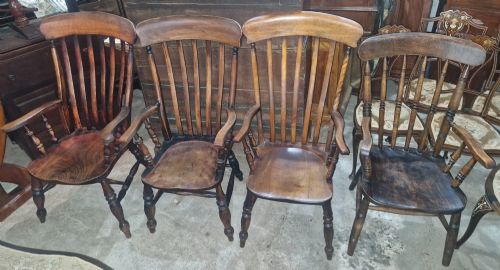
Late Victorian Windsor chairs are functional seating pieces produced during the closing decades of the nineteenth century, typically originating from farmhouse and kitchen contexts. When searching for late Victorian Windsor chairs, buyers frequently encounter robust armchair formats including captain's chairs, smokers' bows, and slat back dining chairs.
The regional English vernacular tradition dictates the form, balancing simple spindle backs with generous wooden seats shaped for utility. Surviving examples demonstrate heavy use in domestic spaces, often appearing as individual armchairs or matched sets intended around a farmhouse table.
Construction and timber combinations
These chairs rely on a mixed-timber construction method where different woods serve distinct structural purposes within the same frame. Elm typically provides the solid, deep-sunk saddle seat, while bent beech, ash, or fruitwood forms the hoops, spindles, and legs.
Turned components and steam-bent elements join together using traditional wedge-tenon and wedged-through-seat joints. This method allows the individual wooden members to remain flexible yet tightly locked under daily weight.
Late Victorian Windsor Chairs Retail Price Guide 2026
Typical asking prices for late victorian windsor chairs among the pieces listed under this phrase on Sellingantiques today, from the lower quarter to the upper quarter. They describe what is for sale here now, not the wider market.
Listings feature periods spanning the Victorian era, eighteen-ninety, nineteen-hundred, and the late nineteenth century.
Judging build integrity and timber character
Quality in these vernacular seats rests upon the depth of the elm seat carving and the retention of tight, original joints across the stick back. Thicker seat planks and well-defined saddle depressions indicate superior regional craftsmanship.
The choice of secondary timbers also alters the overall character, with figured yew or rich fruitwood commanding attention above standard beech and ash frames. Original surface patination accumulated through decades of use elevates the visual depth of the timber.
The Late Victorian Windsor Chairs Glossary
- Smokers bow
- A low-backed Windsor armchair featuring a continuous curved arm rail, historically favoured in public houses and smoking rooms.
- Captain's chair
- A compact wooden armchair with a low curved back rest supported by numerous short spindles.
- Slat back
- A chair back constructed using vertical flat wooden slats rather than thin turned spindles.
- Saddle seat
- A solid timber seat base scooped and carved into a concave shape for enhanced sitter comfort.
Late Victorian Windsor Chairs: Frequently Asked Questions
How do I identify a late Victorian Windsor chair?
Look for combination timbers such as an elm seat paired with beech or ash spindles, alongside nineteenth-century construction methods like wedged legs passing straight through the seat base.
These chairs often display simple vernacular styling typical of farmhouse kitchens from around eighteen-ninety to nineteen-hundred.
Were these chairs used for dining?
Many examples served as kitchen or farmhouse dining seating, frequently found in small sets around a large wooden table.
Armchair versions like smokers' bows were equally suited for parlour or office use due to their supportive curved arm rails.
Are replacement parts common on these chairs?
Due to heavy domestic use over a century or more, individual spindles or legs are occasionally replaced during conservation work.
Examining the underside reveals whether the wedged joints and timber wedges remain period-correct or show later intervention.
How should I care for timber Windsor chairs?
Keep the wood away from direct heat sources and sudden humidity changes to prevent the dry elm seats from splitting.
Applying a traditional beeswax polish helps nourish the grain and maintain the natural patination built up over generations.