



Country House Kitchen Seating
Country house kitchen seating brings honest utility into domestic spaces, offering sturdy vernacular forms shaped by everyday use.
Country House Kitchen Seating
Country house kitchen seating comprises robust everyday furniture designed for domestic labour and communal meals in rural homes. When you search for country house kitchen seating, you encounter utilitarian forms built for endurance rather than formal display.
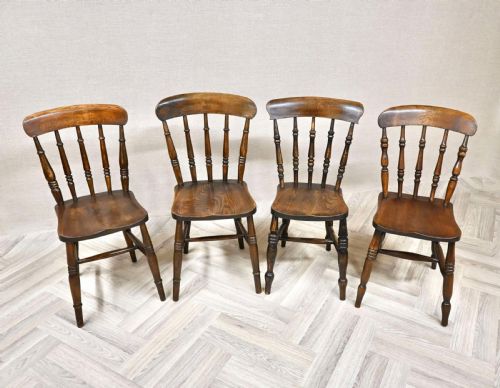
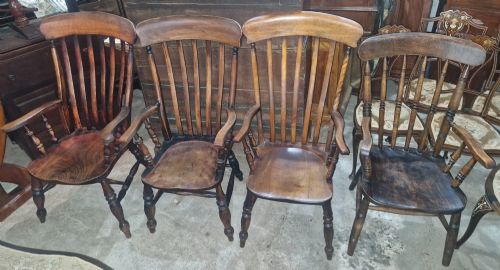
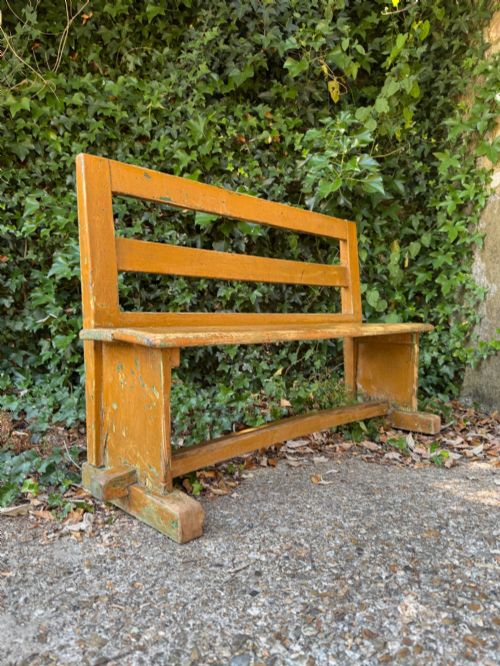
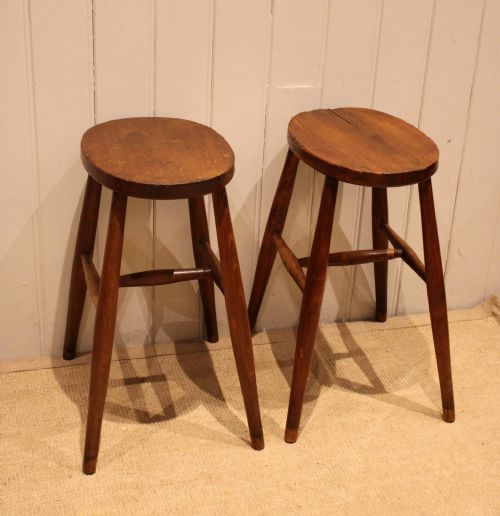
The pieces appearing on this page span the nineteenth century and the early twentieth century, encompassing Victorian and Edwardian eras. Common forms include sets of dining chairs, individual armchairs, stools, bar stools, and long dining benches.
You are most likely to meet traditional Windsor chairs, ladder back dining chairs, and simple pine or hardwood benches. These objects reflect regional British vernacular traditions rooted in practical domestic life.
Materials and construction methods
Craftsmen utilised native timbers such as elm, oak, beech, ash, and pine, selecting woods for strength and local availability. Elm often provided durable seats for Windsor chairs, while beech and ash supplied resilient spindles and legs.
Joinery techniques relied on traditional methods like mortise and tenon joints and turned components fitted securely together. Surfaces frequently show the marks of hand tools, sometimes finished with early paint or left as bare timber.
Country House Kitchen Seating Retail Price Guide 2026
Typical asking prices for country house kitchen seating among the pieces listed under this phrase on Sellingantiques today, from the lower quarter to the upper quarter. They describe what is for sale here now, not the wider market.
Current listings demonstrate a strong presence of nineteenth-century elm and beech Windsor chairs alongside early twentieth-century oak benches.
Assessing quality and character
Quality in these utilitarian pieces rests upon the integrity of the original construction and the survival of surface patination. Examples retain deep signs of age through natural wear, showing how the timber has aged gracefully with use.
Proportion and balance distinguish finer vernacular pieces from standard utilitarian items, particularly in the turning of spindles and the shaping of seats. Complete sets of matching chairs carry greater distinction than assembled groups.
The Country House Kitchen Seating Glossary
- Windsor chair
- A wooden chair featuring a solid sculpted seat into which the legs and back spindles are wedged directly. This design offers robust structural support through simple engineering.
- Ladder back
- A chair style with horizontal slats spanning the upright posts of the backrest. These slats are typically curved for comfort.
- Vernacular
- Architecture and furniture built by local craftsmen using traditional methods and native materials without high stylistic pretension. It prioritises function over academic design rules.
- Patina
- The surface sheen and coloration developed through decades of handling, cleaning, and exposure to light. It serves as a visual record of an object's age and history.
Country House Kitchen Seating: Frequently Asked Questions
How do I use country house kitchen benches?
These long benches suit contemporary dining tables or hallways where sturdy linear seating is required. They offer practical utility and a relaxed rustic aesthetic.
Position them against walls or tables to maximise floor space while retaining an open, unpretentious atmosphere in the room.
Are Windsor chairs comfortable for daily use?
The sculpted wooden seats of nineteenth-century Windsor chairs provide surprising ergonomic support despite lacking upholstered padding. Their raked backs encourage an upright posture suitable for long meals.
Adding loose seat cushions can increase comfort without altering the historic character of the chair.
How do I date nineteenth-century kitchen seating?
Dating relies on observing tool marks, timber selection, construction methods, and wear patterns consistent with specific decades. Nineteenth-century pieces often display hand-turned components and traditional joinery.
Comparing structural details with documented vernacular examples helps narrow down the period of production.
Can I mix different styles of kitchen chairs?
Mixing vernacular seating styles such as ladder backs and Windsor chairs creates an authentic country interior look. Historically, domestic kitchens accumulated furniture gradually over generations rather than matching sets.
Keeping a common material, such as elm or pine, helps unify diverse seating arrangements around a single table.