


Late Victorian Stick Stand
A late victorian stick stand brings order to a hallway while offering sturdy, practical storage for umbrellas and walking canes.
Late Victorian Stick Stand
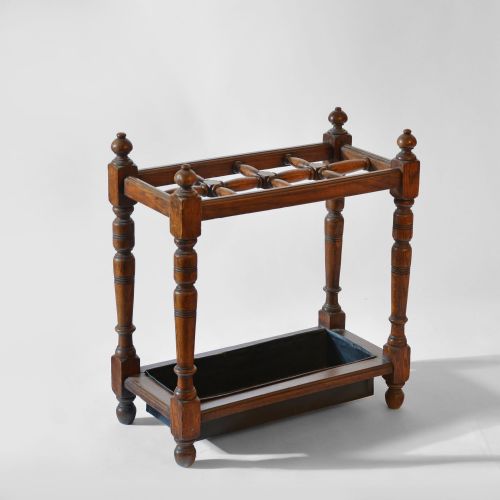
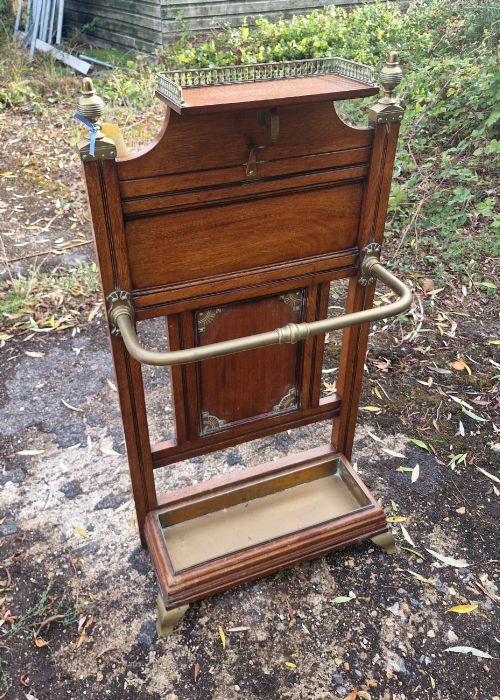
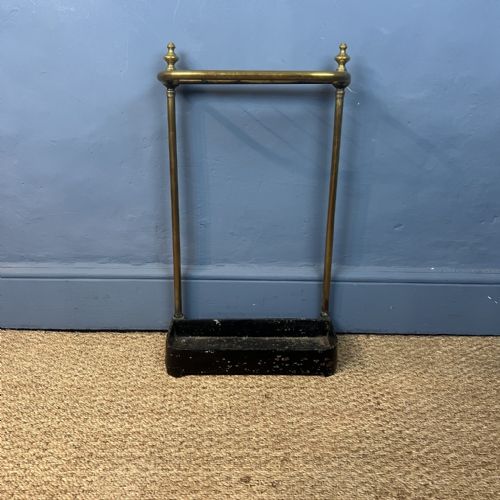
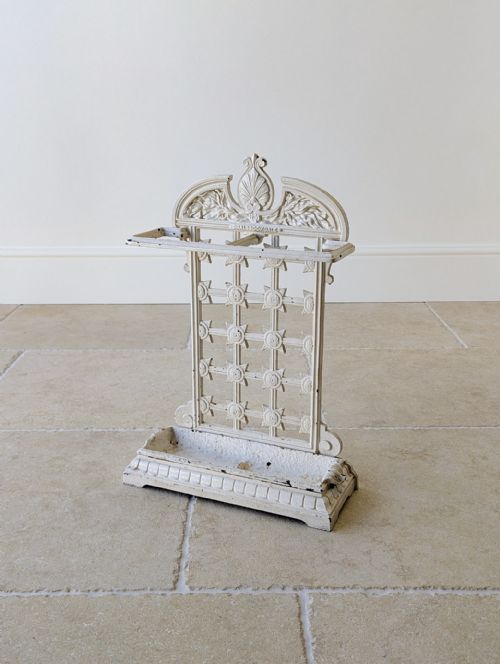
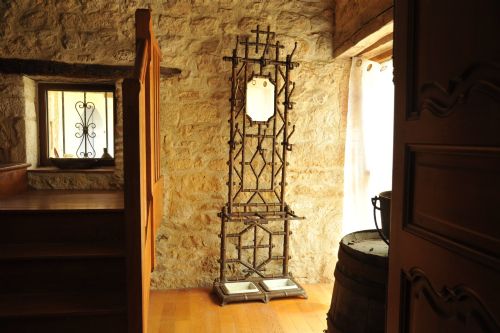
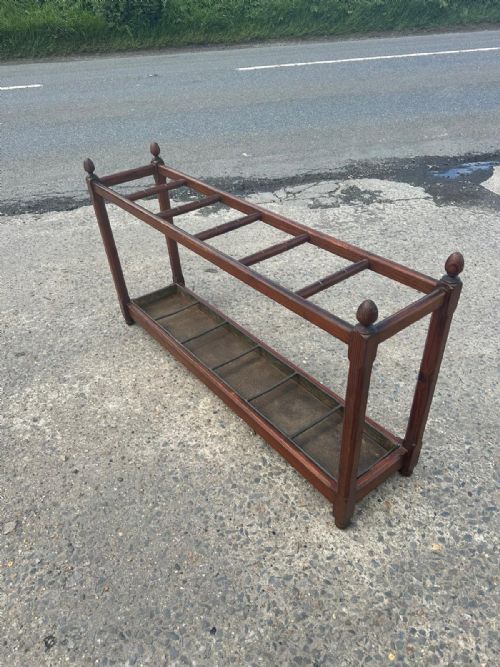
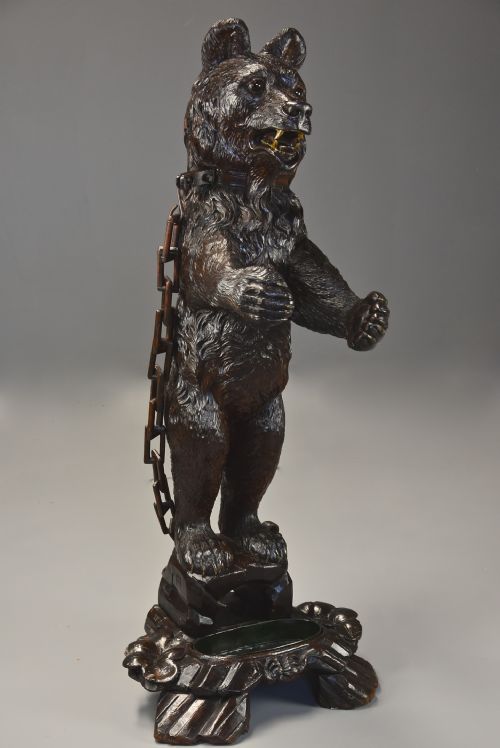
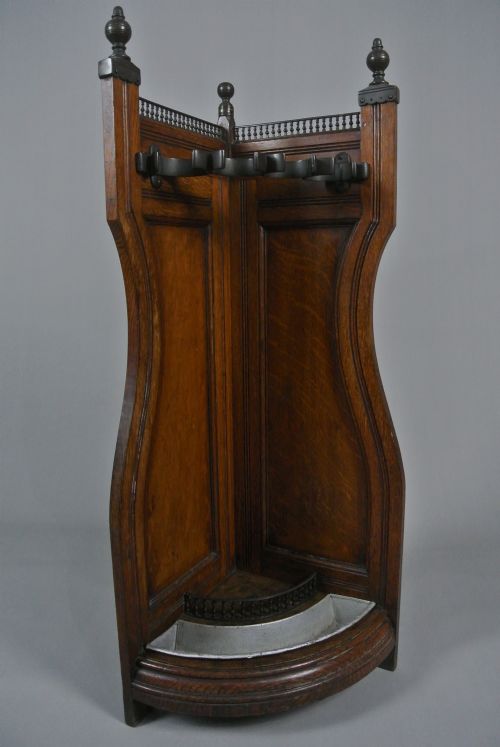
A late victorian stick stand is a functional hallway furnishing designed to hold walking sticks, canes and umbrellas neatly in place. These pieces range from compact brass frames to substantial country house oak furniture incorporating glove boxes and mirror backs.
The versions most commonly met on this page combine practical metal drip trays with sturdy wooden or cast iron frameworks. Many examples also integrate coat and hat hooks, serving multiple hallway functions within a single footprint.
How They Were Made
Maker workshops utilised durable timbers such as mahogany and oak alongside cast iron and brass for structural integrity and moisture resistance. Coopered staves bound with brass bands created robust cylindrical receptacles akin to small wooden barrels.
Foundries cast iron and brass components into intricate openwork patterns, division loops and stable base trays designed to catch rainwater. Skilled carpentry joined these metal elements to timber frames using traditional joints and brass screws.
Late Victorian Stick Stand Retail Price Guide 2026
Typical asking prices for late victorian stick stand among the pieces listed under this phrase on Sellingantiques today, from the lower quarter to the upper quarter. They describe what is for sale here now, not the wider market.
Listings feature woods including mahogany, oak, and pitch pine alongside brass and cast iron structures.
What Varies in Quality
The division of quality rests upon the complexity of the casting work and the selection of timber. Heavy cast iron bases and substantial brass frames indicate superior manufacturing standards compared to lighter plated alternatives.
Artistic execution sets exceptional examples apart, particularly in carved wooden ornamentation, decorative art pottery inserts, or structured maker attribution. Pieces featuring integrated storage compartments or detailed Aesthetic Movement styling reflect higher craftsmanship.
Coalbrookdale·James Shoolbred
The Late Victorian Stick Stand Glossary
- Coopered
- Constructed from wooden staves bound together with metal hoops, much like a traditional barrel. This technique provided excellent resistance to water damage from damp umbrellas.
- Drip tray
- A removable metal basin positioned at the base to catch water running off wet items. These trays protected hallway floors from moisture.
- Aesthetic Movement
- A late nineteenth-century design style emphasising visual beauty and artistic expression over strict historical revival. Pieces from this movement often display refined geometric or stylized natural motifs.
- Faux bamboo
- A decorative technique where wood or metal is carved and painted to resemble natural bamboo stalks. This whimsical finish gained popularity during the late nineteenth century.
Late Victorian Stick Stand: Frequently Asked Questions
How are these stands cleaned?
Wooden surfaces require gentle cleaning with appropriate furniture wax to preserve the finish without damaging the grain.
Metal components benefit from careful dusting and occasional polishing if maintaining a bright metallic shine is desired.
Where should a stand go?
These furnishings belong in entryways and hallways where visitors deposit wet umbrellas and walking canes upon entering.
Placing the piece near the main entrance ensures practical daily utility while grounding the hallway decor.
What materials handle moisture?
Brass, cast iron and copper components resist water exposure effectively without rotting or weakening over time.
Wooden frames rely on protective finishes and metal drip trays to manage moisture from wet umbrella fabric.
How do styles differ?
Industrial metal frames offer open ventilation and heavy bases, whilst larger wooden hall stands provide enclosed storage and coat hooks.
Selecting a style depends on available hallway space and whether umbrella storage alone or multi-purpose coat hanging is required.