


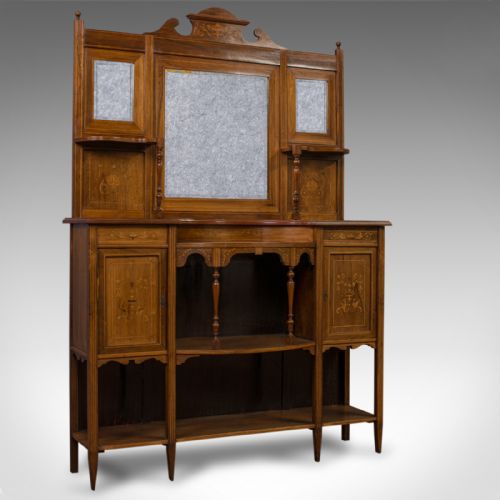
Late Victorian Parlour Sideboard
These late victorian parlour sideboard pieces bring the richness of nineteenth-century timber and mirror glass straight into a room.
Late Victorian Parlour Sideboard
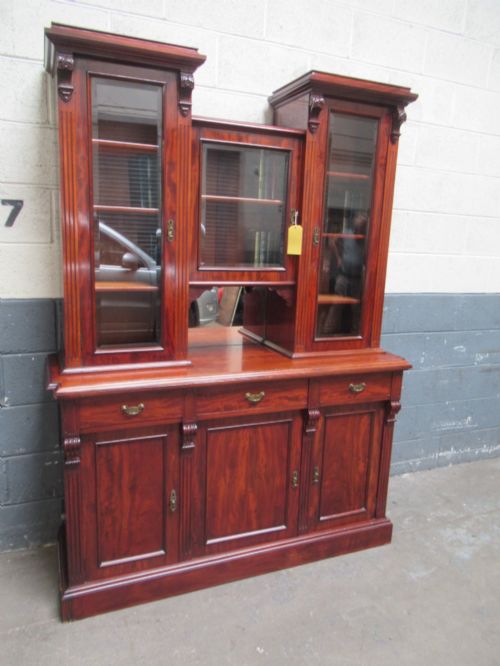
A late victorian parlour sideboard sits firmly within the nineteenth-century domestic interior, combining display and storage in forms such as side cabinets, chiffoniers, and mirror-back cabinets. These pieces often incorporate display cabinets and bookcases alongside traditional sideboard configurations, reflecting the varied social demands of late Victorian reception rooms.
The aesthetic movement strongly influences many examples from this period, bringing ebonised wood, rosewood, and mahogany together with delicate inlay work. Buyers meeting these forms on the page will encounter substantial timber furniture designed to command attention while fulfilling practical storage needs in the parlour.
How they were made
Cabinet makers utilised dense hardwoods including rosewood, mahogany, walnut, and ebonised wood as the primary structural foundations for these items. These timbers provided the strength required for large mirror frames and multi-tiered display sections.
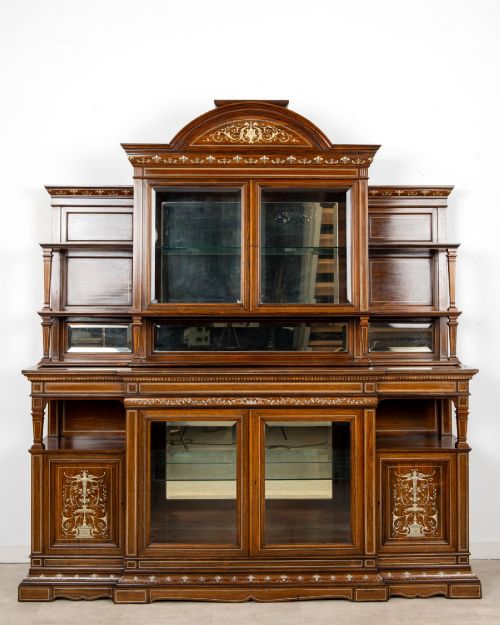
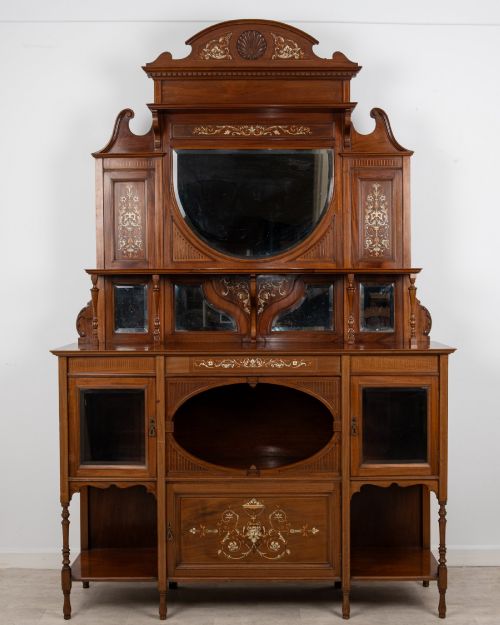
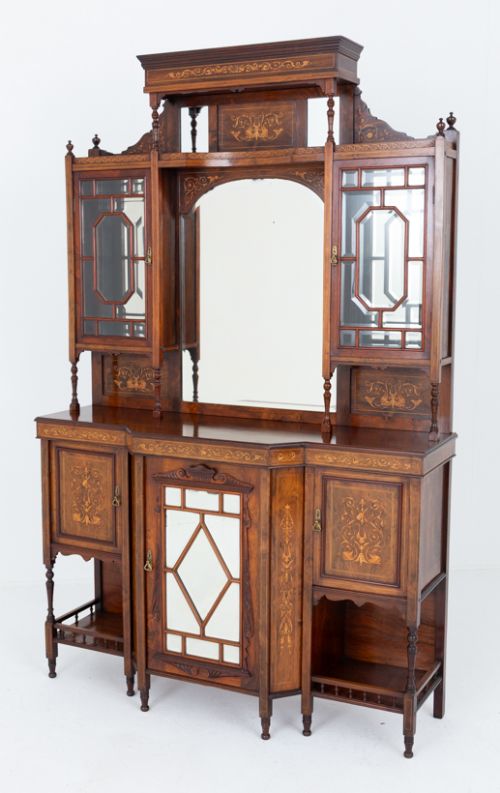
Craftsmen enriched the timber surfaces using boxwood and satinwood inlay, alongside marquetry and brass details, to create contrasting geometric or floral patterns. Integrated bevelled mirror glass and glazed display doors completed the construction, balancing solid timber mass with reflective light.
The inventory combines display cabinets, bookcases, chiffoniers, and mirror-back sideboards with boxwood and satinwood inlay.
What varies in quality
The refinement of the timber and the precision of the inlay separate standard production from superior work. Finer examples display crisp boxwood and satinwood marquetry embedded seamlessly into rosewood or mahogany grounds.
Structural ambition also dictates standard, where pieces featuring integrated mirror backs, drop centres, and glazed display cabinets demand greater joinery skill. The presence of documented workshop attribution or distinct aesthetic movement design elevates the standing of a piece within its period.
Collinson & Lock·Garnett & Sons
The Late Victorian Parlour Sideboard Glossary
- Aesthetic Movement
- A late nineteenth-century design style focusing on art for art's sake, often featuring ebonised wood and simple, striking lines. It broke away from heavy mid-Victorian ornamentation.
- Chiffonier
- A low sideboard or cabinet featuring a combination of cupboards and drawers, frequently topped with a small shelf or mirror. It evolved during the nineteenth century for dining and drawing room use.
- Marquetry
- The art of applying decorative veneer pieces in wood to form intricate patterns and pictures. Craftsmen cut contrasting timbers like boxwood and satinwood into precise shapes.
- Ebonised Wood
- Timber treated to resemble ebony, achieving a deep black finish popular in late Victorian and Aesthetic Movement furniture. It provided a dramatic contrast to gilt and inlay work.
- Mirror Back
- A tall wooden superstructure incorporating a mirror plate, attached to the rear of a sideboard or cabinet. It reflected light and displayed ornaments in Victorian parlours.
Late Victorian Parlour Sideboard: Frequently Asked Questions
What is a late victorian parlour sideboard?
A late victorian parlour sideboard is a nineteenth-century furniture piece designed for reception rooms, combining storage cabinets, display space, and frequently a mirror back.
These items range from compact side cabinets to elaborate drop-centre mirror-back cabinets finished in rosewood, mahogany, or ebonised wood.
How were these sideboards used?
Households used these pieces in the parlour or drawing room to display decorative ceramics, glassware, and treasured ornaments behind glass doors or on open shelves.
The enclosed cupboards and drawers provided practical storage for linens, stationery, and other domestic items out of sight.
How do I identify the Aesthetic Movement style?
Aesthetic Movement pieces from the late Victorian period typically feature ebonised wood surfaces, subtle inlay, and clean geometric lines rather than heavy classical carving.
They reflect a shift towards artistic design, often incorporating brass hardware and delicate marquetry.
What woods were commonly used?
Cabinet makers relied primarily on dense hardwoods such as mahogany, rosewood, and walnut for the main structure of these parlour sideboards.
They added decorative contrast using lighter woods like boxwood and satinwood for intricate inlay and marquetry details.
How do I care for rosewood furniture?
Rosewood benefits from placement away from direct sunlight and dramatic temperature fluctuations to prevent timber movement and fading.
Gentle dusting with a dry cloth keeps the polished surface clean without the need for heavy chemical polishes.