


Late Victorian Ottoman
These late victorian ottoman pieces bring grounded nineteenth-century seating and surfaces into a room through carved timber and textured textile.
Late Victorian Ottoman
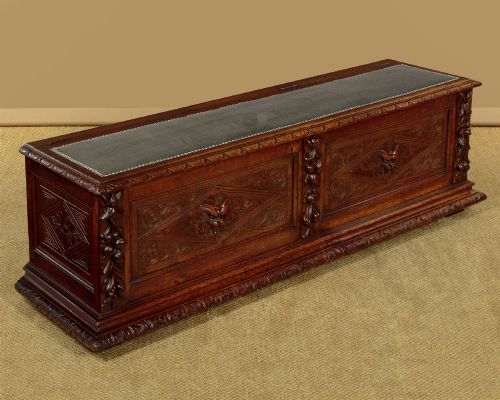
A late victorian ottoman encompasses a diverse group of nineteenth-century seating, footstools, benches, and box seats spanning the 1880s through 1900. These forms range from simple carved stools and window seats to complex day beds, chaise longues, and games tables.
The selection on this page leans heavily toward stools, footstools, and benches in walnut and mahogany, alongside distinct Anglo-Indian and Syrian carved woodwork. Buyers encounter both domestic Victorian revival designs and pieces drawing directly from Ottoman, Moorish, and Anatolian traditions.
How they were made
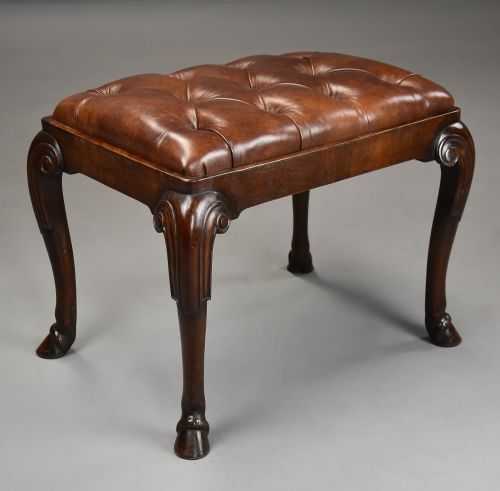
Constructed primarily from hardwoods such as walnut, mahogany, oak, and teak, these pieces rely on traditional joinery paired with hand-carved ornamentation. Artisans shaped cabriole legs, applied intricate surface inlays, and carved detailed panels directly into the timber.
Upholstery and textiles form an integral part of the construction, utilising durable fabrics, damask, leather, woven rattan, and imported prayer rugs. Frame structures incorporate hidden storage compartments in box seats and hinged mechanisms for day beds.
Listings span the nineteenth century, focusing heavily on the 1880s and 1890s with materials ranging from solid walnut to woven rattan and mother of pearl.
What varies in quality
Depth and crispness of hand-carved detail separate standard production pieces from finer examples, particularly in Anglo-Indian and Syrian items where relief work defines the surface. Timber selection and grain density in the walnut and mahogany frames also indicate the original maker's investment of time and material.
The integrity of the underlying frame structure and the quality of re-upholstery dictate daily usability. Pieces retaining original joinery stability alongside appropriate textile choices sit at the upper end of the range.
The Late Victorian Ottoman Glossary
- Cabriole leg
- A furniture leg that curves outward at the knee and tapers inward at the ankle, commonly seen on Queen Anne revival pieces from the late nineteenth century.
- Damask
- A reversible figured fabric woven on a jacquard loom, frequently utilised for fine upholstery on Victorian seats and window benches.
- Anglo-Indian
- A style of decorative woodwork produced in India during the British colonial period, characterised by dense carved foliage and geometric motifs.
- Gout stool
- An adjustable footrest designed to support the foot of someone suffering from gout, often featuring a rocking mechanism.
- Rattan
- A slender palm stem woven to create breathable panels for seating surfaces and stool tops.
Late Victorian Ottoman: Frequently Asked Questions
How do I use a box ottoman in a modern room?
A box ottoman serves double duty as occasional seating and concealed storage for blankets or living room clutter. Place it at the foot of a bed or beneath a window to maximise floor space.
Ensure the internal compartment remains dry and clean, and use the surface for resting books or a decorative tray when not sitting.
Are these pieces strictly British in origin?
While many reflect domestic Victorian cabinet-making traditions and revival styles, the selection includes pieces with distinct international origins. Anglo-Indian and Syrian workshops contributed heavily carved side tables and footstools.
Anatolian rugs and textiles also appear, reflecting nineteenth-century trade and design influences from the broader Ottoman Empire.
How should I care for antique carved walnut?
Dust intricate hand-carved surfaces regularly with a soft brush to prevent dirt accumulation in the recesses. Apply a traditional beeswax sparingly to nourish the timber.
Keep wooden furniture away from direct heat sources and strong sunlight to prevent the walnut from drying out or splitting.
What defines the Gothic revival style here?
Gothic revival pieces draw inspiration from medieval architecture, featuring pointed arches, trefoils, and heavy structural lines. Stools in this style often display robust oak construction and solemn geometric proportions.
They offer a stark contrast to the lighter, curved cabriole forms popular in the same decade.