


Late Victorian Linen Press
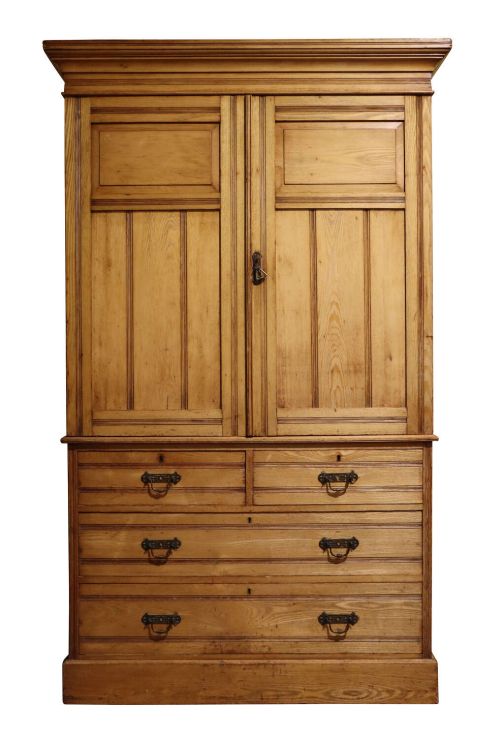
A late victorian linen press offers substantial storage for textiles, combining upper cupboard doors with lower drawers in dense hardwoods and native pines.
Late Victorian Linen Press
A late victorian linen press is a substantial storage piece designed for textiles and garments, combining upper cupboard storage with a bank of drawers below. When you search for a late victorian linen press, you encounter large architectural furniture pieces originating from the nineteenth century, specifically dating around eighteen eighty to eighteen ninety.
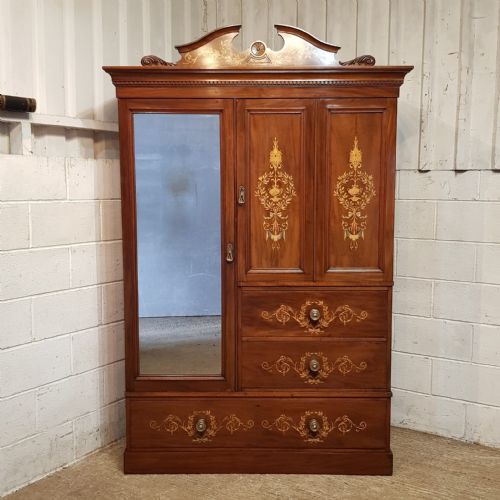
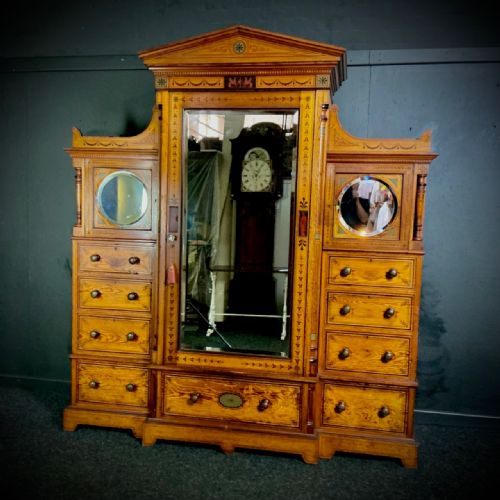
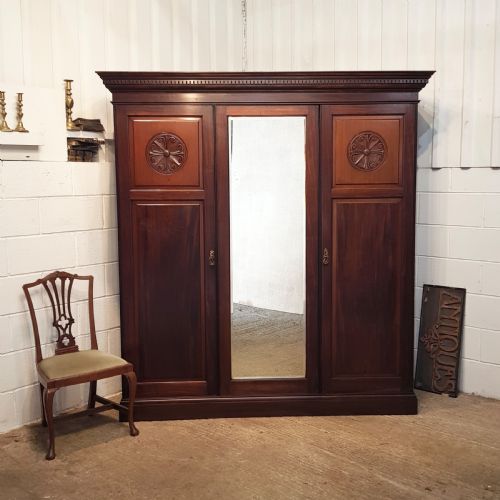
The pieces appearing on this page span several timber types and related forms, including stripped pine dressers, mahogany combination wardrobes, gentleman's dressing chests, and triple wardrobes in burr walnut. True linen presses sit alongside ash press cupboards and pine clothes presses, reflecting the flexible storage needs of late nineteenth century households.
Stylistic influences across these pieces draw on Gothic Revival and Aesthetic Movement traditions alongside standard Victorian forms. Buyers find everything from utilitarian painted pine cupboards to finely figured mahogany and ash constructions bearing the hallmarks of major makers.
Materials and construction methods
Makers of the period utilised a range of dense hardwoods and softwoods, frequently selecting mahogany, walnut, burr walnut, ash, and satin birch for primary surfaces, while employing pine for internal carcases and backing boards. Timber selection dictated the visual weight of the furniture, with burr walnut and figured mahogany reserved for principal facades.
Construction relied on traditional joinery techniques such as dovetailed drawer boxes and panelled doors to accommodate seasonal timber movement. Hardware typically included brass fittings, while larger wardrobing components incorporated mirror glass panels within door frames.
Listings for this phrase demonstrate timber varieties ranging from native pine and ash to exotic mahogany, walnut, and burr walnut.
Evaluating quality and execution
Quality in these large storage pieces rests on timber selection and the crispness of architectural mouldings. Pieces featuring highly figured burr walnut or carefully matched ash veneers stand apart from simpler painted or stripped pine examples through finer grain patterns and more deliberate detailing.
The integrity of internal construction, including smooth-running dovetailed drawers and original brass hardware, separates standard workshop output from higher grade productions associated with known firms. Structural proportions and the retention of original surface finishes further distinguish superior examples.
Maple & Co.·Shapland & Petter·Maples & Co
The Late Victorian Linen Press Glossary
- Press cupboard
- A large storage furniture piece featuring upper doors enclosing shelves or trays, positioned above a base section of drawers. This form evolved specifically for storing folded linens and garments before hanging wardrobes became standard.
- Burr walnut
- A timber veneer sliced from the deformed growths or burrs of a walnut tree, prized for its swirling, highly decorative grain patterns. Makers utilised it on principal doors and drawer fronts to create striking visual contrast.
- Combination wardrobe
- A versatile storage unit that unites hanging space, drawer banks, and sometimes mirrored doors or dressing compartments within a single architectural carcase. These pieces emerged to satisfy varied bedroom storage requirements in the late nineteenth century.
- Gothic Revival
- A nineteenth century design movement that reinterpreted medieval architectural forms, visible in pointed arches, heavy mouldings, and structural chamfering on cabinetwork. This style imparts a solemn, monumental character to storage furniture.
- Aesthetic Movement
- A late nineteenth century design philosophy that emphasised visual beauty over moral narrative, often incorporating simpler lines, ebonised details, and lighter timber choices like satin birch. Furniture in this idiom moved away from heavy Victorian ornamentation.
Late Victorian Linen Press: Frequently Asked Questions
How do I use a linen press today?
A linen press functions effectively in a modern bedroom or landing as a combination of hanging space and deep shelving for folded garments, heavy bedding, or linens. The upper compartment accommodates bulky items while the lower drawers organise smaller articles.
Because these pieces possess a substantial footprint, positioning requires measuring ceiling height and floor space carefully to ensure the wardrobe doors swing clear of surrounding furniture.
What is the difference between a linen press and a wardrobe?
A traditional linen press divides its storage between upper cupboard doors enclosing sliding trays or shelves and lower drawers designed for folded textiles. A standard wardrobe focuses primarily on vertical hanging space for garments on clothes rails.
Many pieces from this period blur these distinctions by combining hanging sections with internal shelving and drawer nests within a single cabinet structure.
How do I identify a late Victorian piece?
Late Victorian furniture typically dates from the eighteen eighties and eighteen nineties, displaying denser proportions, factory-milled timber components, and specific stylistic revivals like Gothic Revival or Aesthetic Movement details. Construction methods show machine-sawn backing boards alongside hand-cut dovetails on drawer interiors.
Documentation such as maker stamps, registration marks, or specific hardware styles can further anchor a piece within this precise manufacturing window.
Can I dismantle these large presses for moving?
Most large late Victorian wardrobes and press cupboards are modular pieces designed to break down into a cornice, a plinth, side sections, and central hanging or drawer carcases. This dismantling process allows the furniture to pass through standard doorways and ascend staircases.
Assembly requires careful alignment of original timber joints, retaining screws, and internal bolts to ensure the structure remains square and plumb.