
Late Victorian Glass
Late victorian glass brings together hand-blown vessels, cut decanters, and coloured table accessories from the final decades of the nineteenth century.
Late Victorian Glass
Late victorian glass encompasses practical tablewares and decorative objects produced during the closing decades of the nineteenth century. These pieces range from everyday serving items like claret jugs and butter dishes to delicate scent bottles and coloured glass bowls.
How They Were Made
Makers shaped these items using traditional free-blowing and mould-blowing techniques, frequently applying wheel-cutting to achieve deep facets and geometric patterns across crystal surfaces. Coloured glass objects relied on precise mineral additives introduced during the melting process to create deep tones like ruby, emerald, and amber.
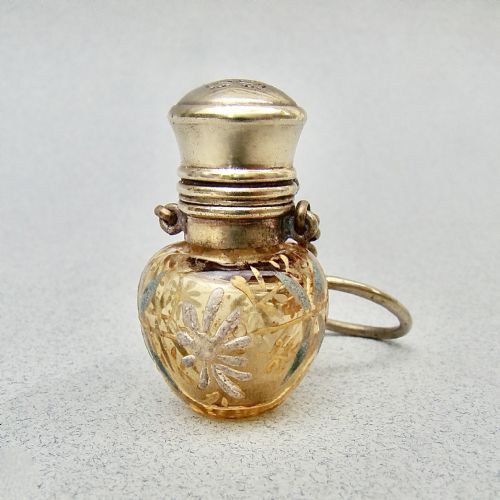
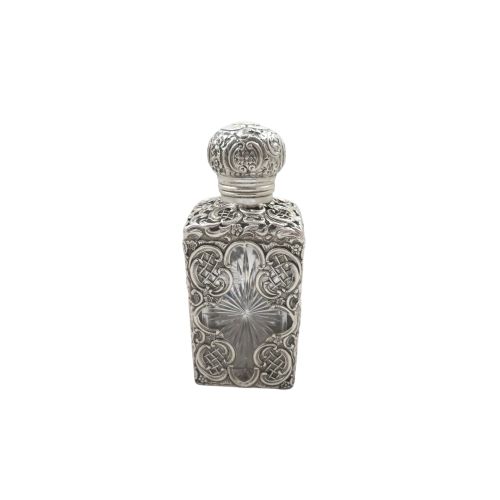
Metal components, including silver-plated stands, hinged lids, and chatelaine mounts, were cast, engraved, and soldered to secure the delicate glass inserts. Workshops combined these disparate media to produce sturdy serving pieces capable of withstanding regular dining use.
Late Victorian households kept pug dogs in terracotta and stuffed birds from New Guinea close to their cranberry glass.
What Varies in Quality
The standard of manufacture depends heavily upon the crispness of the cutting and the weight of the metal mountings paired with the glass. Superior examples display precise wheel-cut facets without surface ripples, alongside heavy silver-plated or sterling mounts bearing clear maker marks.
Design complexity and colour saturation also separate standard domestic wares from exceptional luxury items. Pieces featuring hand-applied enamel decoration, specialised glass types like vaseline or neodymium, and integrated silver frames command greater attention.
Moser·Thomas Webb and Sons·William Comyns·John Grinsell·Elkington·Mappin and Webb·R Richardson
The Late Victorian Glass Glossary
- Claret jug
- A pouring vessel designed for wine, typically combining a cut glass body with a hinged silver-plated lid and handle.
- Vaseline glass
- A yellow-green glass coloured with uranium oxide that exhibits a distinct green fluorescence under ultraviolet light.
- Cranberry glass
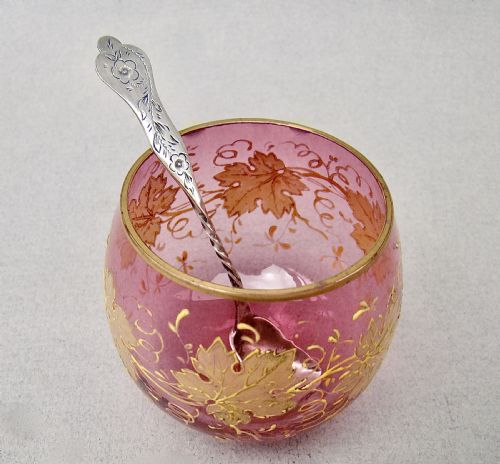
- A rich pinkish-red glass created by adding gold chloride to the molten batch, widely used for Victorian tableware.
- Epergne
- A large tabletop centrepiece featuring multiple branching glass trumpets or baskets mounted on a central stand.
- Vinaigrette
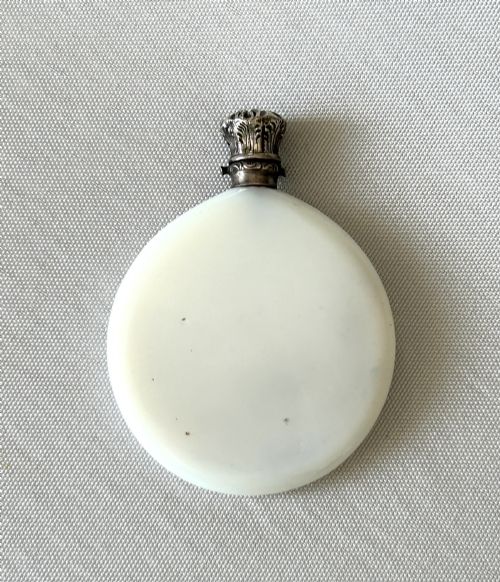
- A small pocket container with a perforated inner grill holding a sponge soaked in aromatic vinegar.
- Overshot glass
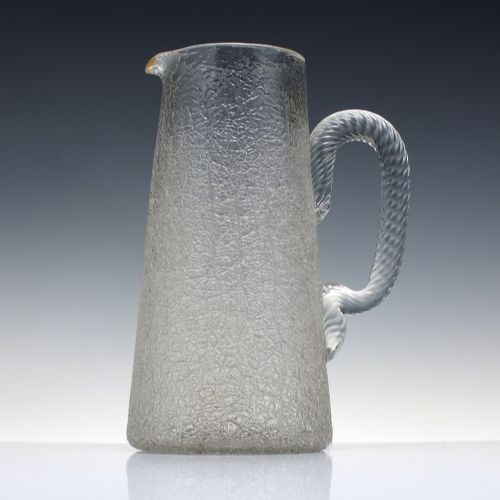
- A technique where molten glass threads are rolled onto a blown vessel body to create a textured, icy surface finish.
Late Victorian Glass: Frequently Asked Questions
How do I clean antique glass?
Wash pieces gently by hand using lukewarm water and a mild detergent. Avoid abrasive sponges or harsh chemicals that might damage delicate silver mounts or enamelled surfaces.
Dry each item immediately with a soft lint-free cloth to prevent water spots from forming on the cut facets or metal hardware.
Were these items used daily?
Many of these objects served functional roles on formal dining tables, holding wine, condiments, biscuits, or butter during Victorian meals.
Others remained in drawing rooms or dressing tables as decorative containers, scent bottles, or desk accessories for personal use.
How can I identify uranium glass?
Uranium glass typically appears in a transparent pale yellow or yellow-green shade often termed vaseline glass. Illuminating the piece with a portable ultraviolet light source causes the glass to glow with a bright neon green colour.
This characteristic fluorescence stems from the small quantity of uranium oxide added to the glass batch during manufacture.
What is a claret jug used for?
Claret jugs held red wine at the dining table, allowing hosts to pour drinks easily during meals. The integrated handle and hinged lid kept the contents secure while pouring.
Silver-plated frames often matched other table accessories such as biscuit barrels, butter dishes, and condiment sets.