

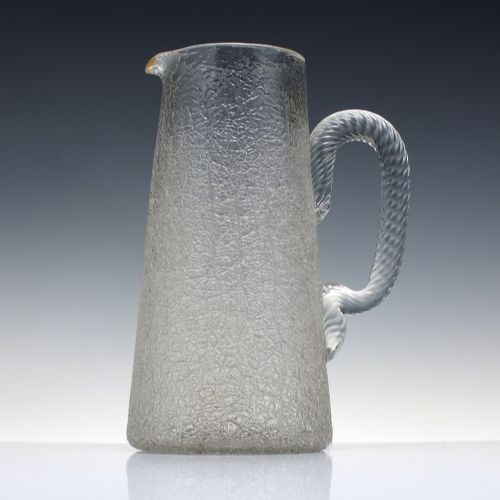


Late Victorian Glass Carafe
These late victorian glass carafe pieces bring tactile weight and nineteenth-century craftsmanship directly to the table.
Late Victorian Glass Carafe
A late victorian glass carafe encompasses functional vessels designed for serving wine, whisky, water, and claret during the late nineteenth century. These pieces bridge utilitarian dining needs and decorative arts, appearing in forms such as decanters, pitchers, and wine jugs.
The examples found here draw on periods spanning the eighteen-eighties to nineteen-hundred, capturing both standard Victorian production and distinct Arts and Crafts sensibilities. Buyers frequently encounter vessels fitted with silver-plate or sterling silver mounts, often complemented by intricate surface decoration.
Mould-blown, optically blown, and free-blown bodies dominate the selection, showcasing the versatility of glassworkers from the period. Whether utilised for daily dining or displayed as cabinet pieces, these vessels reflect the robust manufacturing standards of late nineteenth-century Britain.
Materials and methods
Production relied heavily on clear glass, lead crystal, and coloured glass bodies shaped through blowing and moulding techniques. Artisans enhanced these surfaces using cut-glass patterns, wheel engraving, enamel painting, and gold leaf applications.
Metal components added structural contrast, utilising silver plate, sterling silver, and occasionally mounted collars or handles. Workshops in London, Glasgow, Aberdeen, and Stourbridge contributed specific regional styles, from hobnail cutting to delicate overshot finishes.
Late Victorian Glass Carafe Retail Price Guide 2026
Typical asking prices for late victorian glass carafe among the pieces listed under this phrase on Sellingantiques today, from the lower quarter to the upper quarter. They describe what is for sale here now, not the wider market.
Materials appearing in current inventory span clear glass, lead crystal, silver plate, sterling silver, and gold leaf.
Distinctions in quality
Quality rests on the crispness of the glass cutting, the clarity of the metal, and the precision of any wheel engraving or enamel work. Heavy lead crystal provides a satisfying heft, while thinner optically blown vessels demonstrate remarkable control over glass thickness.
The integration of metal mounts, such as silver-plate or sterling silver collars, dictates the refinement of the finished piece. Well-balanced proportions, secure fittings, and distinct maker attribution elevate certain examples above standard commercial output.
James Powell·Hukin and Heath
The Late Victorian Glass Carafe Glossary
- Claret jug
- A vessel specifically shaped for serving red wine, typically featuring a pouring spout and a hinged metal lid. These often combine cut glass with silver-plated mounts.
- Optically blown
- A glassblowing technique where molten glass is inflated inside a patterned mould to create regular ripples or ribs within the vessel wall. This imparts subtle texture to the body.
- Hobnail cut
- A sharp, faceted geometric pattern cut into the surface of heavy glass, creating rows of pyramid-like points. It catches candlelight effectively and provides a secure grip.
- Overshot glass
- A decorative finish where fine, thread-like trails of glass are applied haphazardly over the surface of a hot vessel, creating a frosted or textured appearance.
Late Victorian Glass Carafe: Frequently Asked Questions
How do I clean a vintage glass decanter?
Fill the vessel with warm water and mild detergent, avoiding harsh abrasives that might scratch the surface. Specialised cleaning beads can help reach stubborn internal residue without damaging historical glass.
Dry the piece thoroughly upside down on a soft mat. Metal mounts should be polished separately to prevent moisture accumulation near the glass joints.
Were these pieces used for daily dining?
Middle and upper-class households utilised these vessels extensively during formal dinners and evening gatherings. They served claret, whisky, water, and champagne at the dining table and sideboard.
Durability varied by thickness, but lead crystal and cut glass were built to withstand regular handling. Today, many owners continue to use them for entertaining.
How can I date a nineteenth-century glass jug?
Silver mounts often bear assay hallmarks that reveal the exact year and city of manufacture. Stylistic markers, such as Arts and Crafts restraint versus heavy Victorian cutting, provide further chronological clues.
Manufacturing techniques like pontil marks on the base help separate nineteenth-century production from later reproductions. Comparing the weight and glass tint confirms the period context.
Can I store wine in these decanters long term?
Historic vessels lack modern airtight seals, meaning wine will oxidise relatively quickly if left unattended. They suit immediate serving during a meal rather than archival storage.
Silver-plated or sterling silver stoppers fit snugly to keep dust out during an evening. Emptying and rinsing the vessel after use preserves both the glass and any remaining liquid.