


Late Victorian Executive Desk
A late victorian executive desk brings substantial working surface and fitted drawers together in mahogany, oak, or walnut for the serious study.
Late Victorian Executive Desk
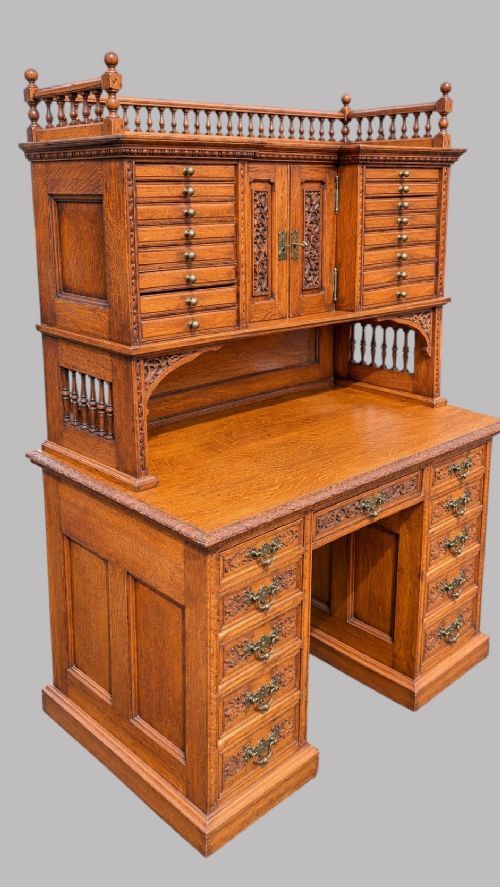
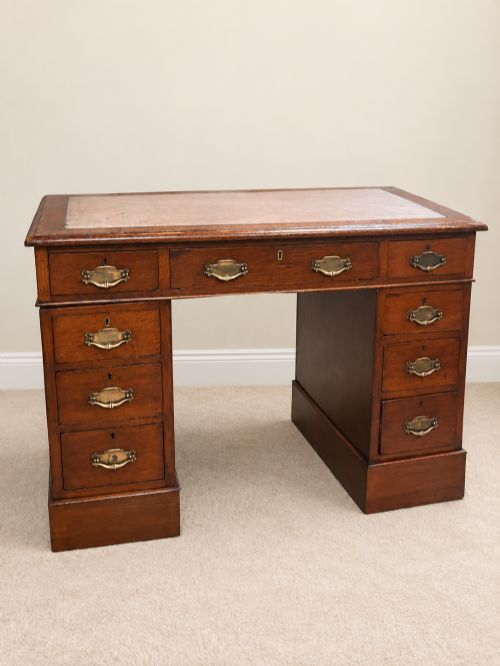
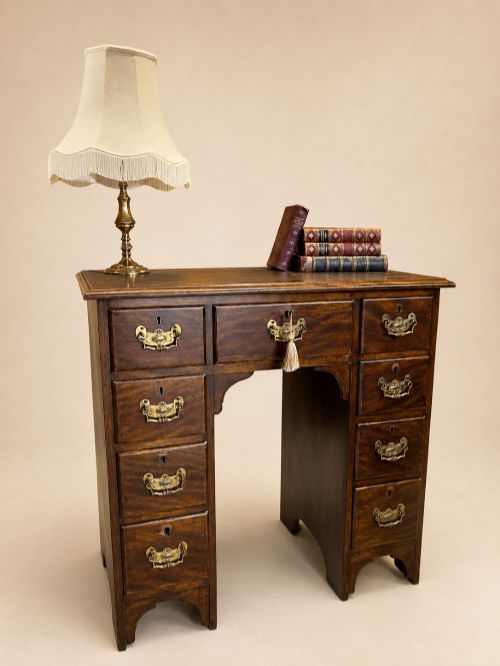
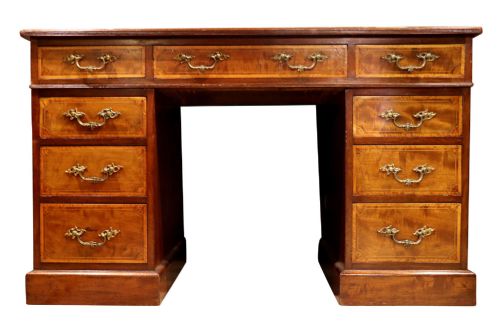
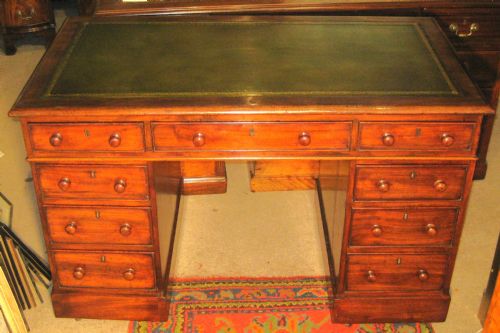
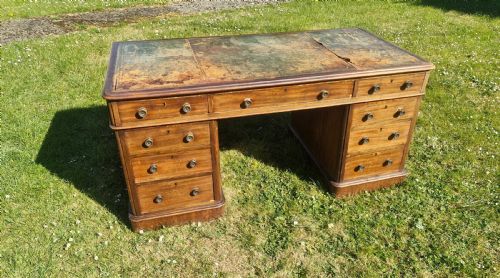
A late victorian executive desk primarily takes the form of a pedestal desk or kneehole desk, combining twin pedestals of drawers with a central writing surface. These pieces emerge from the late nineteenth century, spanning periods from roughly 1880 to 1900, and include partners desks and variants associated with the Aesthetic Movement and Arts and Crafts styles.
The version most commonly met on this page is the mahogany pedestal desk, often fitted with an original leather writing surface and multiple drawers. Alongside these, solid oak and walnut examples appear frequently, ranging from compact writing desks to large partner configurations designed for shared office use.
What varies in quality
The calibre of a late victorian executive desk rests upon the selection of timber, the crispness of any inlaid decoration, and the retention of original components like leather tops and brass handles. Desks built from solid golden mahogany, figured walnut, or quarter-sawn oak display a superior depth of finish compared to standard utility pieces.
Authorship and provenance introduce further distinction, particularly when a desk bears a stamp or label from a documented workshop such as Gillows or Edwards & Roberts. The harmony of proportions and the retention of matching original hardware elevate certain pedestal and kneehole desks above standard commercial production.
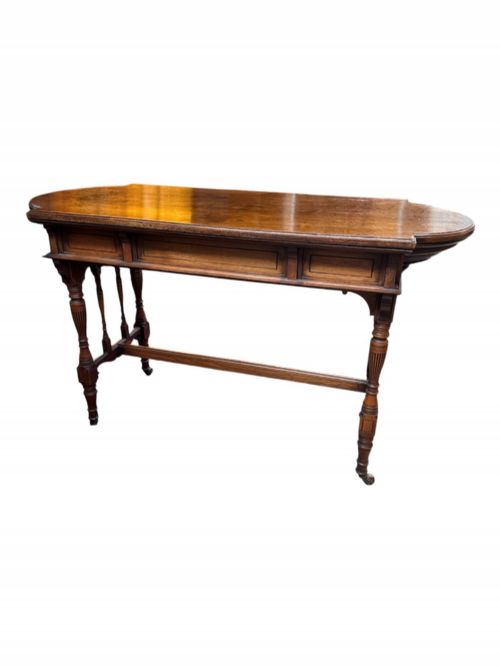
Listings feature pedestal desks, kneehole desks, and writing tables constructed primarily in mahogany, oak, and walnut during the late nineteenth century.
Edwards & Roberts·Merryweather & Son
The Late Victorian Executive Desk Glossary
- Pedestal desk
- A heavy freestanding writing table supported by two columns or pedestals containing multiple small drawers. This format provides substantial storage beneath the main working surface.
- Kneehole desk
- A compact desk featuring a recessed central space for the user's legs, flanked by banks of drawers on both sides. This layout offers a structured writing station.
- Partners desk
- A large executive desk designed to accommodate two people working opposite one another, featuring drawers and cupboards accessible from both sides. These pieces suited shared libraries and administrative offices.
- Dickens desk
- A specialised writing desk featuring a sloped upper tier with small drawers and pigeonholes above twin pedestals. This form provides elevated storage for correspondence and documents.
- Aesthetic Movement
- A late nineteenth-century design style prioritizing visual beauty and craftsmanship over historical revivalism. Pieces from this movement often exhibit clean lines and refined decorative details.
Late Victorian Executive Desk: Frequently Asked Questions
What is a partners desk?
A partners desk is a large executive writing table built with drawers and storage accessible from both sides. This arrangement allowed two people to sit opposite each other in a shared office or library.
Such desks represent some of the most substantial pieces of nineteenth-century office furniture. They require ample floor space to allow access from all directions.
What woods were used for these desks?
Cabinet makers predominantly utilised mahogany, oak, and walnut, sometimes selecting burr walnut or golden mahogany for high-status commissions. Secondary timbers provided internal support for drawer construction.
Surface finishes varied from polished deep mahogany to lighter golden oak tones, depending on the prevailing aesthetic and regional workshop traditions.
Are leather top inserts original?
Many late victorian executive desks retain their original leather writing surfaces, often decorated with blind tooling or gilt borders. The leather provided a durable, smooth surface for writing.
Over decades of use, these inserts acquired a distinctive patina that collectors value for authenticity. Replacement leather tops also appear on pieces restored for modern use.