


Late Victorian Dining Table
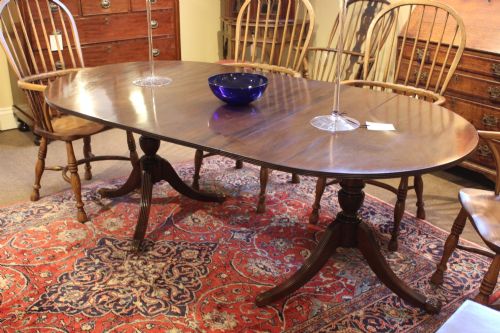
A late victorian dining table brings robust nineteenth-century timber and mechanical ingenuity to the modern dining room.
Late Victorian Dining Table
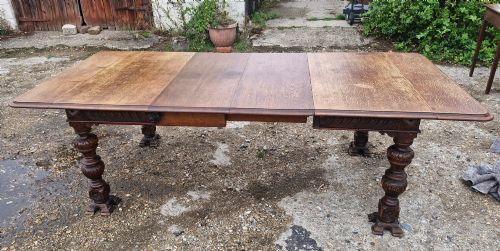
When searching for a late victorian dining table, buyers encounter substantial pieces designed to accommodate family gatherings through clever extending mechanisms. The archive and current selections demonstrate that mahogany and oak dominate these forms, often built with winding systems that accept multiple leaves.
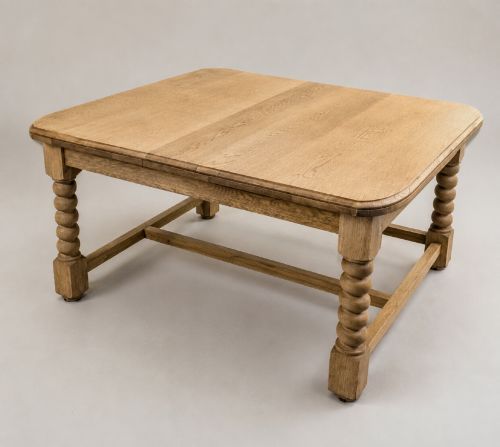
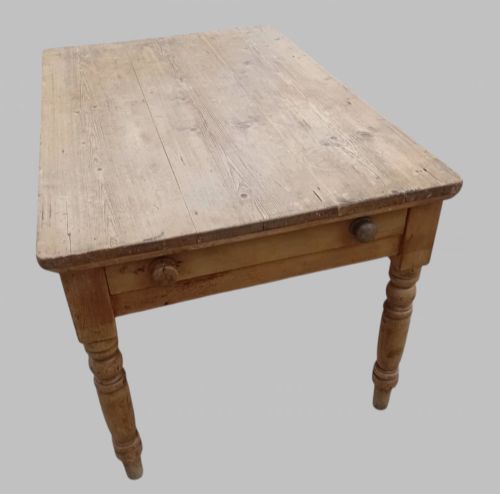
Many examples utilise sturdy pedestals, pillar supports, or four legs to sustain considerable lengths. Alongside formal mahogany wind-out formats, country house and farmhouse variants in pine and oak appear frequently.
Proportions range from intimate four-seater formats to grand tables capable of seating twelve or more guests. The structural grammar reflects nineteenth-century utility combined with aesthetic revivals.
What varies in quality
The sophistication of the timber grain and the integrity of the secondary woods separate standard utility models from exceptional pieces. Superior examples display carefully matched veneer grains on the primary surfaces and robust, smoothly functioning extension mechanisms.
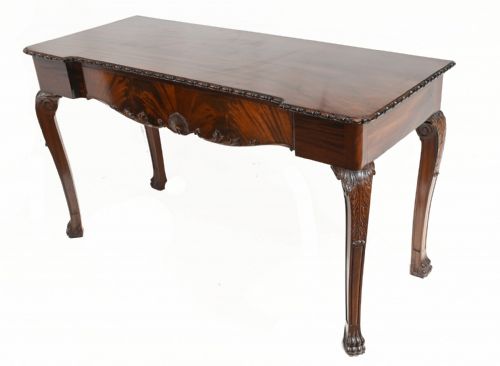
Carving depth and execution on the legs or friezes indicate the tier of workshop production. Well-executed turning, substantial brass castor fittings, and original winding handles elevate a piece above basic utilitarian furniture.
A rotating lazy-susan joins the dining furniture, ensuring nobody ever has to stretch too far for the mustard.
Gillows
The Late Victorian Dining Table Glossary
- Wind-out
- An extending dining table mechanism operated by a removable metal crank handle that turns an internal screw thread to pull the frame apart.
- Leaf
- A removable section of timber inserted into the centre of an extending table to increase its overall length for dining.
- Refectory
- A long, narrow dining table style characterised by substantial legs connected by a low central floor stretcher.
- Pull-out
- A simpler manual extension method where the table ends slide apart on wooden runners without a mechanical screw thread.
- Frieze
- The horizontal band of wood running directly beneath the top edge of the table.
Late Victorian Dining Table: Frequently Asked Questions
How do winding mechanisms work?
A removable metal crank fits into a hidden socket beneath the table edge. Turning the handle rotates an internal screw mechanism that smoothly parts the frame.
This movement allows additional timber leaves to drop centrally into the gap. The process requires steady turning to ensure the wooden runners glide apart evenly without binding.
How many leaves can these tables take?
Most standard extending tables accommodate between one and three extra leaves. Grand country house versions occasionally accept up to five leaves to seat twelve or more people.
Each added leaf increases the structural load on the centre legs or pillars. Well-designed tables include a pull-down middle leg for extra support when fully extended.
Are walnut and mahogany equally durable?
Both timbers offer exceptional strength suited to heavy daily dining use. Mahogany provides a dense, stable surface that resists warping across wide expanses.
Walnut displays striking decorative grain patterns but requires careful moisture management. Both woods develop a rich patina over decades of polish and use.
What is the difference between wind-out and pull-out tables?
Wind-out tables use a mechanical screw system operated by a handle to separate the halves. This gearing allows one person to open a heavy table with minimal physical effort.
Pull-out tables rely entirely on manual sliding force along wooden runners. While simpler in construction, they lack the mechanical precision of screw-geared wind-out formats.