


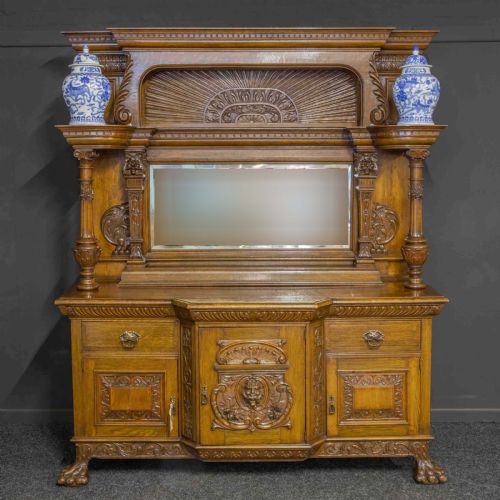


Late Victorian Dining Sideboard
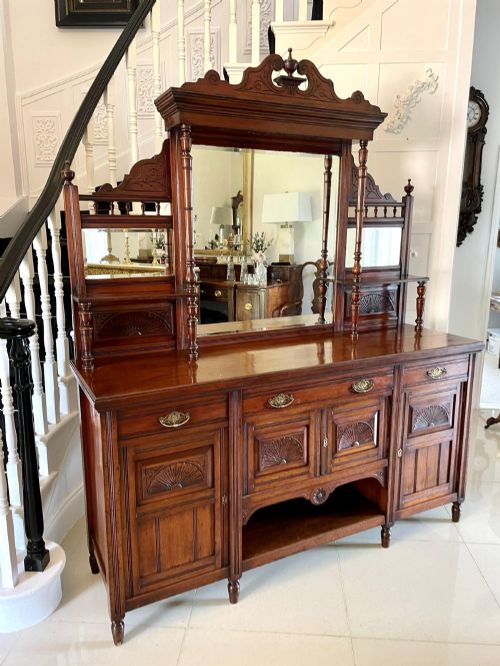
A late victorian dining sideboard brings heavy timber and confident carving into the room, offering generous storage for dining rooms.
Late Victorian Dining Sideboard
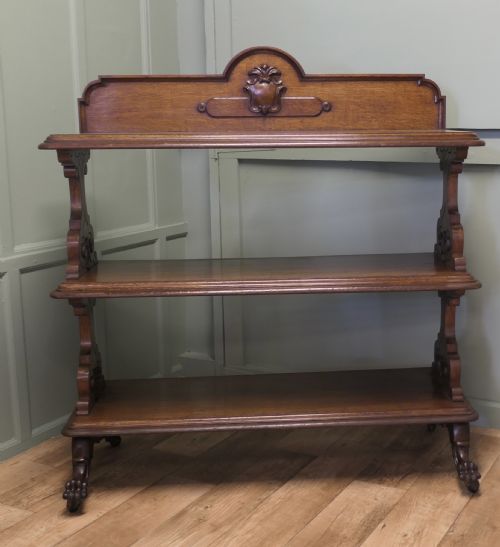
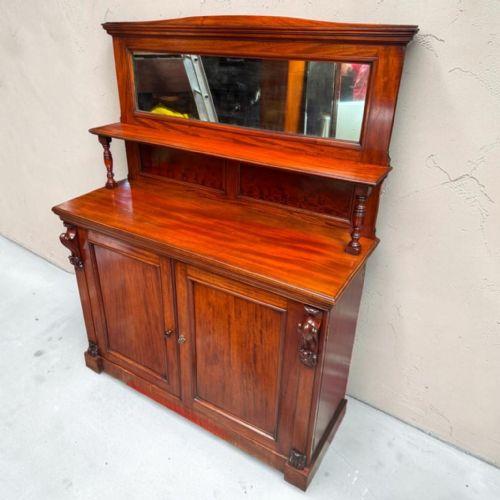
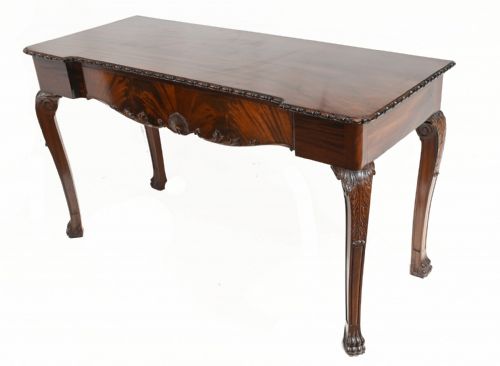
A late victorian dining sideboard is a substantial dining room furnishing designed for serving and storage during the later decades of the nineteenth century. These pieces appear in forms such as mirror back sideboards, buffets, serving tables, and dressers.
The materials recorded in the evidence show substantial use of oak, walnut, and mahogany, alongside rosewood and pitch pine. Sideboards from this era frequently display the influence of Arts and Crafts, Aesthetic Movement, and Georgian Revival styles.
How they were made
Makers utilised solid timbers like oak, walnut, and mahogany, often enhanced by carved decoration and boxwood inlay. Metal fittings such as brass hardware secure doors and drawers.
Listings show sideboards spanning the Victorian period, utilising oak, walnut, mahogany, rosewood, and pitch pine across multiple revival styles.
What varies in quality
Quality rests upon the depth and execution of the carving, the selection of figured timber such as walnut or mahogany, and the integrity of the construction. Pieces displaying deliberate Arts and Crafts or Aesthetic Movement design demonstrate distinct artistic ambition.
Simpler sideboards rely on straightforward utility, whereas elaborate mirror back designs and substantial oak buffets show greater joinery skill and material selection.
Gillows
The Late Victorian Dining Sideboard Glossary
- Mirror back sideboard
- A large storage cabinet featuring an integrated wooden frame holding a mirror above the main surface. This form gained popularity during the Victorian period.
- Buffet
- A low side table or cabinet used for serving food and displaying dining items. These pieces often feature cupboards and drawers.
- Arts and Crafts
- A design movement valuing handcraftsmanship and simple structural honesty over industrial ornament. This style appears frequently on late nineteenth-century oak furniture.
- Aesthetic Movement
- A late nineteenth-century style prioritising visual beauty and artistic design. Pieces in this manner utilise refined woods and subtle inlay.
- Pitch pine
- A resinous softwood utilised for utility furniture and internal framing during the period. It provides sturdy construction for serving tables.
Late Victorian Dining Sideboard: Frequently Asked Questions
What is a late victorian dining sideboard?
A late victorian dining sideboard is a large storage and serving piece built during the late nineteenth century, typically found in dining rooms for holding china and silverware.
These items appear in woods like oak, walnut, and mahogany, often featuring carved decoration and mirror backs.
Where were these sideboards used?
These sideboards stood in the dining rooms of nineteenth-century homes, serving as surfaces for laying out food during meals.
Cupboards and drawers provided storage for linens, cutlery, and heavy serving dishes.
What woods were used for sideboards?
Cabinetmakers utilised dense hardwoods such as oak, walnut, mahogany, and rosewood for visible exterior surfaces.
Pitch pine also appears in tables and structural elements from the same period.