



Late Victorian Decorative Glass
Late victorian decorative glass brings colour and craftsmanship to interiors through mirrors, vessels and domestic objects dating from the late nineteenth century.
Late Victorian Decorative Glass
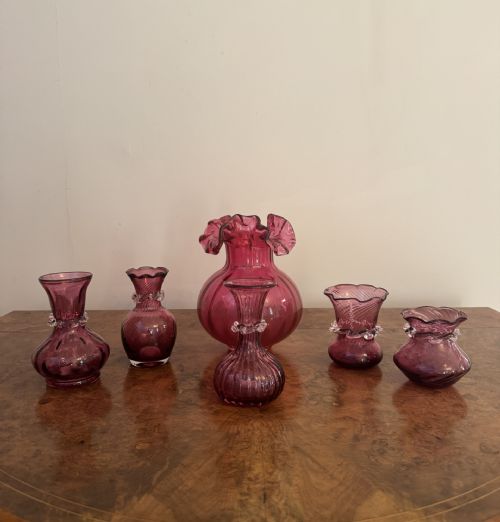
When you search for late victorian decorative glass, you encounter items produced during the final decades of the nineteenth century and into the early twentieth century. These pieces span household furnishings, ornamental objects and display items that utilise coloured and clear glass.
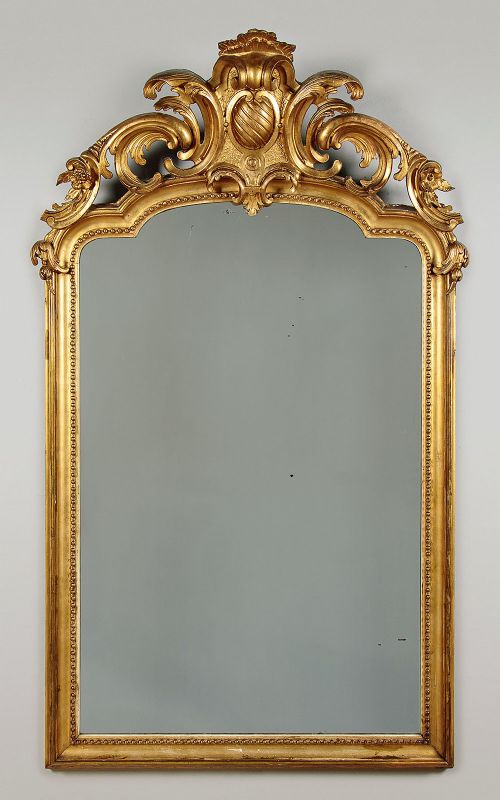
The selection on this page centres upon mirrors with glass frames, display domes, glass vessels and decorative accessories. You meet items originating from English workshops as well as continental centres such as Venice and Bohemia.
Domestic objects in this category range from hand bells and door handles to snuff bottles and table lamps. Each item combines utilitarian purpose with decorative glass work characteristic of the period.
Materials and techniques
Glass production in this era employed techniques such as cutting, etching, engraving and acid-cutting to shape coloured and clear metal. Workshops utilised cobalt blue, ruby red, black glass with aventurine inclusions and layered cameo glass.
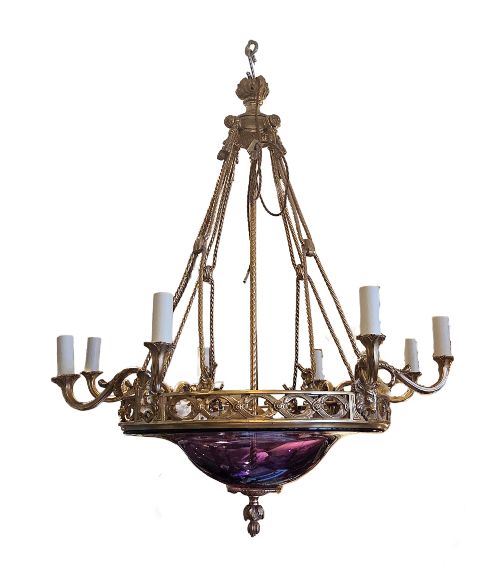
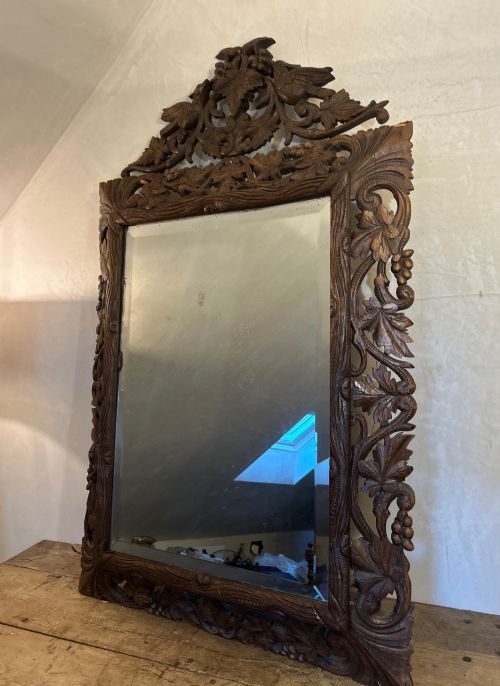
Makers integrated glass with supportive mounts of brass, ormolu, gilt bronze and carved wood. Certain items combined glass bodies with silver-plated frames, cast handles or fitted wooden cabinetry.
Late Victorian Decorative Glass Retail Price Guide 2026
Typical asking prices for late victorian decorative glass among the pieces listed under this phrase on Sellingantiques today, from the lower quarter to the upper quarter. They describe what is for sale here now, not the wider market.
Listings feature items spanning the 1880 period, 1890 period, 1900 period, 19th Century, Victorian and Edwardian eras.
Distinctions in quality
The standard of late victorian decorative glass depends on the precision of the glass cutting and the clarity of the etching. Pieces featuring multi-layered cameo work or detailed hand-painting demonstrate advanced technical skill.
Quality also rests in the execution of accompanying mounts and frames, where cast brass, ormolu and carved timber display fine definition and secure construction.
Stevens & Williams·Edwards & Roberts·Thos. Webb & Sons·Baccara
The Late Victorian Decorative Glass Glossary
- Cameo glass
- A vessel formed of two or more distinct layers of coloured glass fused together, where the outer layer is carved away to leave a raised design. This technique requires considerable patience and skill from the glassblower and carver.
- Cloche
- A bell-shaped glass cover used to protect delicate items or display taxidermy and ornaments. These domes rest upon wooden or metal bases.
- Aventurine
- Glass containing metallic inclusions such as copper crystals that create a shimmering effect. It appears in Venetian glass objects from this era.
- Margin-edged mirror
- A mirror plate surrounded by smaller sections of bevelled or etched glass border panels. These frames are held together with metal clips or a backing structure.
Late Victorian Decorative Glass: Frequently Asked Questions
What defines late victorian glass?
Late victorian glass encompasses decorative objects, vessels and mirrors produced between roughly 1880 and 1900. It includes coloured glass, cameo techniques and etched mirrors.
Items from this timeframe frequently display influences from the Aesthetic Movement, Venetian traditions and continental revival styles.
How were glass display domes used?
Display domes and cloches protected delicate objects such as taxidermy, clocks and wax flowers from dust and damage in Victorian homes. They were placed on wooden bases for tabletop display.
These glass covers allowed owners to showcase fragile collections while keeping them secure in domestic interiors.
What is cameo glass?
Cameo glass is formed by fusing layers of different coloured glass together and carving the outer layer away to reveal the contrasting background. Makers applied this to vases and decorative vessels.
The technique demands precise hand-carving to achieve detailed relief patterns.
How do I identify a Venetian glass mirror?
Venetian glass mirrors from this period often feature cut and etched glass frames with coloured borders, such as ruby red. They utilise individual glass panels assembled around a central plate.
These mirrors reflect the decorative techniques developed on the island of Murano and exported across Europe.