



Pink Art Glass Vase
These pink art glass vases bring fluid organic forms and soft blown colour to a room, catching the light in a way few other decorative objects manage.
Pink Art Glass Vase
When someone searches for a pink art glass vase, they encounter a range of blown and moulded vessels stretching from Victorian cranberry glass and Burmese ware through to Art Nouveau iridescent shapes and Art Deco designs. These pieces span the nineteenth and twentieth centuries, capturing shifts in glassmaking technology and aesthetic taste across Britain, Bohemia, and France.
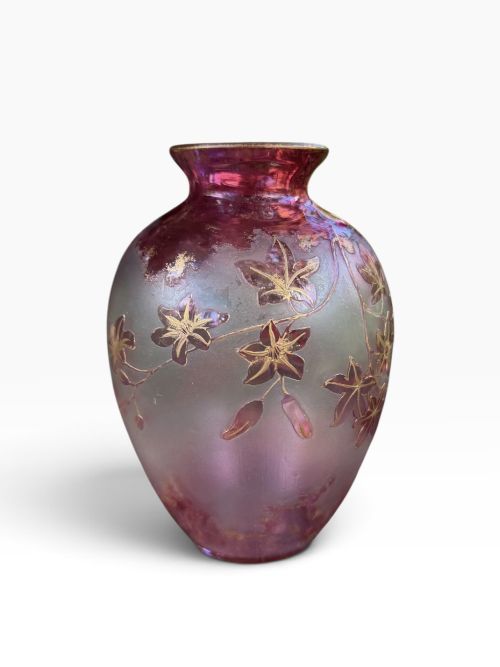
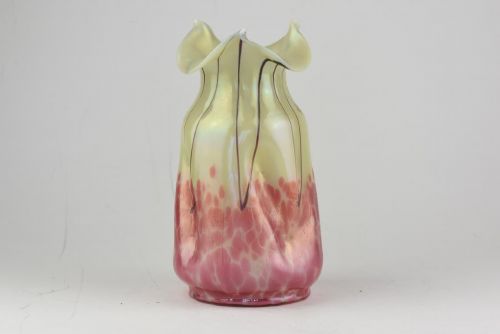
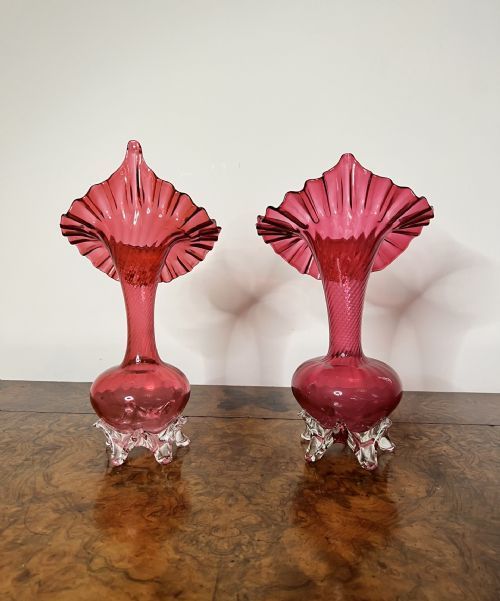
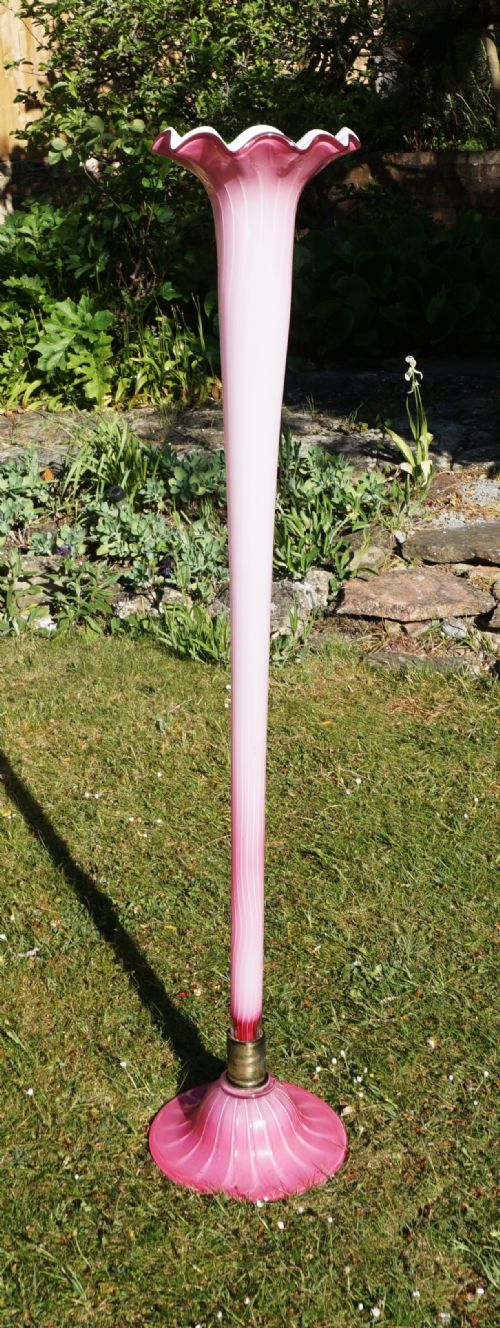
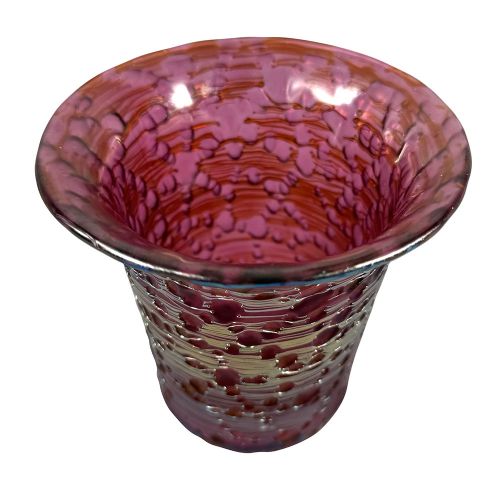
The version most commonly met on this page is the Art Nouveau piece, often bearing cameo carving or iridescent pulled surfaces in delicate shades of pink. Victorian jack-in-the-pulpit forms and cased glass lily vases also appear regularly, alongside later mid-century and Deco productions.
How they were made
Makers achieved these pink tones by mixing metallic oxides into the molten batch or by casing layers of contrasting glass together on the blowpipe. The cased glass lily vases demonstrate this method, layering white glass within a pink exterior to build depth of colour.
Surface decoration involved diverse techniques such as acid-etching cameo layers, applying enamel paints, or pulling trails of glass across the hot body while still on the punty. Acid-etched cameo glass required meticulous masking and chemical baths to reveal multi-layered floral or landscape motifs in relief.
Some Victorian glassmakers shaped their tulip and lily vases so aggressively that visitors regularly mistook them for actual conservatory cuttings.
What varies in quality
The distinction between ordinary and exceptional work rests on the dexterity of the hot-glass manipulation and the crispness of any secondary carving. Master glassmakers controlled wall thickness with precision, ensuring the piece feels balanced in the hand rather than heavy or clumsy.
Artistry in the surface finish also divides the range. Superior examples display subtle shading in the glass body and finely detailed enamel or cameo work that integrates naturally with the underlying form.
Thomas Webb & Sons·Emile Galle·Libochovice·Pallme Konig·Walther & Sohne
The Pink Art Glass Vase Glossary
- Cased glass
- Glass made in two or more distinct layers of different colours, often blown together so the inner layer shows through an outer casing. This technique allowed makers to achieve rich contrasts when carving through the exterior.
- Cameo glass
- Vessels carved from multi-layered glass blanks to create raised designs standing out against a contrasting background. Acid-etching frequently assisted the carving process.
- Iridescent glass
- Glass treated with metallic vapours while hot to produce a shimmering, rainbow-like sheen on the surface. This effect was heavily favoured by Art Nouveau makers seeking naturalistic lustre.
- Cranberry glass
- Transparent red-pink glass coloured with gold chloride during melting. It became a staple of Victorian table and decorative wares.
- Burmese ware
- Heat-sensitive opaque glass shading from pale yellow to a soft pink rim. Thomas Webb & Sons patented this shaded formula in the late nineteenth century.
Pink Art Glass Vase: Frequently Asked Questions
Where were these glass vases made?
The pieces originate from major European glassmaking centres active in the nineteenth and twentieth centuries. Workshops in Britain, Bohemia, and France produced the majority of these designs.
Specific regional houses developed distinct colour formulas and blowing techniques that define their regional output.
How can I tell Victorian glass from Art Nouveau?
Victorian pieces tend to feature symmetrical forms, rich cranberry tones, and applied or enamelled ornamentation. They often lean towards formal decorative presentation.
Art Nouveau examples embrace asymmetrical, plant-inspired lines, iridescent finishes, and integrated cameo landscapes that reflect natural growth.
How should I display a pink art glass vase?
Place the vessel near a natural light source to let daylight pass through the coloured and cased layers. Direct sunlight works particularly well for highlighting iridescent sheens.
Keep the vase away from high-traffic edges where accidental knocks might occur, as antique glass remains vulnerable to sharp impacts.