
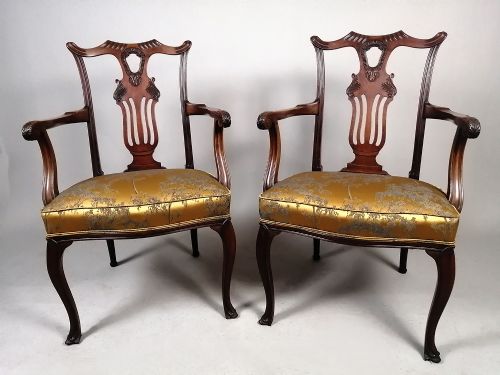
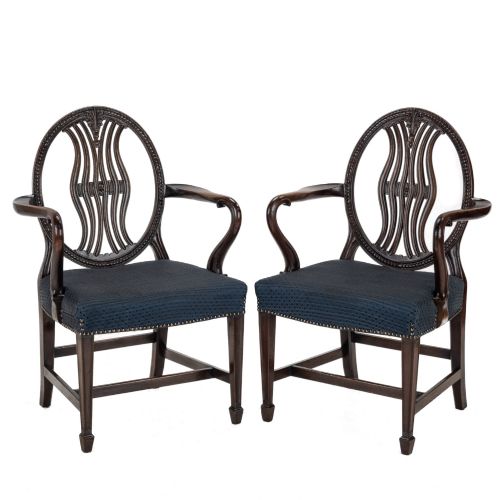


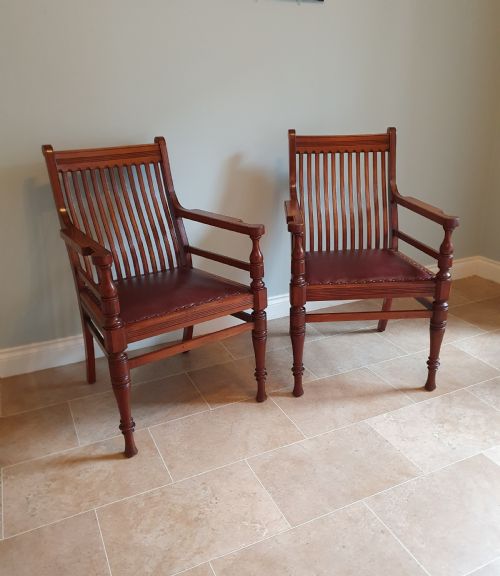


Late Victorian Carver Chair
A late victorian carver chair offers substantial seating with arms, combining period craftsmanship with practical comfort for daily use.
Late Victorian Carver Chair
A late victorian carver chair is an armchair designed to stand at the head of a dining table or serve as an occasional seat in a study or morning room. These pieces date primarily from the late nineteenth century, spanning the Victorian and Edwardian eras.
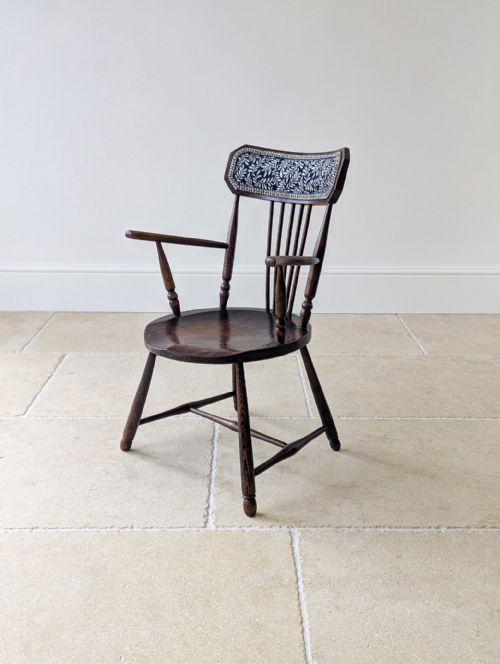
Vernacular examples utilise native timbers like elm, beech, and oak, often taking the form of Windsor or Arts and Crafts armchairs. Buyers will encounter both single library chairs and matched sets including dining chairs and carvers.
How they were made
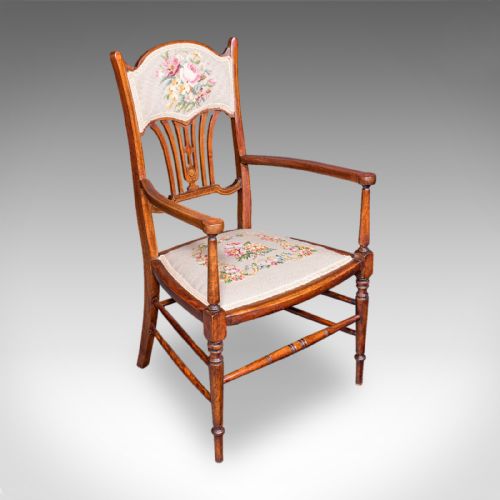
Makers constructed formal carvers using dense hardwoods like mahogany and walnut, applying hand-carved details to splats, arms, and rails. Workshops also utilised inlay, brass fittings, and painted decoration to embellish surface grain.
Country and vernacular pieces relied on traditional turning and steam-bending techniques using combinations of elm seats, beech spindles, and ash or oak frameworks. Seats were frequently upholstered in fabric, leather, or tapestry, or left as solid timber in Windsor designs.
Design styles span Chippendale Revival, Hepplewhite Revival, Arts and Crafts, Art Nouveau, and Victorian Country.
What varies in quality
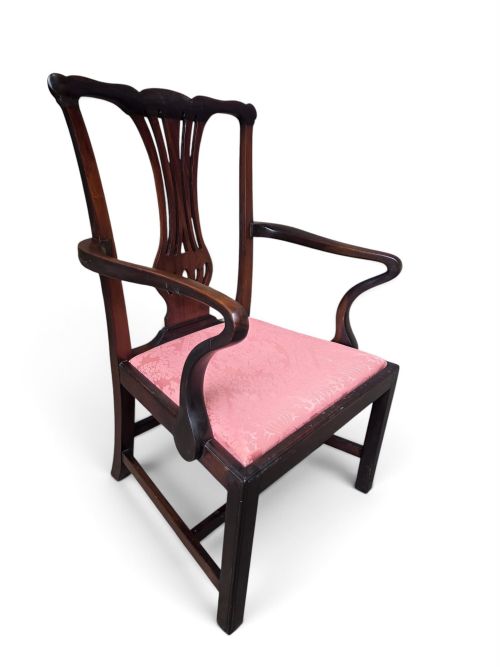
Quality rests upon the crispness of the carving, the selection of timber, and the integrity of the frame construction. Superior formal chairs display deeply sculpted splats, well-proportioned open arms, and tight joinery.
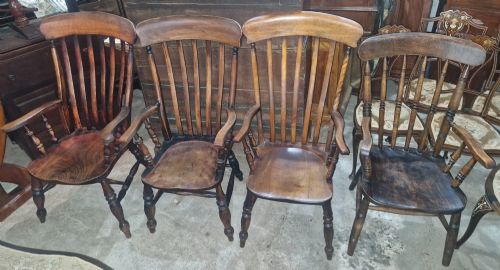
In country Windsors, excellence shows in the balance of the spindle turning, the grain figure of the elm seat, and the comfort of the bow arm. Original upholstery surfaces and untouched timber patination elevate individual pieces above later restored examples.
James Shoolbread·Lamb of Manchester
The Late Victorian Carver Chair Glossary
- Carver chair
- An armchair, traditionally placed at the head of a dining table to match a set of single dining chairs.
- Splat
- The vertical wooden strip down the centre of an open chair back, often carved or pierced in revival styles.
- Windsor chair
- A wooden armchair featuring a solid saddle-sculpted seat into which the legs and back spindles are wedged directly.
- Elm
- A tough, interlocking timber commonly utilised for chair seats because it resists splitting under stress.
- Chippendale style
- A revival design drawing on eighteenth-century motifs including interlaced ribbon backs and cabriole legs.
Late Victorian Carver Chair: Frequently Asked Questions
What is a carver chair?
A carver chair is an armchair designed with scrolling or open arms to accommodate the wider garments of diners at the head of a table.
In modern rooms, these seats function equally well as desk chairs or occasional seating in a hallway.
How do I spot a Chippendale revival chair?
Chippendale revival pieces emulate mid-eighteenth-century forms through elaborate pierced splats, carved top rails, and ball-and-claw feet.
Makers produced these faithful copies during the late nineteenth century to satisfy demand for historic dining furniture.
Are Windsor chairs comfortable?
Windsor armchairs offer sturdy support through steam-bent back bows and ergonomically sculpted solid timber seats.
Their comfortable proportions made them staples in farmhouse kitchens and libraries alike.
How do I care for antique wood?
Maintain timber frames by dusting regularly with a soft cloth and applying a microcrystalline wax sparingly to nourish the finish.
Keep chairs away from direct heat sources and strong sunlight to prevent the timber and leather from drying out.