

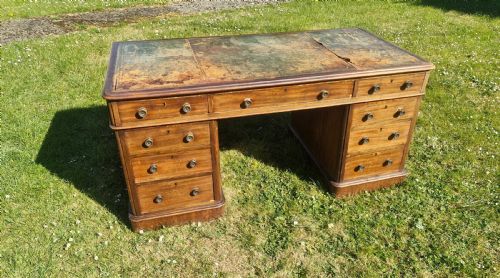


Late Victorian Carved Pedestal
A late victorian carved pedestal brings solid nineteenth-century timber and deep relief work directly into a room.
Late Victorian Carved Pedestal
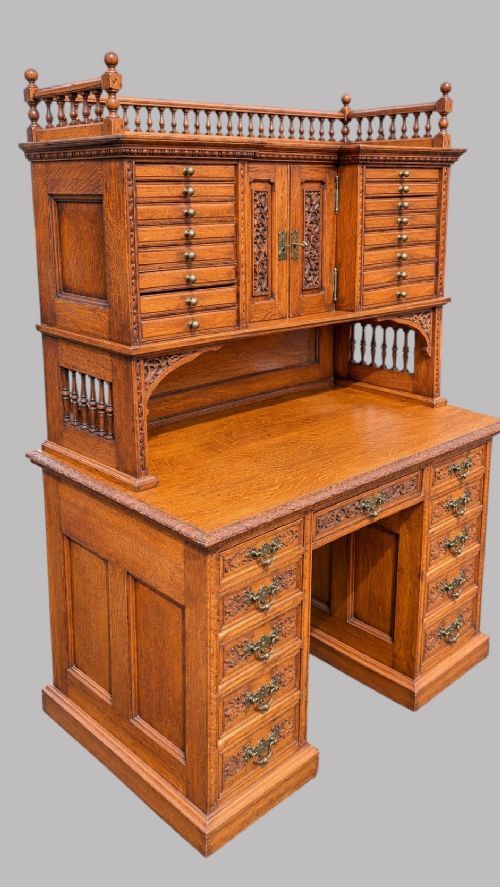
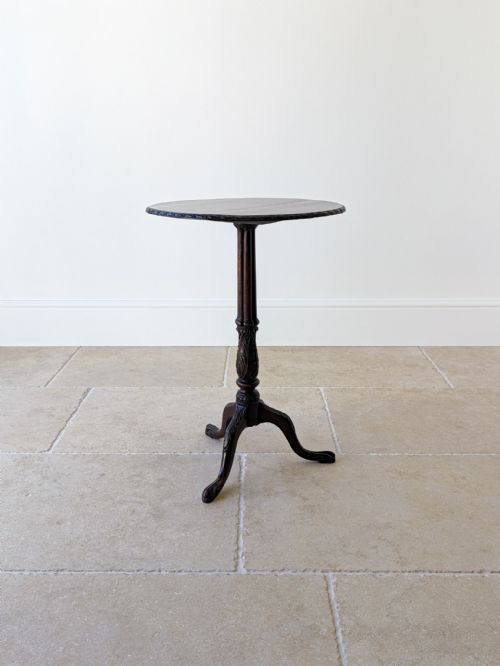
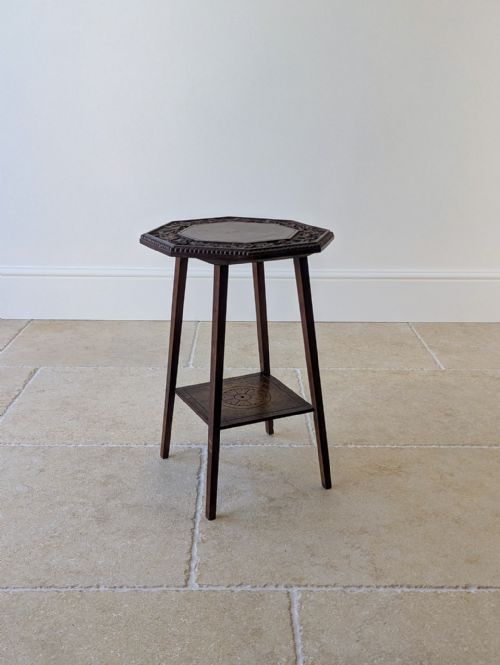
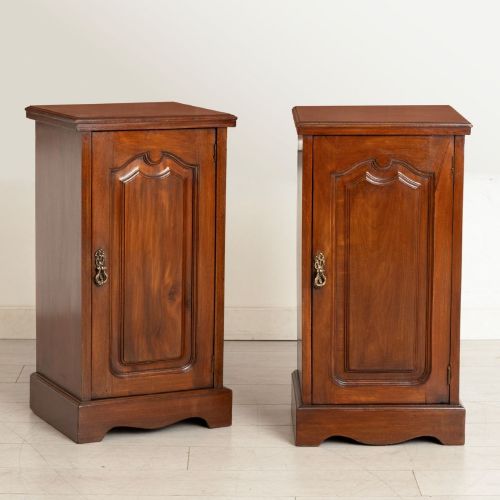
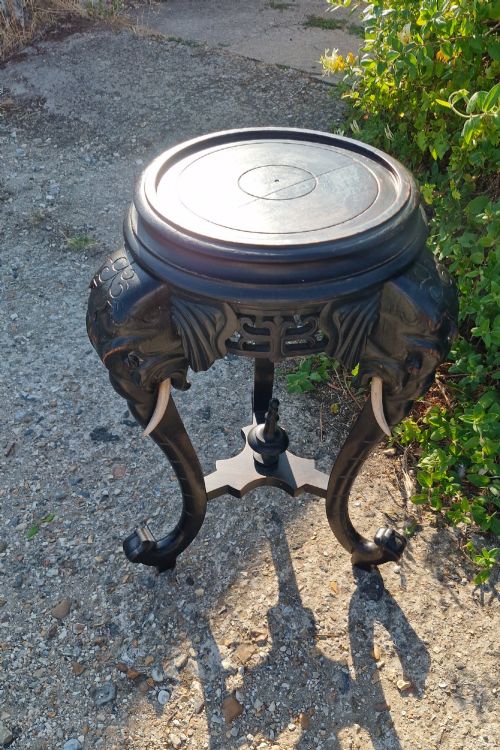
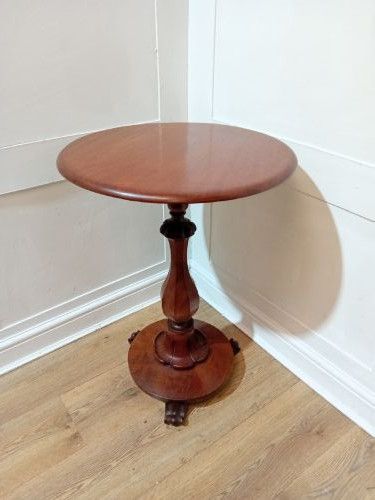
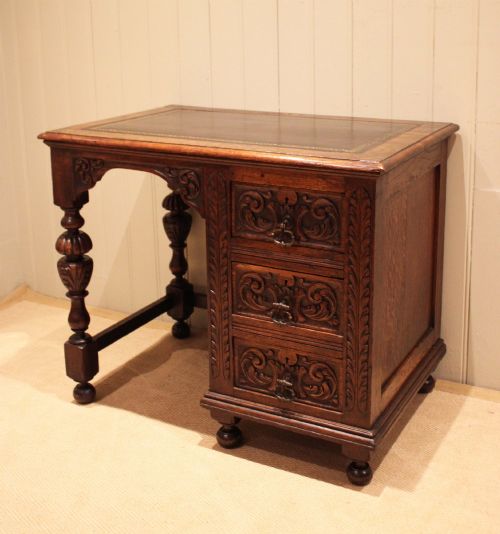
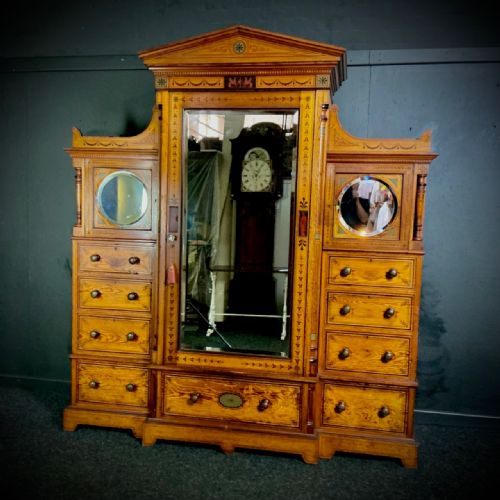
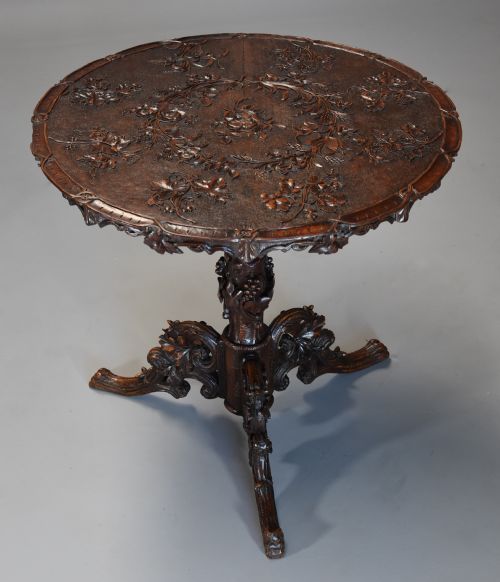
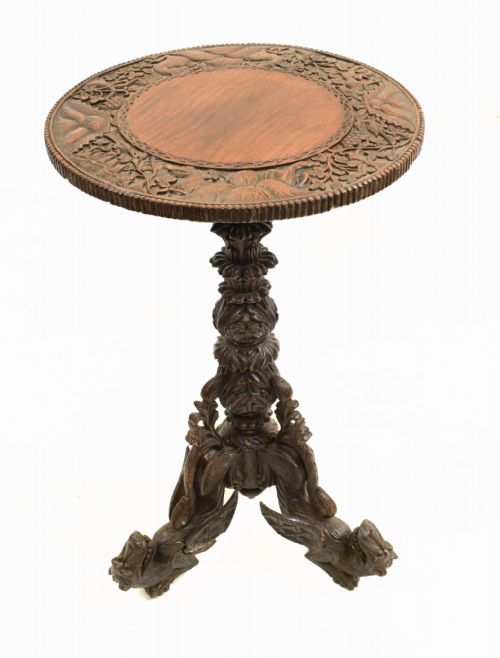
A late victorian carved pedestal usually takes the form of a substantial writing desk, a plant stand, or a support for sculpture, dating from the final decades of the nineteenth century. These pieces combine utilitarian function with ornate woodwork, drawing on stylistic influences ranging from Gothic Revival to Black Forest and Anglo-Burmese traditions. The surfaces frequently display robust carving, showing motifs like the Green Man, animal figures, or floral relief work on dense timbers.
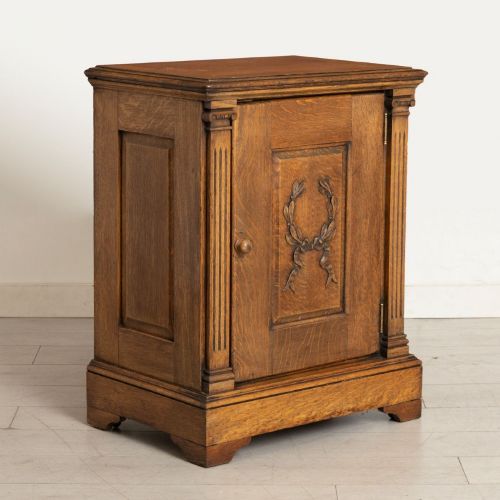
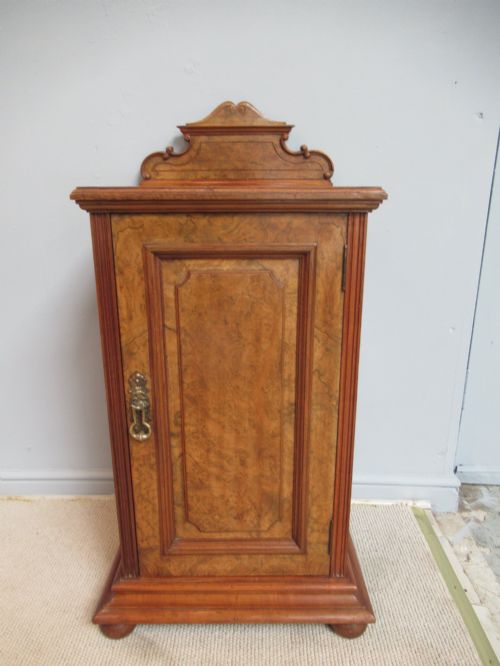
Buyers will encounter pedestal desks with banks of drawers flanking a central kneehole, alongside tall stands meant for display. The construction relies on heavy woods shaped during the 1880s and 1890s, often featuring panelled sides and leather writing inserts. These furnishings anchor a study or hallway, serving as both functional workspaces and platforms for decorative objects.
Materials and Construction Techniques
Cabinet makers built these pedestals and desks using dense hardwoods such as oak, mahogany, walnut, and exotic Asian timbers like padouk. Timbers were selected for grain stability and weight, ensuring the pedestals could support heavy writing surfaces or marble inserts without warping. Joinery typically involved robust dovetailing for drawers and mortise and tenon joints for the structural frames.
Carving was executed by hand directly into the solid wood, utilising gouges and chisels to achieve deep undercut relief work. Surfaces were then finished with wax or polish to protect the timber while highlighting the natural grain and the intricate details of the sculptural elements.
The listings show oak, mahogany, walnut, and padouk used alongside marble inserts and leather writing surfaces.
Assessing Quality and Craftsmanship
The standard of a late victorian carved pedestal rests upon the depth and crispness of the hand carving rather than surface decoration alone. Superior pieces exhibit three-dimensional relief where figures and foliage detach cleanly from the background timber, showing deliberate chisel work without mechanical smoothing. Lesser examples rely on shallow stamping or repetitive factory profiling that lacks individual character.
Structural integrity and material selection further distinguish the range. High-grade items employ solid indigenous or exotic hardwoods throughout the carcase and drawer linings, joined with tight tolerances that endure centuries of use. Poorer execution reveals secondary softwood framing hidden behind decorative veneers and drawer movement that binds through seasonal humidity changes.
GILLOWS Lancaster·John Wenlock Rollins·Merryweather & Son
The Late Victorian Carved Pedestal Glossary
- Greenman
- A sculptural motif representing a human face surrounded by or sprouting from foliage. It appears frequently in late nineteenth-century architectural and furniture carving.
- Pedestal desk
- A heavy freestanding writing table supported by two pedestals or columns of drawers resting on the floor. These forms provide substantial storage alongside a flat writing surface.
- Padouk
- A heavy, durable tropical hardwood with a reddish hue used in fine cabinet making. Nineteenth-century craftsmen utilised it for substantial stands and desks imported from or influenced by Asian trade.
Late Victorian Carved Pedestal: Frequently Asked Questions
How do I care for a carved wooden pedestal?
Maintain the timber by applying a traditional beeswax polish every few months to nourish the grain and protect the surface from drying out. Avoid placing the piece in direct sunlight or near heat sources to prevent the wood from splitting.
Dust the intricate carved recesses regularly using a soft-bristled brush to prevent dirt accumulation in the deep relief work. Gentle handling preserves the original patina built up over generations.
What is the difference between a desk and a stand?
A pedestal desk incorporates internal drawer storage and a writing surface, often lined with leather for daily administrative work. These pieces are designed primarily for sitting at and managing paperwork.
In contrast, a pedestal or plant stand provides a tall, elevated platform intended for displaying sculptures, jardiniere bowls, or lamps. Their narrow footprints focus entirely on display rather than storage or workspace.
Where should I place a heavy pedestal in a room?
These substantial pieces demand a strong focal point, often anchoring a home study, library, or a spacious hallway. Freestanding pedestal desks benefit from being positioned away from walls so the panelled backs remain visible.
Ensure the floor surface can support the considerable weight of dense hardwoods like oak or mahogany. Placing them on level floorboards prevents structural distortion in the joints over time.
How do I identify the late Victorian period?
Late Victorian furniture, produced roughly between 1880 and 1900, often mixes historic revival styles like Gothic or Chippendale with eclectic global influences. The woodwork during this era tends to feature heavier proportions and more assertive, deep relief carving than earlier Victorian pieces.
Look for construction methods that combine traditional hand joinery with transitional industrial output. Documentation or maker stamps from this bracket further confirm the timeline.