


Late Victorian Bedroom Furniture
Late victorian bedroom furniture brings solid timber utility and careful craftsmanship together, offering substantial storage and wash pieces for the home.
Late Victorian Bedroom Furniture
Late victorian bedroom furniture comprises large case pieces and smaller functional items designed for domestic chambers during the closing decades of the nineteenth century. Buyers encounter wardrobes, chests of drawers, dressing tables, and washstands predominantly constructed from dense native and imported timbers.
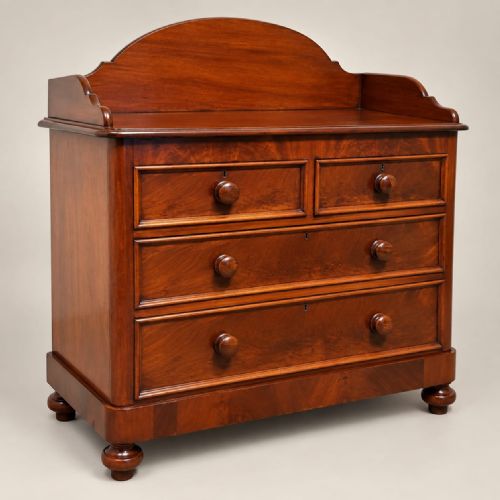
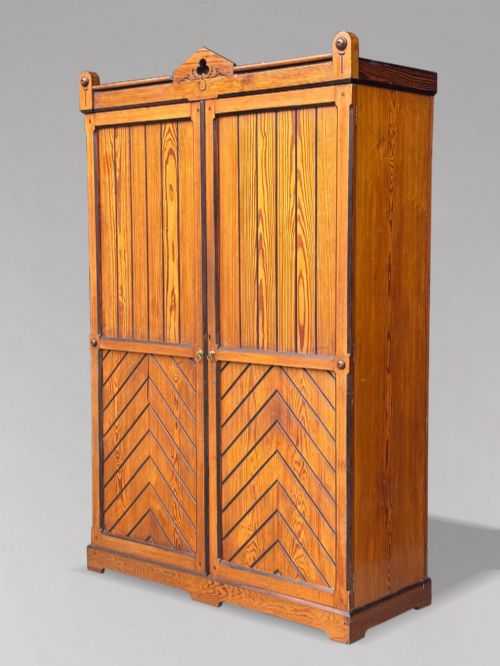
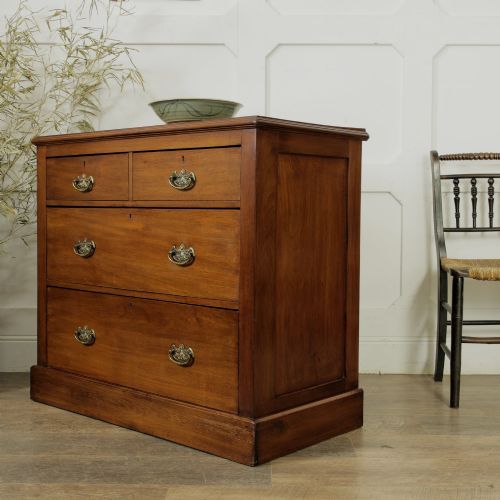
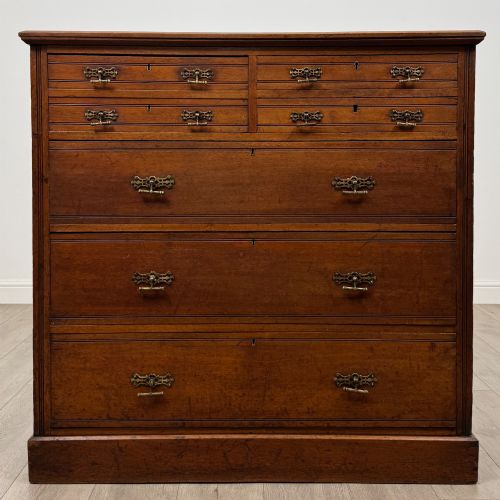
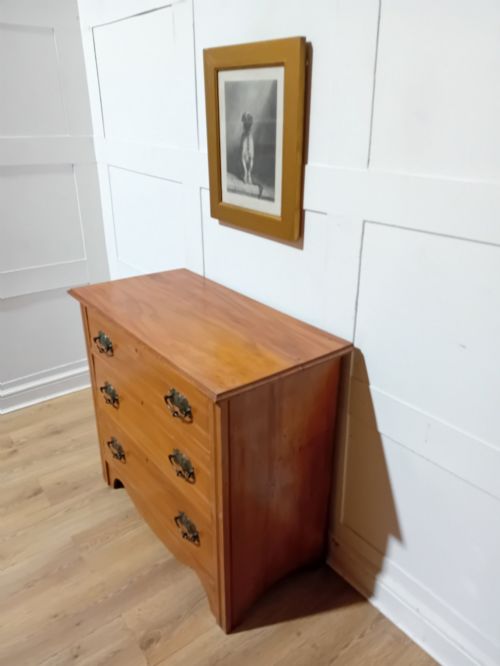
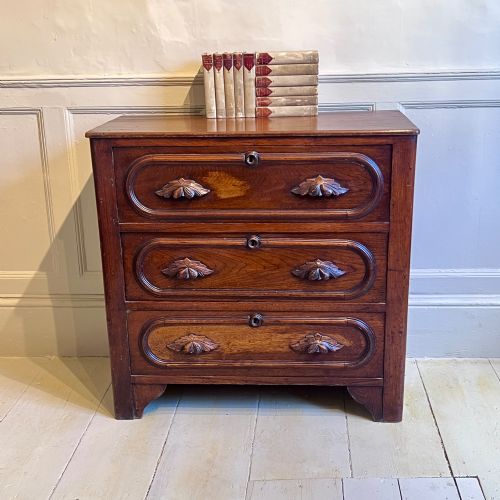
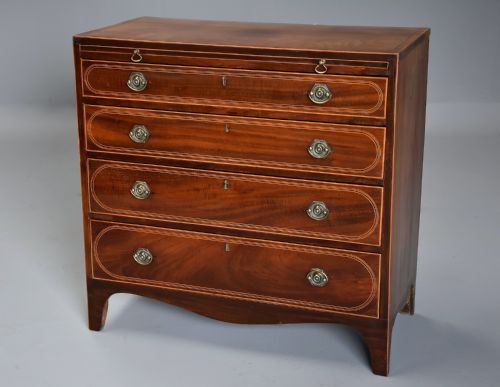
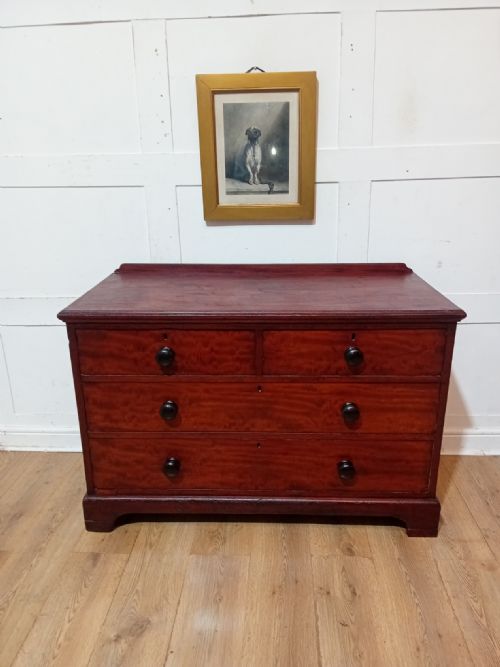
Chest of drawers forms range from narrow tall variants to broad bow-fronted designs utilising mahogany, walnut, pine, and satinwood. Wardrobes and compactums provide substantial hanging space, frequently paired with matching bedside cabinets and shaving stands to furnish complete sleeping quarters.
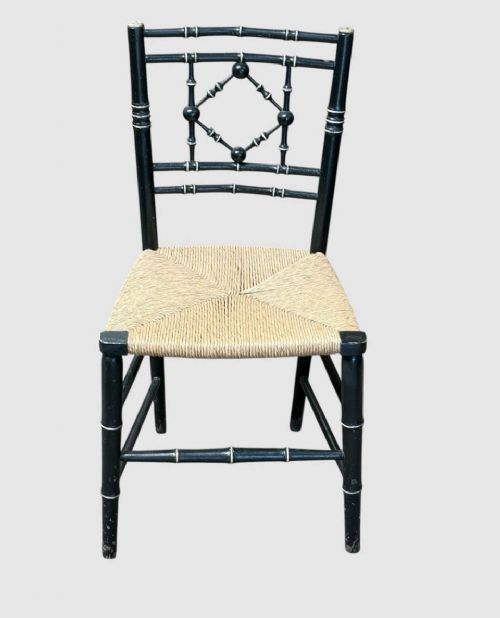
Stylistic influences stretch from traditional Victorian aesthetics to the simpler lines of the Arts and Crafts movement and the decorative flourishes of the Aesthetic period. Pieces span the transition into the twentieth century, incorporating revival styles like Hepplewhite alongside functional painted or faux bamboo finishes.
How they were made
Makers built these pieces using solid hardwoods and softwoods including mahogany, walnut, oak, ash, and pine, often accented with decorative veneers such as burr walnut or satinwood. Joinery relied on traditional dovetailed drawer construction and mortise and tenon frames to ensure durability under daily use.
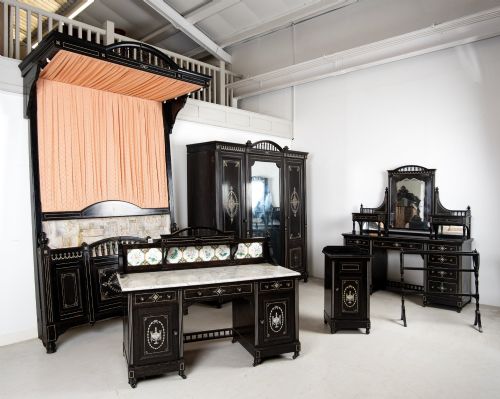
Surfaces frequently incorporated inset panels of marble, integrated brass hardware, and glass mirror plates within dressing chests and wardrobes. Decorative details extended to ebonised highlights, inlaid woodwork, and carved motifs aligning with Arts and Crafts and Aesthetic movement principles.
Makers occasionally turned solid pine and ash into convincing bamboo stems to satisfy a Victorian craze for exotic flora.
What varies in quality
Construction substance dictates the standing of a piece, separating straightforward utilitarian pine items from dense, figured mahogany and burr walnut case furniture. The selection of primary timbers and the depth of secondary woods used in drawer linings indicate the workshop standards applied during manufacture.
The sophistication of decorative execution separates standard production items from workshop-specific output. Integrated details such as matched wood grains, superior marble tops, original brass mounts, and refined hand-carving elevate the distinction of individual suites and cabinets.
Jas Shoolbred·Harris Lebus·Druce and Co·Heals·Wright and Hunter
The Late Victorian Bedroom Furniture Glossary
- Compactum
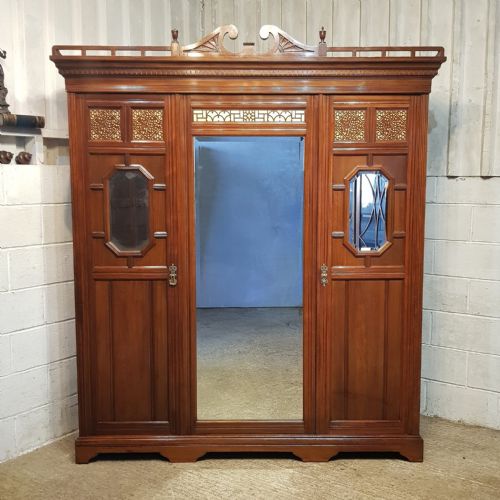
- A large fitted wardrobe combining hanging space with internal drawers, shelves, and smaller compartments. This multi-purpose form maximises storage within domestic sleeping quarters.
- Washstand
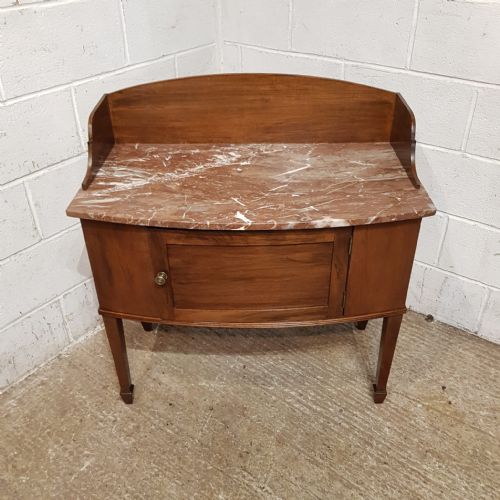
- A dedicated wooden table, frequently topped with marble, designed to hold a basin and pitcher for morning ablutions. These pieces often include tiled splashbacks and lower undershelves.
- Shaving stand
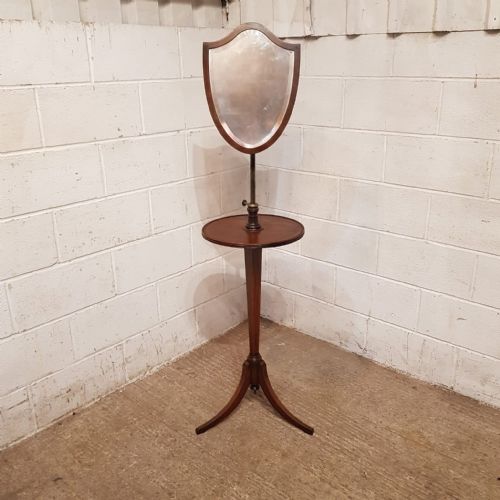
- A small specialised table or cabinet incorporating an adjustable mirror and surfaces for grooming accessories. They typically feature compact proportions suited to bedroom corners.
- Duchess dressing table
- A large vanity table featuring a central swing mirror flanked by smaller drawers or trinket boxes. This grand form became prominent during the later nineteenth century.
- Faux bamboo
- Wood turned and carved by hand to imitate the segmented stalks of natural bamboo. This decorative technique reflects the widespread nineteenth-century fascination with imported oriental design.
Late Victorian Bedroom Furniture: Frequently Asked Questions
What defines late victorian bedroom furniture?
These furnishings encompass case pieces, wardrobes, and washing stands produced between the late nineteenth and early twentieth centuries. They reflect a period of transition toward simpler functional designs alongside traditional cabinet-making.
Woods like mahogany, walnut, and pine dominate the selection, often featuring detailing from the Arts and Crafts and Aesthetic movements.
How do I care for antique wood furniture?
Keep wooden pieces away from direct heat sources and fluctuating humidity to prevent timber splitting or veneer lifting. Regular dusting with a dry cloth maintains the finish without moisture damage.
Applying a traditional beeswax polish periodically nourishes the grain and preserves the original patina of the timber.
Were these pieces sold as matching suites?
Makers produced both individual statement pieces and coordinated multi-piece bedroom suites. Suites allowed households to furnish sleeping quarters with uniform timber selections and decorative motifs.
Matching sets often included wardrobes, dressing chests, washstands, and bedside cabinets sharing identical stylistic details.
How do I distinguish Arts and Crafts pieces?
Arts and Crafts items emphasise honest construction, exposed joinery, and the natural grain of materials like oak, ash, and satinwood. Ornamentation remains minimal compared to heavier revival styles of the era.
These designs often feature simple brass hardware and utilitarian forms intended for practical daily use.