


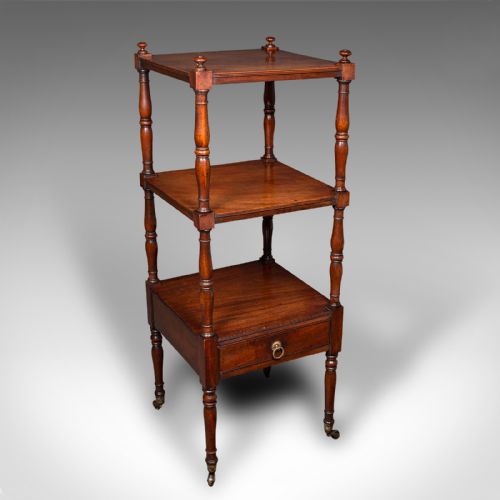


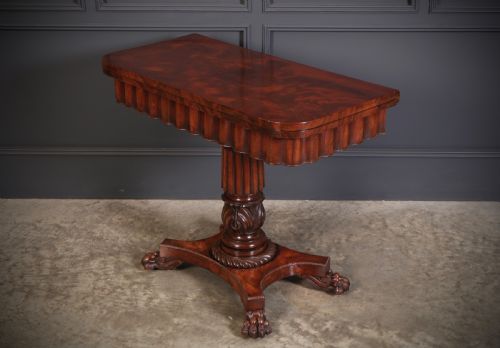
Late Regency Mahogany Table
A late regency mahogany table brings architectural clarity and rich timber tone into a room, offering both formal presence and daily utility.
Late Regency Mahogany Table
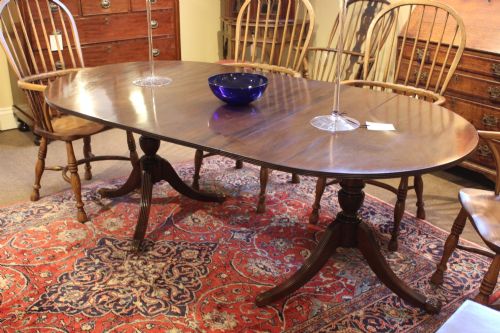
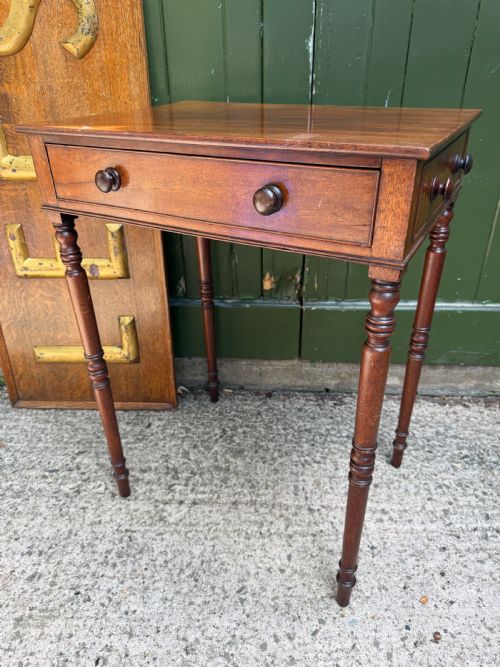
The selection bridges the late Georgian and Regency periods, where classical restraint meets bolder proportions and architectural ornament. Dining tables and smaller occasional pieces share a structural honesty, utilising dense timber to create surfaces meant for both ceremonial use and daily life.
How They Were Made
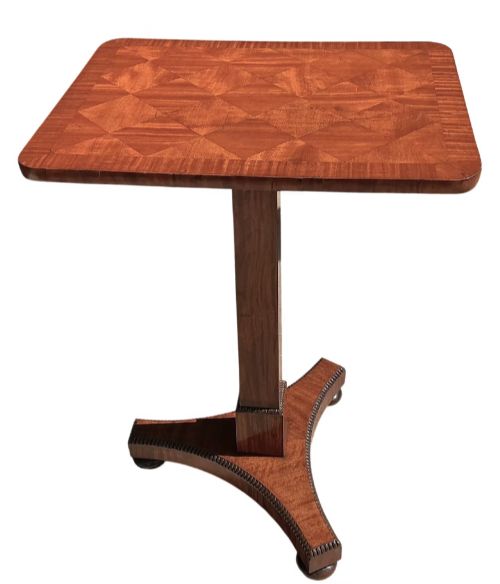
Cabinetmakers utilised solid mahogany and figured timber veneers applied to secondary woods, achieving deep grain patterns and warm surfaces through hand-polishing. Brass mounts, castors, and inlaid details frequently accented the primary structure, adding functional mobility and decorative contrast.
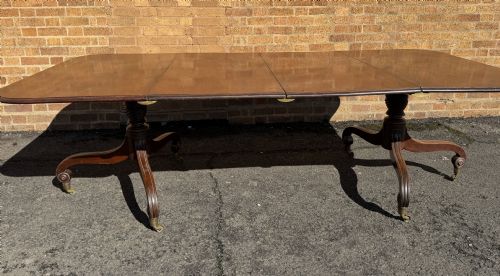
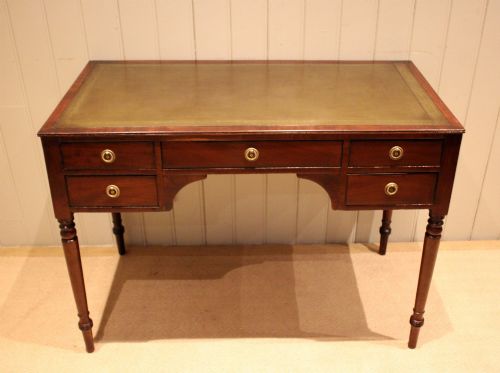
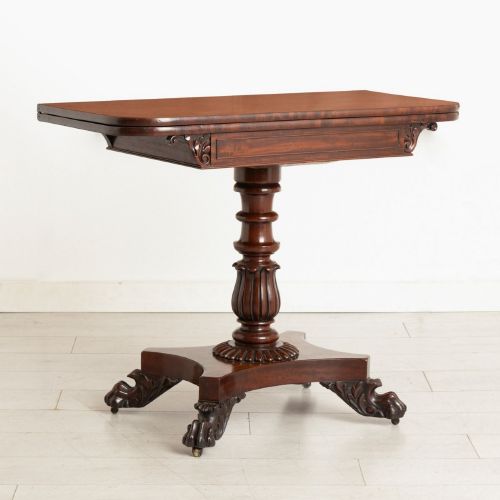
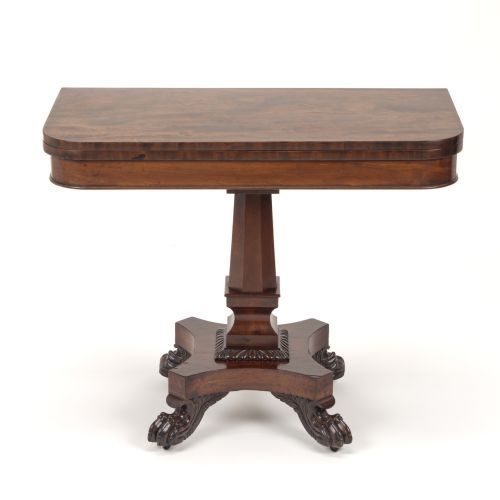
Structural integrity relied on traditional joinery, turned pedestals, and carved paw feet, allowing large dining tables to incorporate extending mechanisms without sacrificing stability. Secondary materials like leather, fabric, and bone appeared selectively on writing surfaces and hardware.
Late Regency Mahogany Table Retail Price Guide 2026
Typical asking prices for late regency mahogany table among the pieces listed under this phrase on Sellingantiques today, from the lower quarter to the upper quarter. They describe what is for sale here now, not the wider market.
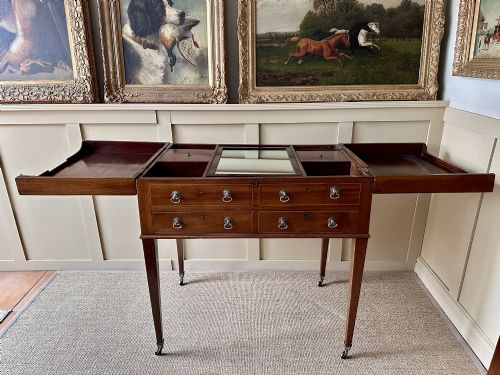
A few clever tables doubled as work stations or sewing stands, concealing threads and needles beneath modest folding tops.
What Varies in Quality
The distinction between standard domestic production and top-tier workshop output lies in the selection of figured mahogany and the precision of the carving. Master cabinetmakers employed finely-drawn proportions and seamless veneer matching that elevate simple functional forms into sculptural objects.
Hardware execution and structural adaptability further separate the grades, as seen in the smooth operation of extending mechanisms and the crisp detailing of paw feet or reeded legs. Pieces originating from documented workshops display a sharper architectural discipline in every joint and surface.
Thomas Myers·Richard Bridgens
The Late Regency Mahogany Table Glossary
- Mahogany
- A dense, durable tropical timber prized for its deep reddish-brown colour and capacity to take a fine polish. It served as the primary material for high-end furniture throughout the Georgian and Regency eras.
- Twin-Pillar
- A dining table construction supported by two central pedestals, typically terminating in branched legs with brass castors. This format allows greater legroom and accommodates extension leaves.
- Fold-Over Table
- A multi-functional form designed with a hinged top that rotates and folds out to double its surface area. It functioned primarily as a tea or card table when placed against a wall.
- Pedestal
- A central vertical column supporting a tabletop, often resting on a platform base with carved or reeded feet. It provides unobstructed seating around dining and breakfast tables.
- Plum Pudding Mahogany
- A highly decorative veneer exhibiting swirling, circular grain patterns resembling the surface of a traditional Christmas pudding. It was reserved for the most select surfaces of the period.
Late Regency Mahogany Table: Frequently Asked Questions
How do I use a fold-over table daily?
A fold-over table sits flat against a wall as a console or side table when closed, occupying minimal floor space in a hallway or drawing room. When guests arrive, the hinged top swings and unfolds to create a stable surface for dining, writing, or playing cards.
Keep the polished surface protected from moisture and heat by using coasters and mats. Regular waxing maintains the rich tone of the timber without building up a heavy residue.
How do I care for mahogany furniture?
Maintenance requires little more than dusting with a soft, dry cloth and applying natural beeswax periodically to nourish the grain. Avoid placing the table near direct heat sources or strong sunlight, which can dry out the timber and fade the finish.
Treat spills immediately by blotting gently rather than wiping, ensuring the polish remains uncompromised. Proper humidity control in the room prevents the wood and veneers from shifting over time.
How do I distinguish late Georgian from Regency?
Late Georgian pieces often retain slender, restrained lines and subtle neoclassical stringing, reflecting eighteenth-century design traditions. Regency forms introduce bolder architectural elements, heavier pedestals, and more pronounced classical motifs derived from Greek and Roman antiquities.
The transition appears gradual in the evidence, with pieces from around eighteen hundred sharing characteristics of both idioms. Examining the turning, base supports, and overall mass helps clarify the specific design period.