

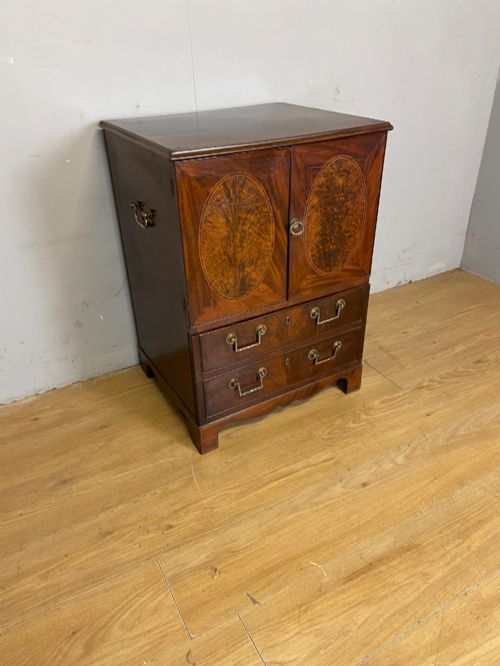

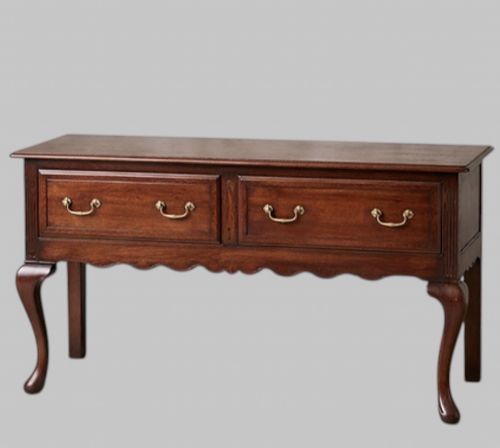


Late Georgian Sideboard
A late georgian sideboard anchors a formal dining room with generous proportions and rich timber figures.
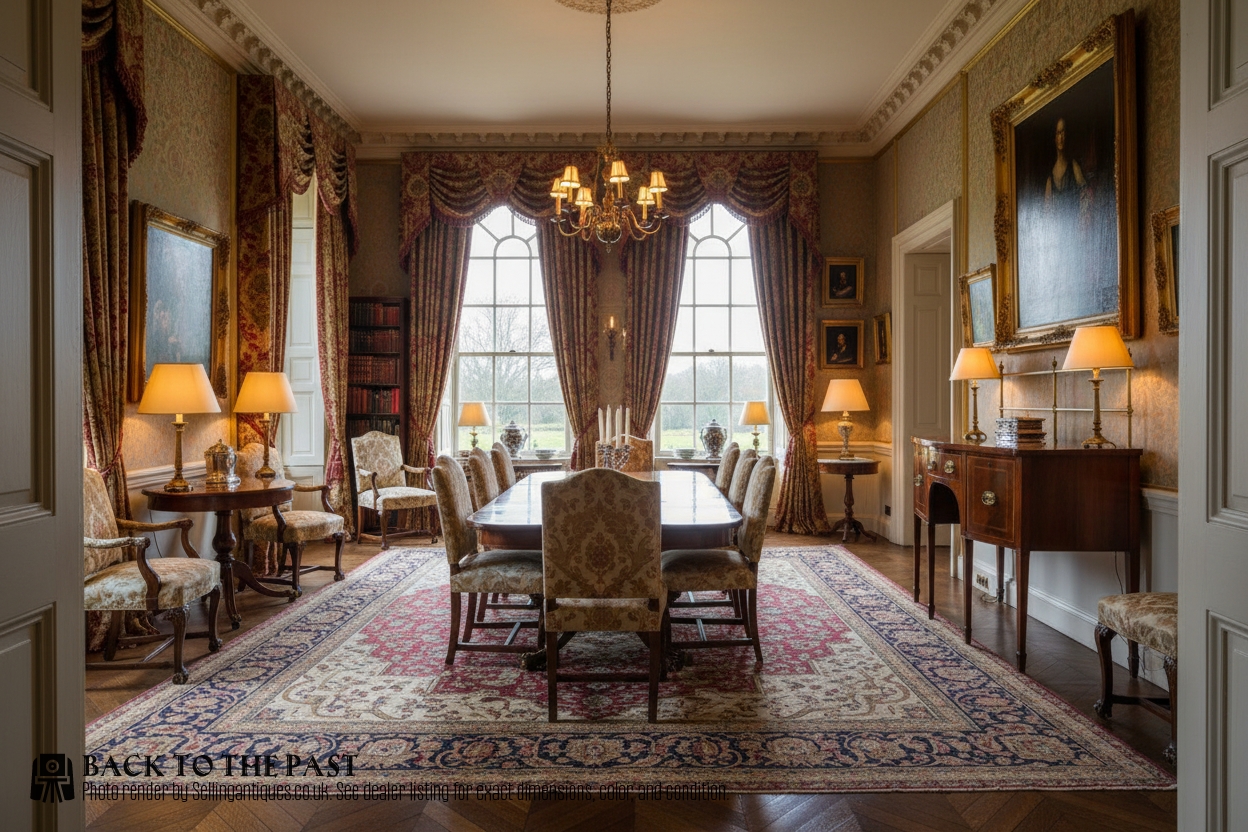
Late Georgian Sideboard
A late georgian sideboard serves as the central storage and serving piece of the dining room, built to hold silver, linen, and wine. These items appear in serpentine, bow front, and straight formats, originating primarily from the eighteenth and nineteenth centuries.
The version most commonly met on this page is the mahogany bow front or serpentine sideboard, often decorated with subtle line inlay. Pieces range from grand pedestal designs to smaller serving tables and side cabinets reflecting George III and Sheraton influence.
How they were made
Cabinet makers utilised solid timbers and veneers of flame mahogany, oak, and satinwood, frequently enriched with boxwood stringing and contrasting cross-banding. Surfaces gain their distinct character from careful polishing that highlights the natural grain of the wood.
Metal components such as brass handles, escutcheons, and occasional silver mounts are fitted to drawers and cupboards designed with precise joinery. Structural elements often incorporate secondary woods like oak or pine behind the polished mahogany facades.
Some knife boxes feature internal velvet linings and silver locks designed to protect the silver cutlery from adventurous household staff.
What varies in quality
The distinction between tiers rests upon the choice of timber figure, the precision of the inlay work, and the originality of the brass hardware. Highly figured flame mahogany and crisp, unblemished stringing elevate a piece far above plain stock.
Proportion and line dictate the architectural success of the server, where sweeping serpentine curves or delicate bow fronts demand advanced cabinet making skill. The integrity of the secondary woods and the depth of the finish complete the assessment.
The Late Georgian Sideboard Glossary
- Serpentine
- A front outline that curves outward in the centre and inward toward the ends. This shape requires exceptional skill from the cabinet maker to fit drawers and doors smoothly.
- Bow front
- A convex, outwardly curved front profile popular in late eighteenth century design. It softens the rigidity of a dining room while maximising internal storage space.
- Inlay
- The technique of embedding contrasting woods, such as boxwood and satinwood, into the primary timber surface to create linear or geometric patterns.
- Cross-banding
- A border of veneer laid around the edges of a surface so that the grain runs at right angles to the central panel. This frames the primary timber figure effectively.
- Pedestal sideboard
- A form consisting of two distinct cabinets connected by a central serving table or recess. These large pieces define grand dining spaces.
Late Georgian Sideboard: Frequently Asked Questions
Where did they place sideboards?
These pieces stood against the dining room wall to hold heavy serving platters, cutlery boxes, and decanters during large meals.
Servants prepared dishes on the surface before transferring them to the main dining table, keeping the workflow efficient.
How do I clean mahogany?
Maintenance requires only a soft, dry cloth to remove dust and preserve the historic polish built up over centuries.
Avoid modern chemical sprays or excessive moisture, which can damage the aged timber and delicate veneer work.
What is Sheraton style?
Thomas Sheraton popularised lighter furniture forms featuring classical geometry, tapered legs, and refined contrasting inlay. His pattern books heavily influenced late eighteenth century cabinet makers across Britain.
Pieces bearing this influence prioritize elegance and restrained ornamentation over heavy carving.
Can I use one in a hallway?
Narrower bow front formats and side serving tables adapt easily to entrance halls and drawing rooms as display surfaces.
Their shallow depth allows placement in walkways without obstructing movement through the home.