

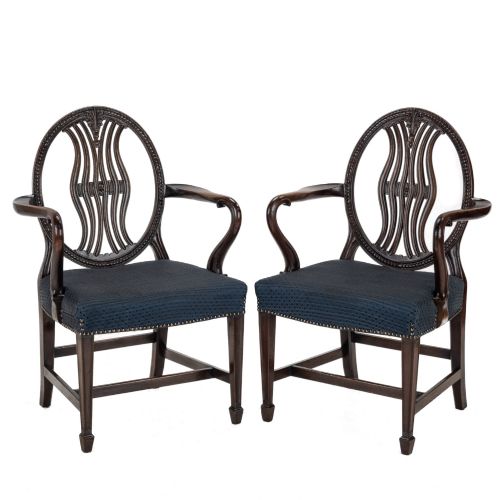


Late Georgian Mahogany Chairs
Late georgian mahogany chairs bring enduring craftsmanship to a room, offering robust construction and rich timber tones that suit both traditional and modern interiors.
Late Georgian Mahogany Chairs
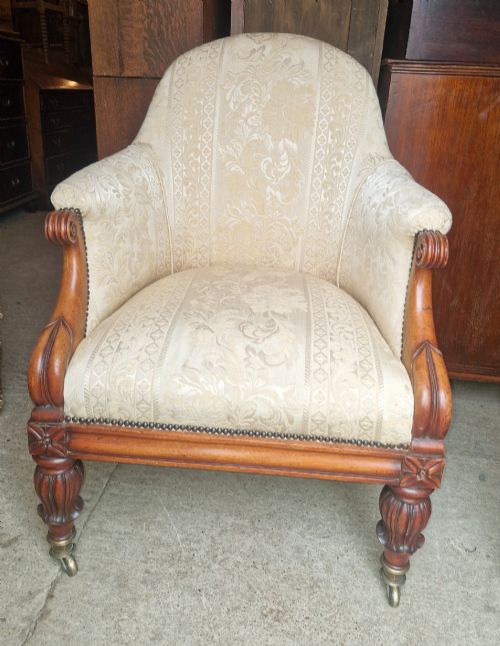
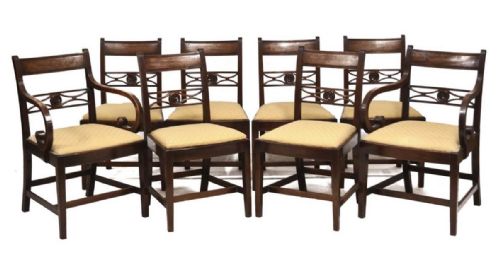
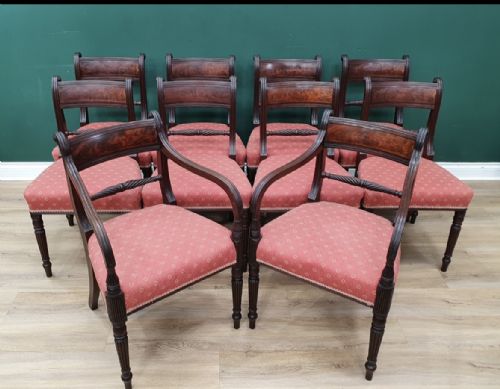
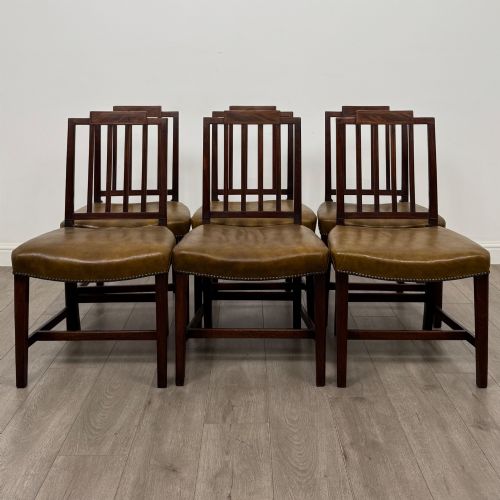
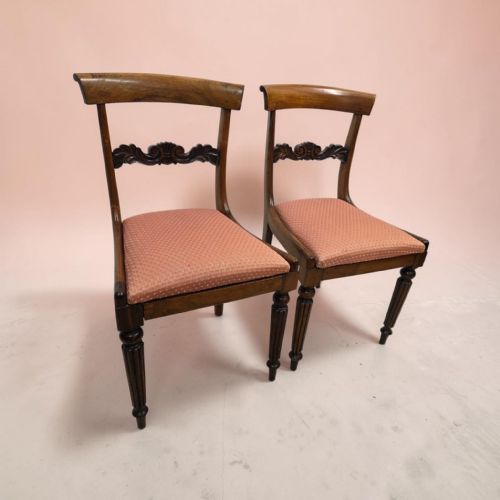
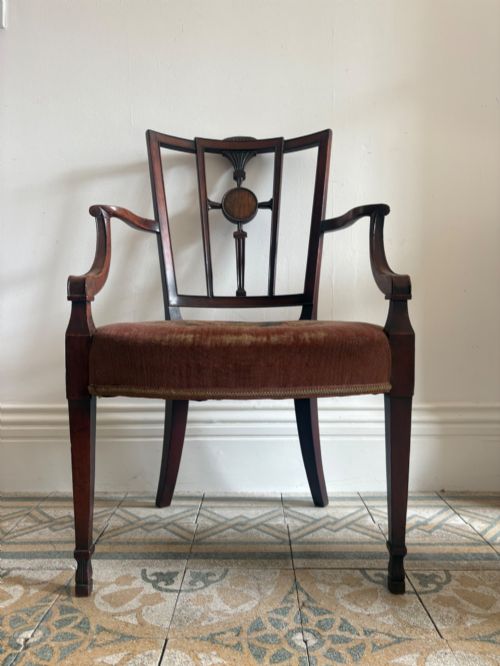
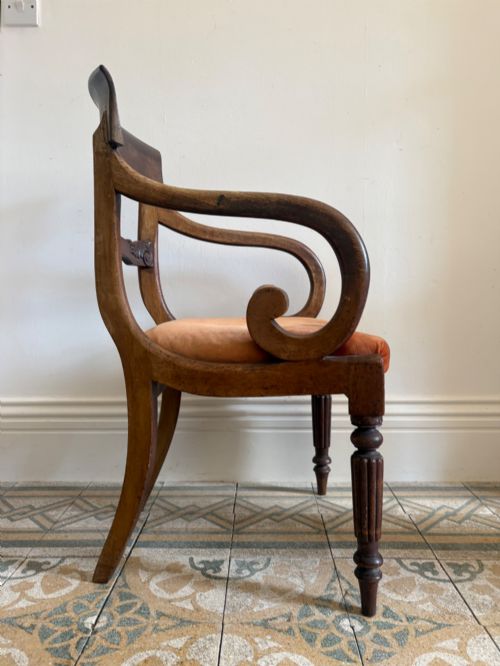
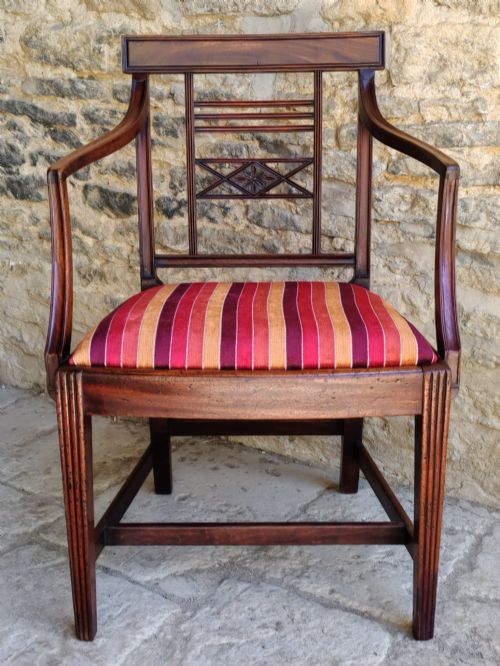
Late georgian mahogany chairs encompass a diverse selection of seating, ranging from singular library armchairs and hall chairs to large sets of dining chairs. Buyers seeking these pieces will frequently encounter individual carvers alongside multiple sets dating from the late eighteenth century through to the early decades of the nineteenth century.
The inventory includes specialised forms such as metamorphic library chair steps, children's chairs, and wingback chairs, reflecting the varied domestic needs of the period. Alongside authentic period examples, later revivals appear in styles referencing Chippendale and Hepplewhite designs.
Materials and construction methods
Makers relied primarily on solid mahogany and flame mahogany veneers, sometimes accenting the timber with rosewood roundels or brass details. Frames were constructed using traditional joinery techniques to ensure structural stability for daily seating.
Seating portions utilised drop-in pads or upholstered foundations covered in fabric, leather, velvet, or needlepoint. These varied textile coverings provided comfort while complementing the polished timber framework.
Late Georgian Mahogany Chairs Retail Price Guide 2026
Typical asking prices for late georgian mahogany chairs among the pieces listed under this phrase on Sellingantiques today, from the lower quarter to the upper quarter. They describe what is for sale here now, not the wider market.
Listings feature mahogany, fabric, brass, velvet, leather, and rosewood across Georgian and Regency periods.
Distinctions in quality
Quality differences emerge in the crispness of carved details, the selection of timber grain, and the integrity of the original frame construction. Superior examples display refined proportions and deliberate attention to decorative elements such as back rails and leg shapes.
Sets that retain their original matched composition and uniform timber patination command greater interest than assembled groups. Maker attribution, visible in stamps or distinct workshop characteristics, further elevates a piece's standing.
Gillows·Morgan and Sanders
The Late Georgian Mahogany Chairs Glossary
- Carver
- An armchair, typically designed for the head of a dining table, featuring supportive side arms. These chairs often matched a larger set of single dining chairs.
- Drop-in seat
- A removable upholstered frame that drops securely into the seat rail rebate of a chair. This method allowed for easier reupholstering without dismantling the main structure.
- Flame mahogany
- A veneer cut from the fork of the mahogany tree, producing a distinctive, flamelike grain pattern. Cabinet makers reserved this timber for prominent surfaces to create visual impact.
- Library chair
- A heavy, upholstered armchair intended for reading and study, sometimes incorporating writing arms or steps. These pieces prioritized seated comfort over formal appearance.
- Metamorphic
- Describing furniture designed to transform into another functional object, such as a chair that converts into library steps. Such ingenuity reflects the practical inventiveness of the period.
Late Georgian Mahogany Chairs: Frequently Asked Questions
How do I date late georgian mahogany chairs?
Dating relies on examining the timber species, construction methods, and stylistic cues present in the leg and back design. Cabinet makers altered proportions and decorative motifs across the decades.
Comparing structural joinery with dated examples helps confirm whether a piece originates from the late eighteenth century or represents a later nineteenth-century revival.
Are dining chair sets practical for daily use?
Most dining sets remain sturdy enough for regular seating if the joints are secure and the underframe is sound. Solid timber construction provides inherent durability.
Routine inspection of the blocks and rails ensures the chairs safely support daily activity without compromising the historical material.
What is the difference between a carver and a side chair?
Carvers feature armrests and were traditionally placed at the head and foot of a dining table. Side chairs lack arms and were designed to fit neatly in rows along the table sides.
Sets often paired several side chairs with two matching carvers to create a cohesive seating arrangement.
How should I care for mahogany surfaces?
Maintaining mahogany requires regular dusting with a soft cloth and avoiding direct exposure to strong sunlight or heat sources. Excessive light alters the rich colour of the timber.
Applying microcrystalline wax periodically preserves the polished finish and protects the wood grain from moisture without building up heavy residues.