

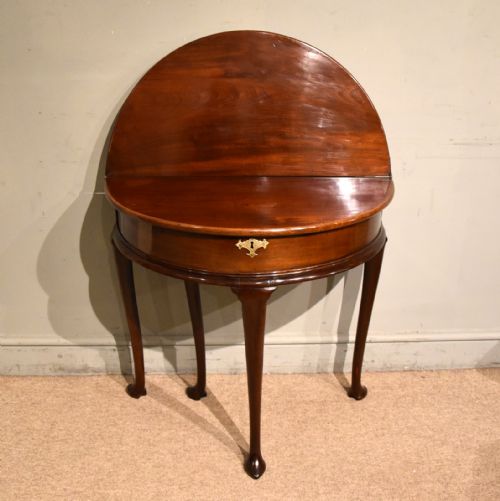


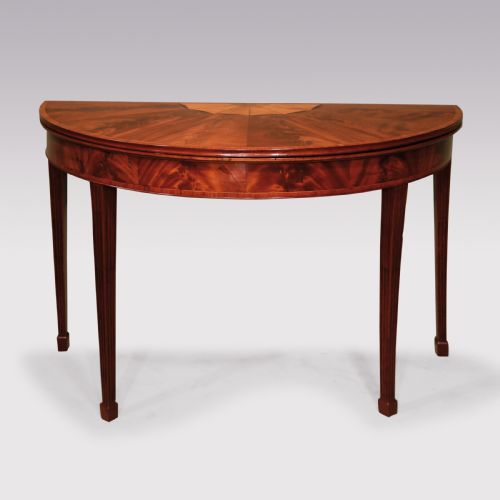


Late Georgian Games Table
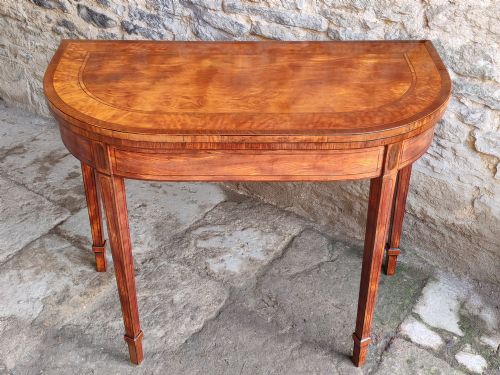
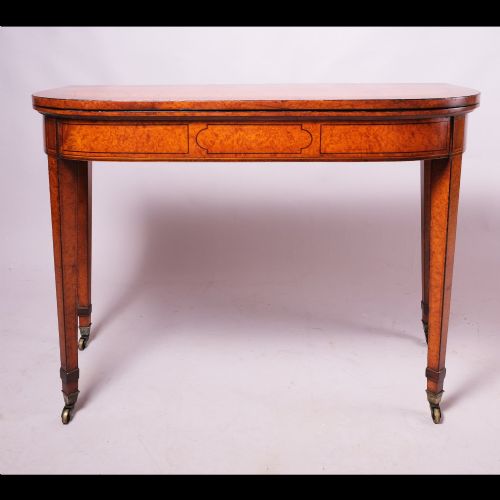
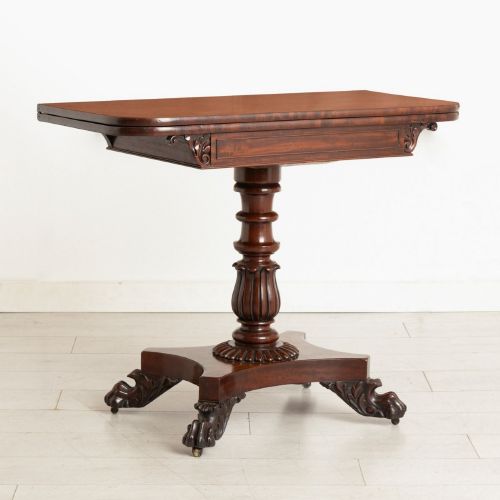
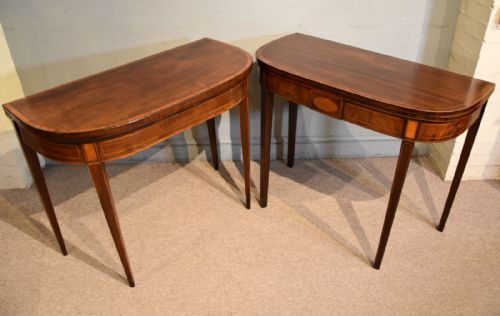
These late georgian games table pieces are versatile folding tables designed for card playing and tea, bringing exceptional craftsmanship into a sitting room.
Late Georgian Games Table
A late georgian games table is a dual-purpose piece intended for social evenings, serving as a side table when folded and opening to reveal a playing surface. The selection spans the 18th century, Georgian, 19th century, and Regency periods, reflecting the tastes of fashionable households.
You will most frequently encounter mahogany card tables and tea tables from the late Georgian era, often featuring fold-over tops and timber inlays. Forms range from dedicated games tables and card tables to tea tables and side tables.
Examples cross several recognised design influences including George III, late Georgian, Regency, Georgian Neoclassical, and Sheraton styles. Scottish craftsmanship also appears among the rosewood pieces.
How they were made
Cabinet makers utilised dense timbers such as mahogany, rosewood, and satinwood, frequently accentuating the surfaces with contrasting stringing in ebony and boxwood. Exotic woods like amboyna also appear on tea tables from the late 18th century.
Internal folding mechanisms and hinges often incorporate brass elements to support the rotating or unfolding leaves. Playing surfaces are traditionally lined with baize to provide a suitable texture for card games.
Late Georgian Games Table Retail Price Guide 2026
Typical asking prices for late georgian games table among the pieces listed under this phrase on Sellingantiques today, from the lower quarter to the upper quarter. They describe what is for sale here now, not the wider market.
Object forms span card tables, tea tables, games tables, side tables, and console tables.
What varies in quality
Quality rests upon the selection of timber veneers and the precision of the inlay work, particularly where satinwood, ebony, and boxwood meet. Segmented tops and hand-painted decoration distinguish superior examples from standard utility pieces.
The integrity of the fold-over mechanism and the stability of the timber frame determine the structural standard. Pieces retaining their original surfaces and baize linings hold greater consistency with their period origins.
The Late Georgian Games Table Glossary
- Card table
- A folding table specifically designed for evening card parties, featuring a top that opens to double the surface area. It typically includes a recessed well for counters or candles.
- Baize
- A coarse woollen fabric, traditionally green, used to line the playing surface of card and games tables. It provides a soft, durable texture that protects the timber beneath during play.
- Satinwood
- A light, lustrous timber imported from the tropics, highly prized for contrasting veneers and geometric stringing. Cabinet makers utilised it extensively during the Sheraton and late Georgian periods.
- Stringing
- Thin inlay lines of contrasting wood, such as ebony or boxwood, set flush into the primary timber. This technique frames table tops and drawer fronts to define the geometric proportions.
- George III
- The stylistic period spanning the long reign from seventeen sixty to eighteen twenty, encompassing classicism and refined cabinet making. Pieces from this era show restraint and balanced proportions.
Late Georgian Games Table: Frequently Asked Questions
How were these tables used?
These tables stood against the drawing room wall as side or console tables when not in use. During evening social gatherings, the top unfolded to accommodate card games, tea, or supper.
The clever hinged design allowed households to maximise space in formal rooms without sacrificing surface area for entertainment.
What woods were commonly used?
Mahogany forms the structural core for the majority of surviving examples, prized for its strength and rich grain. Finer decorative pieces incorporated exotic veneers including rosewood, satinwood, and amboyna.
Inlays frequently utilised contrasting strips of ebony and boxwood to create geometric borders around the table top.
How do I identify a Regency piece?
Regency items date from the early nineteenth century and often display bolder grain patterns in rosewood or mahogany. The influence shifts slightly away from earlier Georgian restraint towards heavier classical forms.
They share the same folding function as earlier card tables but reflect the distinct aesthetic preferences of the Regency period.
Can I use it as a desk?
The flat interior surface of a fold-over card table makes it a suitable writing desk for occasional use. However, the internal hinges and folding leaf mean the structure is not designed to bear heavy vertical loads.
Placing a desk pad on the baize surface helps protect the traditional fabric lining from ink or pressure marks.