
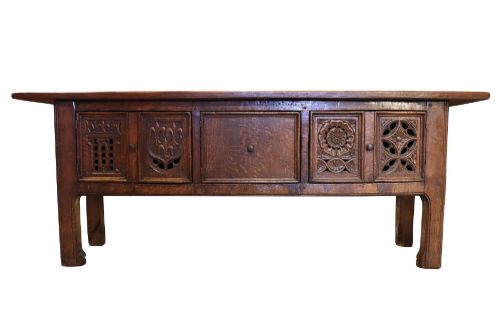
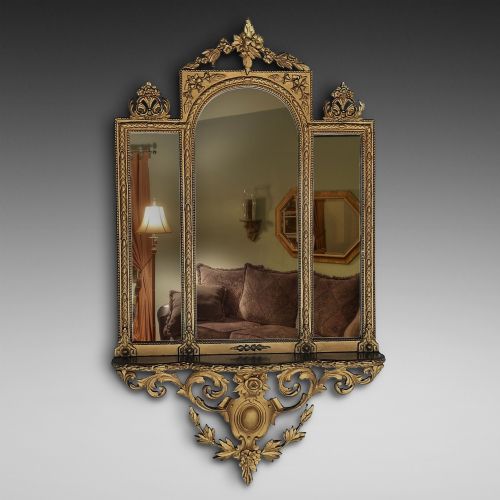
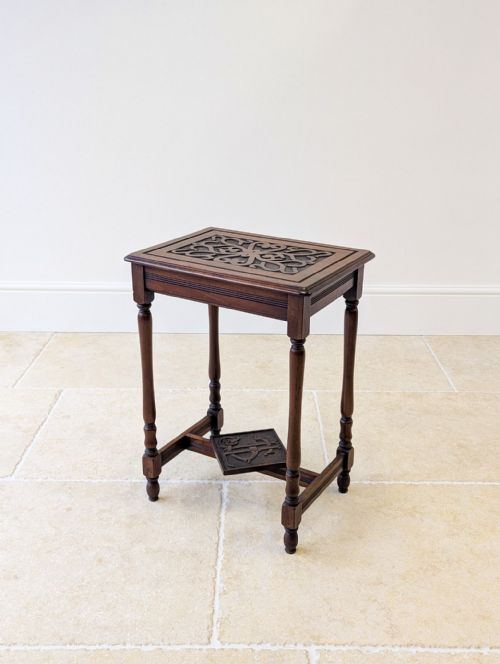
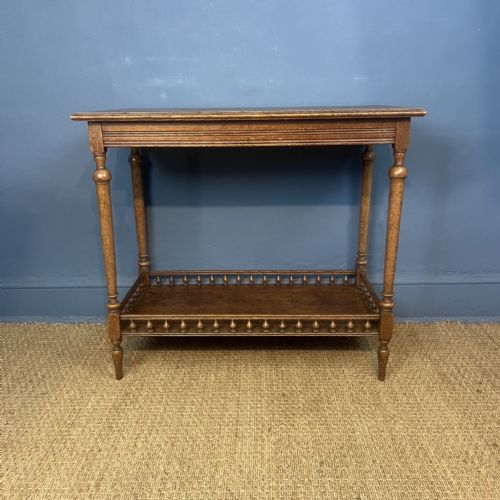
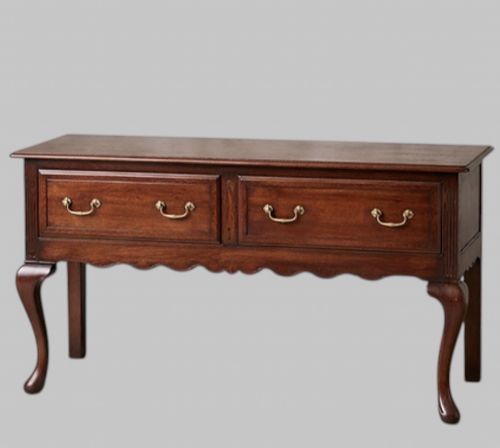


Late 19th Century Console
When choosing a late 19th century console, a buyer finds an adaptable surface designed to anchor a hallway or reception room.
Late 19th Century Console
A late 19th century console brings together wall-anchored tables, demi-lune shapes, and rectangular side pieces intended for formal rooms.
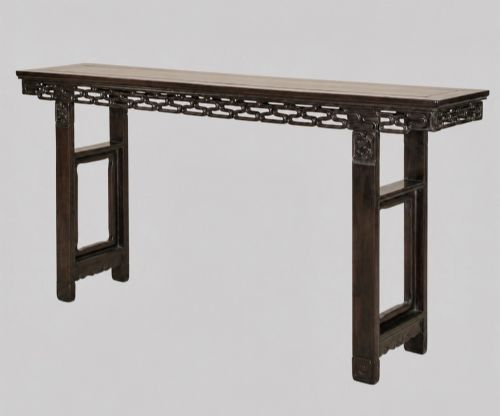
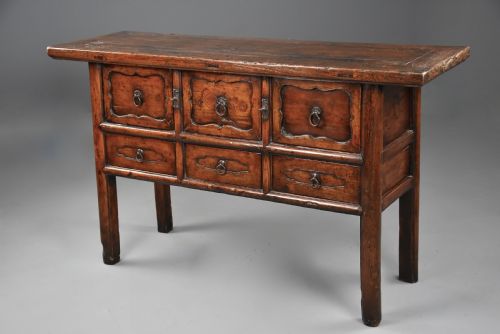
The selections on this page stem from diverse international cabinet-making traditions, ranging from French giltwood and English mahogany to Swedish painted pine and Chinese hardwood altar tables.
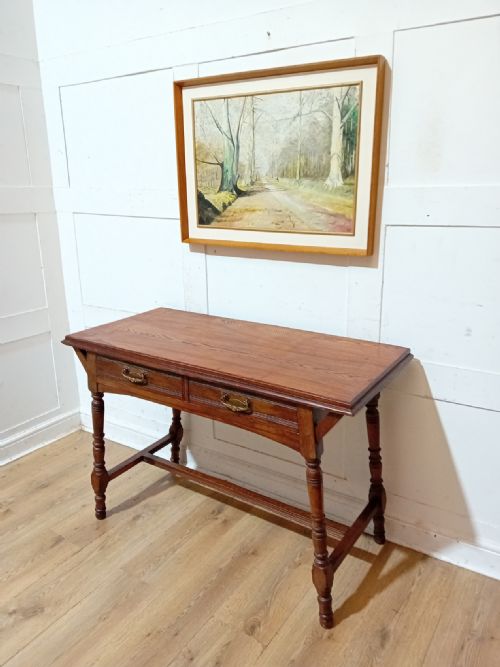
Makers of this period drew heavily on earlier vocabularies, producing works in the Gothic Revival, Aesthetic Movement, and Adams design idioms alongside standard Victorian forms.
Materials and Construction
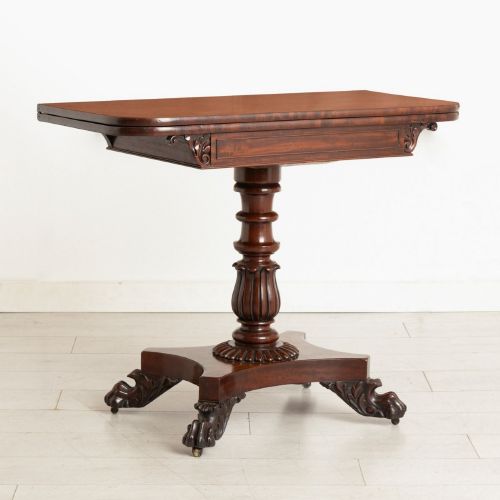
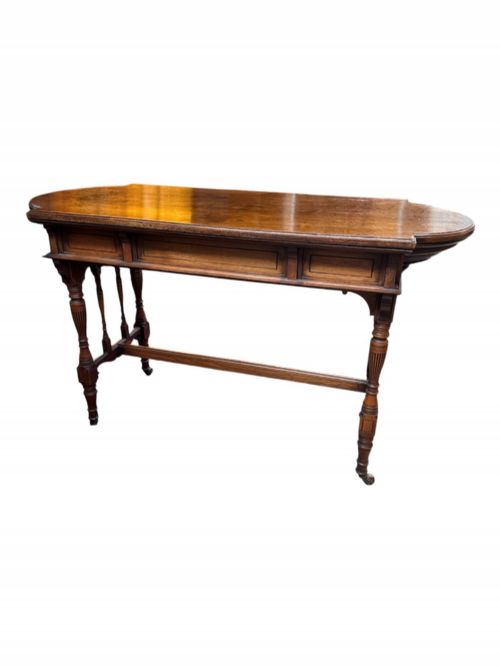
Carpenters utilised dense timbers such as mahogany, oak, walnut, and rosewood, frequently incorporating decorative veneers like kingwood and burr walnut across curved surfaces.
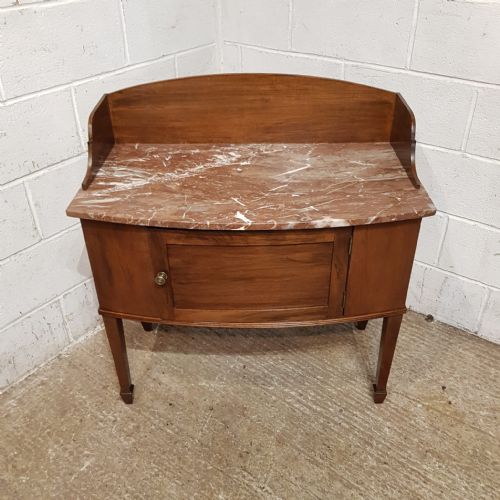
Many formal examples integrate heavy marble slabs inset into the timber frame, whilst others rely on intricate hand-carved giltwood, cast iron, or marquetry inlay to achieve ornamentation.
Listings feature woods such as oak, mahogany, walnut, satinwood, and pine alongside applied marble and cast iron.
Standards of Execution
The distinction between ordinary workshop production and high-grade cabinet-making rests in the crispness of hand-carved details, the precise fitting of marble tops, and the integrity of underlying secondary timbers.
Surface finishes dictate long-term visual success, separating pieces retaining original patination or gilding from those compromised by heavy modern refinishing.
Howard And Sons·Jonas Frisk·Liberty
The Late 19th Century Console Glossary
- Demi-lune
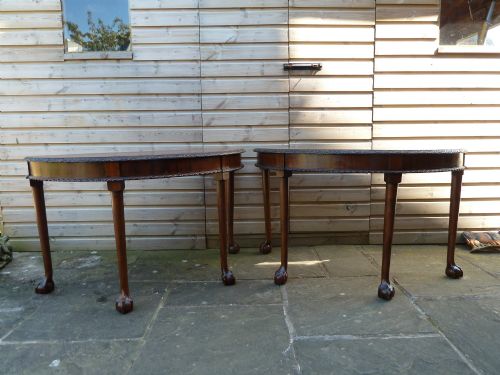
- A half-moon shape popular for console tables designed to sit flush against a wall in narrow spaces. This profile allowed makers to showcase symmetrical wood grain across a curved front.
- Giltwood
- Timber coated with a thin layer of gold leaf or gold paint over a prepared gesso ground. It was extensively utilised on decorative French and English reception furniture.
- Marquetry
- The art of applying small pieces of veneer to a structure to form decorative patterns or pictorial scenes. Cabinet-makers used contrasting exotic hardwoods to create complex geometric designs.
- Dresser base
- A low wooden sideboard or table fitted with drawers and occasionally a lower pot shelf. These utilitarian forms frequently double as robust console surfaces in country house settings.
Late 19th Century Console: Frequently Asked Questions
Where should I place a console table?
These tables traditionally anchor entrance halls, beneath large wall mirrors, or along narrow passageways where depth is restricted. Their flat surfaces provide a convenient drop zone for correspondence or illumination.
In larger reception rooms, matching pairs often flank a fireplace or architectural opening to create balance. Their narrow profiles ensure they do not obstruct household traffic.
How do I care for a marble top?
Marble surfaces require gentle cleaning with warm water and a soft cloth to avoid scratching the polished stone. Acidic substances like citrus or wine must be wiped away immediately to prevent etching.
Applying a specialist stone wax periodically helps protect the porous surface from staining. Avoid placing abrasive ceramics directly onto the bare stone.
What distinguishes a console from a side table?
Console tables were historically designed to be fixed directly to the wall or supported by front legs with wall brackets for stability. Side tables are entirely freestanding structures with four independent legs.
Over time, the distinction blurred as many console designs gained rear legs to become stable independent furniture. However, their primary function remains linear placement against room perimeters.
Can I use a antique console for daily dining?
Most period consoles lack the robust structural bracing required for heavy daily dining use or frequent shifting. Their slender legs and wall-dependent designs suit decorative display rather than heavy weight loads.
Using protective pads beneath lamps or centerpieces prevents surface friction. Treating the timber finish with mild beeswax preserves the historical patina against minor scuffs.