


Vintage Wrought Iron Console
A vintage wrought iron console brings robust structure and historic character into a hallway, pairing heavy metalwork with cool stone or timber.
Vintage Wrought Iron Console
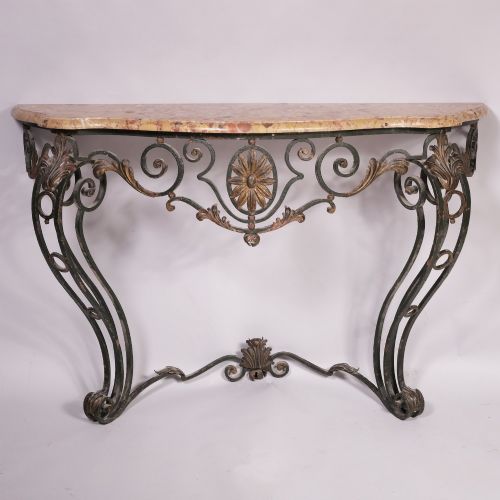
A vintage wrought iron console combines forged metal framing with a durable surface, typically intended for placement against a wall in a hall or living space. When you search for this phrase, you encounter heavy structural tables originating from the nineteenth and early twentieth centuries.
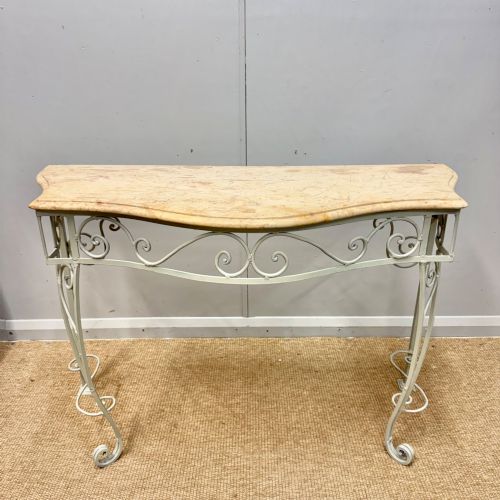
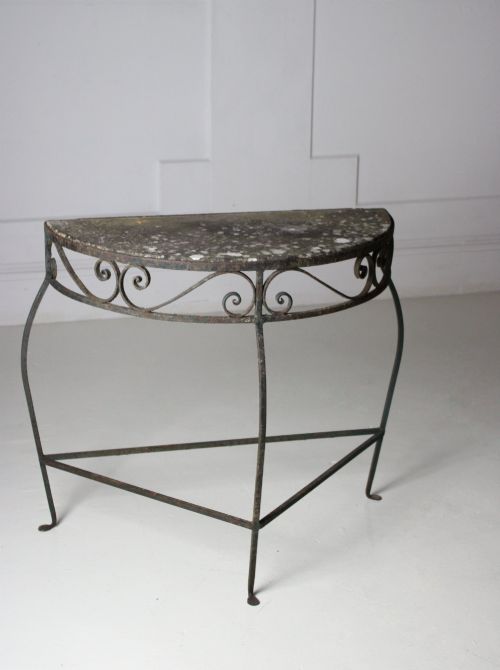
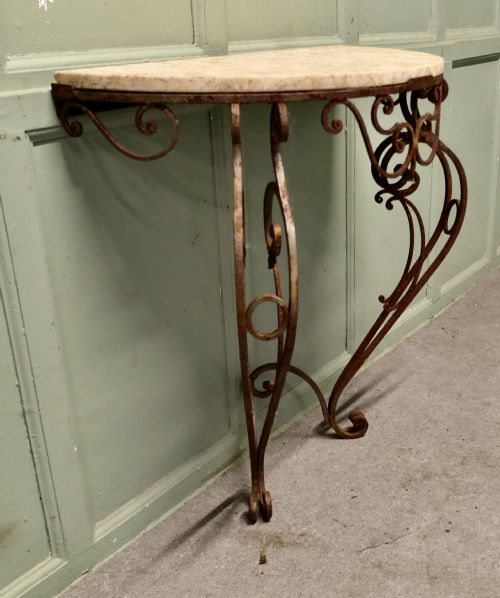
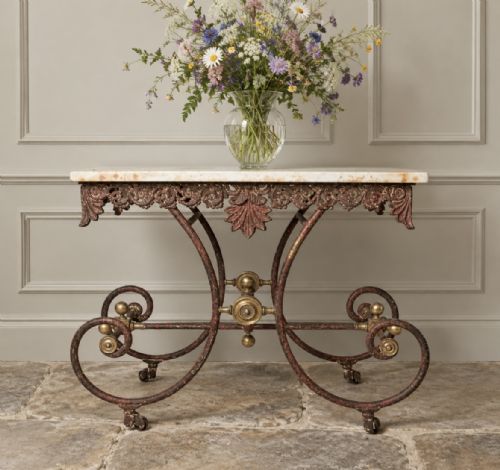
The examples most commonly met on this page showcase French provincial and rustic designs, often featuring scrolled metal supports and contrasting tops of white or grey marble. Alongside these traditional console tables, the selection includes related heavy metalwork forms such as bakers tables, patisserie counters, and industrial foundry pieces.
Origins span across continental Europe and Britain, with nineteenth-century French pieces dominating the aesthetic through characteristic scrollwork and painted finishes. Alongside iron and marble, variations incorporate oak, brass, pine, and glass to create functional furniture suited for domestic interiors.
Materials and construction methods
Construction relies upon hand-forged wrought iron and cast iron components assembled to create rigid, load-bearing frames. Smiths heated and hammered iron bars into decorative curves, geometric braces, and supportive stretcher bases capable of holding substantial weight.
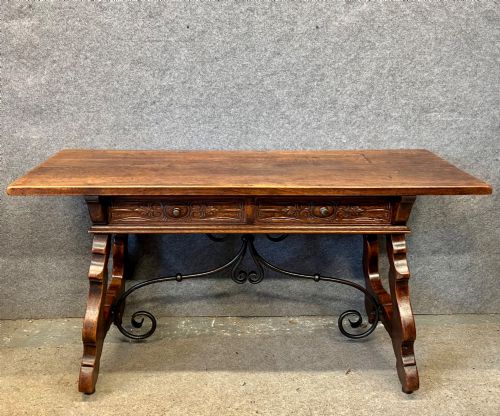
Tops are frequently fashioned from thick slabs of heavy marble, often cut with serpentine or plain rectangular edges to sit loosely or securely upon the metal base. Secondary materials include solid oak, pine, and walnut for wooden table tops, while occasional brass detailing or fitted vices add functional utility.
The listings span the nineteenth century through the 1920s, featuring French provincial, Arts and Crafts, and Victorian aesthetic influences.
Assessing quality in iron and stone furniture
Quality rests upon the proportion and fluidity of the forged ironwork, where hand-beaten scrolls show individual craftsmanship rather than uniform machine stamping. Heavier gauge metalwork and complex structural bracing indicate superior durability and deliberate design.
The integration of the top dictates the overall calibre of the piece, particularly with heavy marble slabs that match the exact footprint of the iron base. Finer examples display harmonious proportions between the decorative metal scrolling and the natural veining of the stone or timber above.
The Vintage Wrought Iron Console Glossary
- Console table
- A table designed to stand against a wall, traditionally supported by fixed brackets or decorative legs rather than four independent vertical posts. These pieces serve functional placement in narrow entrance halls and reception rooms.
- Wrought iron
- Iron that has been heated and hammered by hand into shape, displaying slight surface irregularities from the forging process. This material offers high tensile strength and resilience.
- Serpentine
- A curved line of furniture edging that undulates in a smooth convex and concave pattern. This shaping is frequently found on marble table tops from the nineteenth century.
- Patisserie table
- A heavy utilitarian work table originating from French bakeries, typically constructed with a robust iron base and a smooth marble top suited for rolling pastry. They function well as modern kitchen islands or console surfaces.
- Cast iron
- Iron poured into a mould in a molten state to create complex repetitive forms and decorative framing. It differs from forged wrought iron through its rigid, crystalline structure.
Vintage Wrought Iron Console: Frequently Asked Questions
How do I style a wrought iron console?
Position the table against a prominent hallway or living room wall where the contrasting textures of cold metal and smooth stone can anchor the room. Keep styling minimal above the surface to let the forged iron scrollwork remain visible.
Pair the console with a matching mirror or substantial wall art to balance the visual weight of the iron base. Ensure the piece is secured if you have heavy ornaments resting on top of unattached marble slabs.
Are these tables suitable for everyday use?
These tables are built around industrial and domestic utility, utilising heavy iron frames and robust stone or timber tops designed for demanding environments. They handle daily household traffic and placement of everyday items with ease.
Maintenance involves simple wiping of the marble or wood surfaces and occasional treatment of painted or bare iron to prevent surface oxidation. The substantial weight of the materials ensures stability during routine domestic use.
How do I identify a nineteenth-century piece?
Examine the ironwork for hand-forged joinery, rivet construction, and subtle irregularities that indicate manual shaping before the widespread adoption of modern welding. Tool marks and hand-cut threads provide strong indicators of period manufacture.
Check the marble or timber top for natural ageing, patination, and traditional edge profiles consistent with nineteenth-century workshop practices. The presence of period timber species like oak or walnut further supports dating.
Can these tables be used outdoors?
While garden tables and certain cast iron pieces were built for exterior use, antique console tables with marble tops and indoor finishes are generally suited for interior environments. Moisture can affect vulnerable wooden components and untreated iron surfaces.
If placed in a sheltered outdoor setting, ensure the piece is protected from prolonged dampness to preserve the iron structure and stone integrity.