


Late 18th Century Tallboy
A late 18th century tallboy brings imposing presence and generous storage to a bedroom through stacked drawers in rich mahogany or oak.
Late 18th Century Tallboy
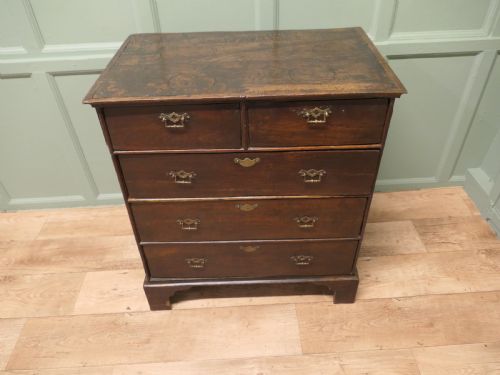
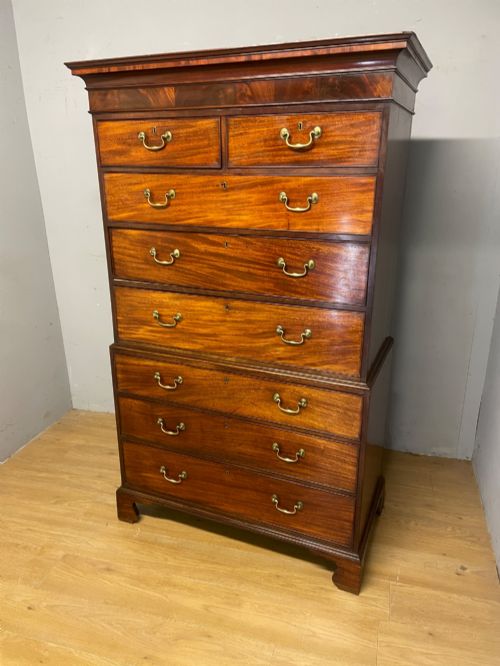
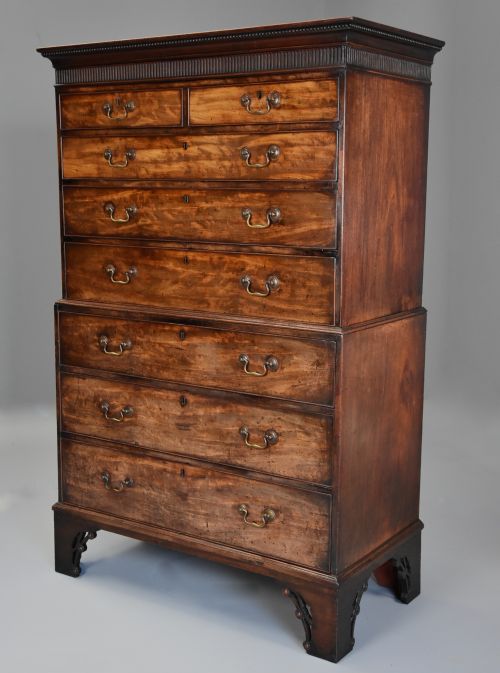
A late 18th century tallboy is a commanding case piece designed to hold a gentleman's wardrobe, combining a chest on chest or a linen press with multiple deep drawers. These furniture items emerge from the Georgian period, specifically around the late 18th century and George III eras, offering substantial vertical storage without taking up excessive floor space.
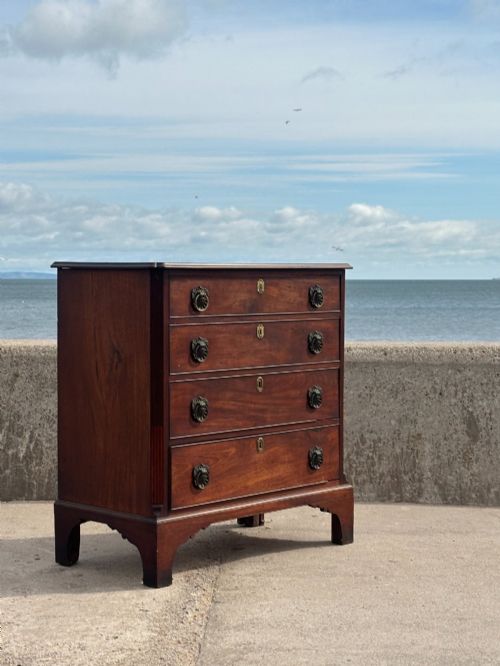
The versions encountered on this page span provincial workshops and finer urban ateliers, often rendered in solid mahogany, oak, or satinwood. Buyers frequently find examples configured as chests on chests, complete with bracket feet and traditional cornices, reflecting the domestic needs of the late 1700s.
How they were made
Cabinetmakers of this era constructed these pieces primarily from solid mahogany and oak, often incorporating secondary woods like pine for internal framing and drawer linings. Joinery relies on hand-cut dovetails for the drawers and robust frame construction to support the heavy stacked sections.
Surface detailing involves careful timber selection, occasionally enhanced by boxwood inlay and contrasting satinwood veneers. Brass hardware, including drop handles and escutcheons, completes the construction, fastened securely to the drawer fronts.
Several pieces include hidden secretaire drawers, built to keep eighteenth-century correspondence safe from wandering household eyes.
What varies in quality
The distinction between standard examples and superior pieces rests on the choice of timber and the crispness of the cabinetmaker's joinery. Fine quality tallboys display well-figured mahogany grain, precise boxwood inlay work, and original brass fittings that remain undisturbed through generations.
Structural integrity and proportion also separate pieces, where well-balanced cornices, elegant bracket feet, and smooth drawer operation indicate a higher grade of provincial or metropolitan craftsmanship. Exceptional patina accumulated over centuries marks the most desirable survivors.
The Late 18th Century Tallboy Glossary
- Tallboy
- A tall piece of furniture consisting of one chest of drawers placed on top of another. This form provides maximum storage capacity while maintaining a relatively small footprint in a room.
- Chest on chest
- An alternative term for a tallboy where a smaller upper chest sits directly upon a larger lower chest. These pieces often feature graduated drawers that decrease in depth toward the top.
- Linen press
- A tall cabinet designed originally for storing folded sheets and textiles, typically featuring upper doors enclosing sliding trays above lower drawers. They share the towering stature of standard tallboys.
- Bracket foot
- A simple, sturdy foot shape resembling a bracket, commonly found supporting the base of Georgian case furniture. They lift the main body slightly off the floor.
- Serpentine
- A gently undulating furniture front line that curves outward at the centre and inward at the sides. This decorative shaping requires advanced woodworking skill.
Late 18th Century Tallboy: Frequently Asked Questions
What is the difference between a tallboy and a chest on chest?
The terms are largely interchangeable in British antique trade usage, both referring to a tall piece built from two stacked sections of drawers.
Historically, some makers and regions reserved the word tallboy specifically for a chest on stand, but eighteenth-century examples almost universally describe the two-part chest on chest format.
How do I fit a tallboy into a modern room?
Because these pieces build upward rather than outward, they occupy minimal floor space while offering vast drawer capacity. They suit high-ceilinged bedrooms or dressing rooms where their vertical proportions command the wall.
Securing the upper and lower sections properly is essential, and anchoring the piece to the wall ensures safety in daily use.
How can I tell a George III tallboy from a later copy?
Authentic pieces from the late eighteenth century show hand-cut dovetailing with irregular spacing and timber shrinkage appropriate to genuine age. Secondary woods like oak or pine inside the drawers match the period's domestic workshop practices.
Machine-cut joints, uniform modern screws, and lack of genuine surface wear point toward later nineteenth-century revival pieces.
Were these pieces used only for clothing?
Georgian households utilised these tall cabinets primarily for garments, linens, and personal accessories belonging to the master of the house. The deep drawers accommodated bulky woollens and folded linen before modern wardrobes became standard bedroom fixtures.