

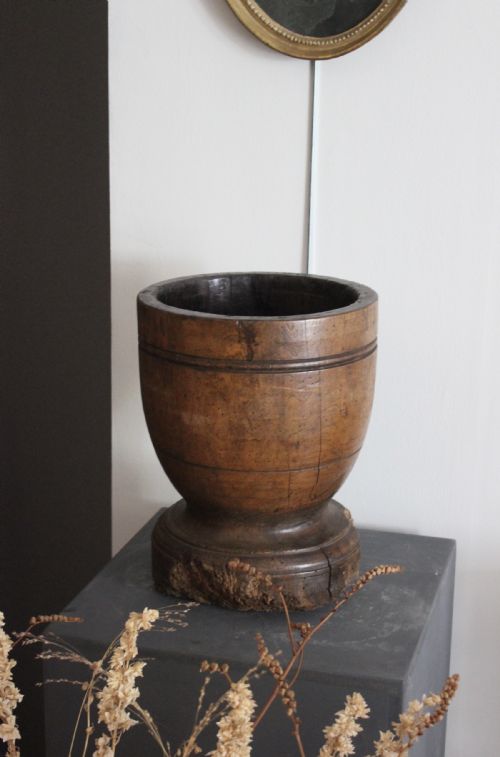
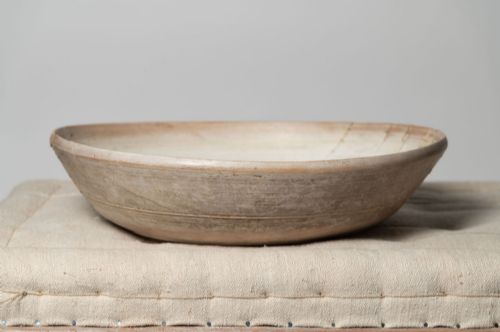
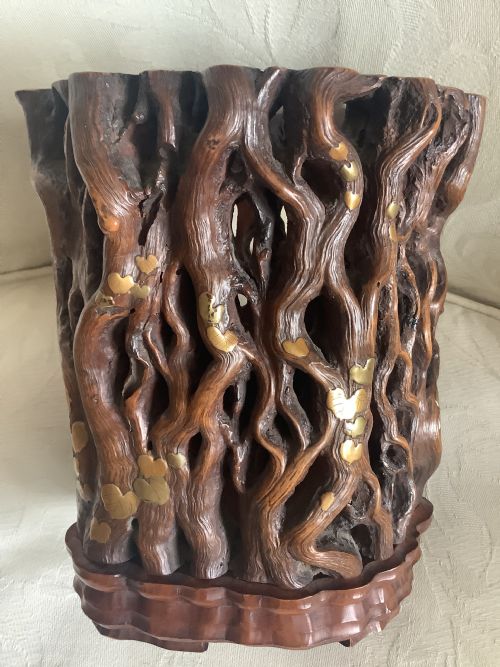
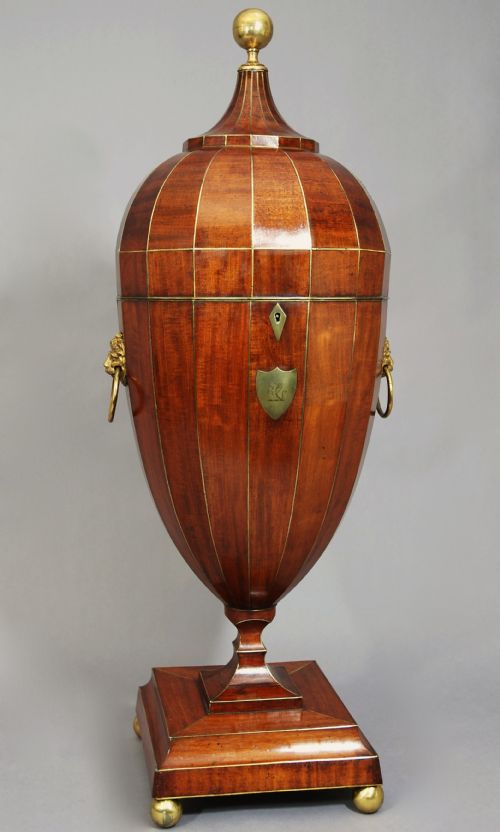





Large Wooden Vessel
A large wooden vessel brings organic warmth and sculptural presence to an interior, offering utility turned from solid timber.
Large Wooden Vessel
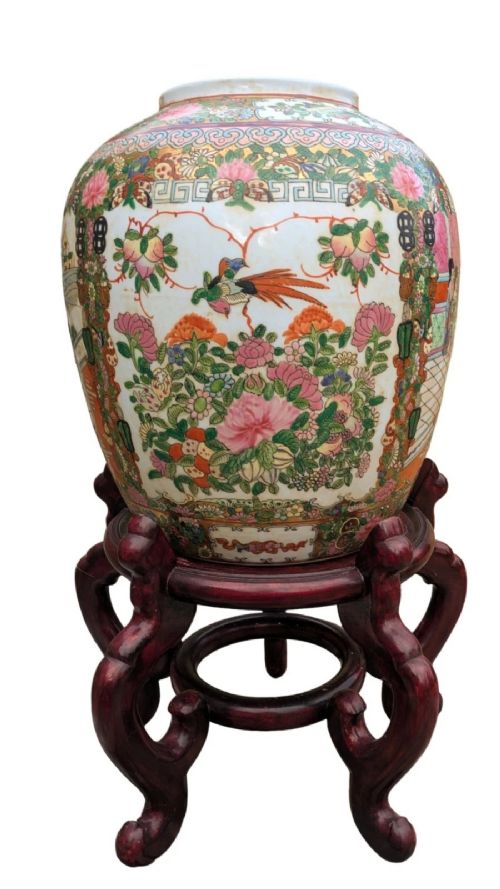
A large wooden vessel encompasses robust utilitarian forms shaped from timber across the seventeenth, eighteenth, nineteenth, and early twentieth centuries. When you search for a large wooden vessel, you encounter a diverse collection spanning dairy bowls, coopered oak jugs, turned vases, mortars, and carved containers.
Rustic farmhouse and folk art aesthetics dominate the offerings. Heavy turned hardwood, pine, oak, sycamore, and yew form the backbone of these functional objects.
Materials and Techniques
Makers utilised solid native and exotic timbers including oak, pine, sycamore, mahogany, teak, and yew. Wood was selected for density and grain pattern, often shaped directly from tree trunks or dug out by hand.
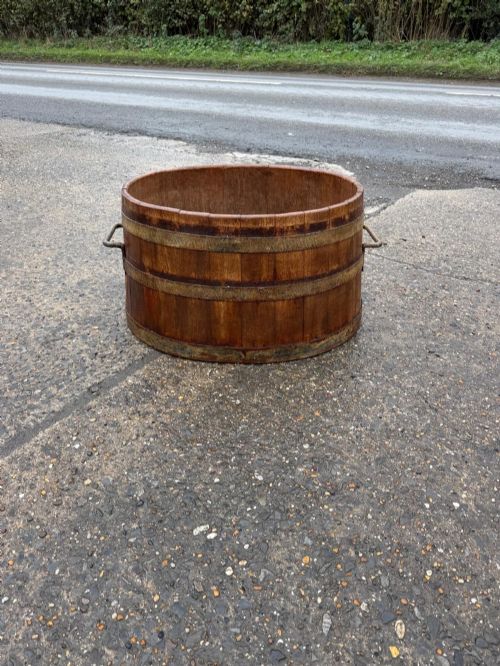
Many items employ traditional coopering techniques, joining vertical staves of wood with metal or brass bands to hold liquids or dry goods. Other pieces utilise manual turning on a lathe or laborious hand-carving with gouges and chisels.
Surfaces frequently display structural joins, turned rings, or natural patinas developed through decades of handling and use. Elements of brass, marble, and straw work occasionally supplement the primary wooden construction.
Large Wooden Vessel Retail Price Guide 2026
Typical asking prices for large wooden vessel among the pieces listed under this phrase on Sellingantiques today, from the lower quarter to the upper quarter. They describe what is for sale here now, not the wider market.
Materials span common domestic softwoods and hardwoods like pine and oak alongside denser exotic timbers including teak and mahogany.
Judging Quality and Character
Quality rests in the integrity of the timber selection and the honesty of the tool marks left by the maker. A well-proportioned vessel displays harmonious weight and balance relative to its intended function.
The depth and warmth of the surface patina dictate visual appeal. Pieces retaining dry, untouched historic finishes stand apart from those with over-cleaned or stripped surfaces.
Structural honesty and minimal intervention over centuries preserve the integrity of a piece. Original brass bindings, uncompromised staves, and crisp turning lines elevate the standing of any object.
The Large Wooden Vessel Glossary
- Coopered
- Constructed from curved wooden staves fitted together edge-to-edge and bound with metal or brass hoops to form a watertight cylinder.
- Treen
- Small handmade wooden household objects, ranging from bowls and vases to mortars and spoons, prized for their utilitarian beauty.
- Patina
- The lustrous surface sheen and depth of colour developed on timber through age, handling, wax, and exposure to light.
- Mortar
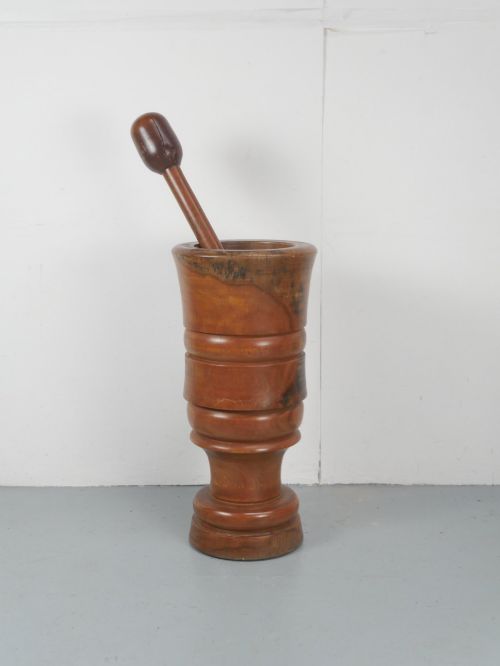
- A heavy bowl-shaped vessel of stone or turned hardwood used in conjunction with a pestle for crushing and grinding substances.
- Dug out
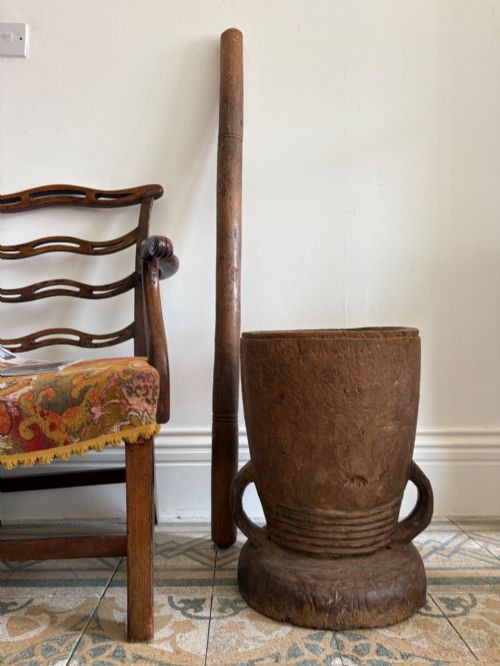
- An object carved entirely from a single solid section of a tree trunk rather than constructed from multiple assembled pieces.
Large Wooden Vessel: Frequently Asked Questions
How do I clean an antique wooden vessel?
Dust the surface regularly with a soft, dry cloth to prevent dirt accumulation in the grain. Avoid water immersion and harsh chemical cleaners which strip historic finishes.
Apply a microcrystalline wax sparingly if the timber appears dry, buffing gently to maintain the natural sheen.
How can I tell the age of a wooden bowl?
Examine the tool marks, timber shrinkage, and overall wear patterns left by historical manufacturing methods. Hand-dug surfaces and pit-sawn indicators suggest earlier periods.
Patina accumulation inside the interior base provides physical evidence of long-term usage over generations.
What is the difference between coopered and turned vessels?
Coopered items are assembled from multiple vertical wooden staves held tightly together by metal or brass bands. Turned vessels are shaped on a lathe from a single block or turned log section.
Coopered construction is typically reserved for larger storage barrels, buckets, and jugs.