


Large Wooden Prep Table
A large wooden prep table brings heavy timber, working drawers and centuries of domestic utility straight into a modern kitchen.

Large Wooden Prep Table
A large wooden prep table is a utilitarian surface built for heavy domestic labour, from kneading dough to scrubbing vegetables. When searching for a large wooden prep table, buyers encounter robust utility forms originating from the nineteenth century, including Victorian, Edwardian and early twentieth-century examples.
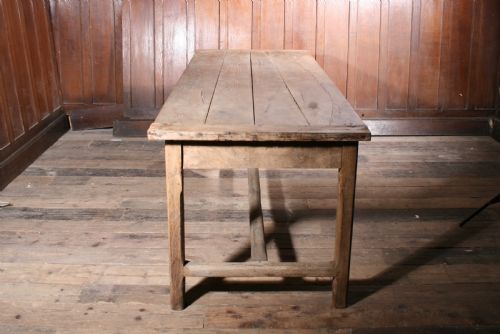
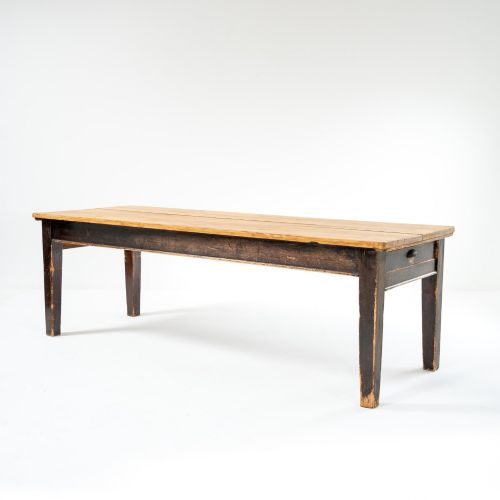
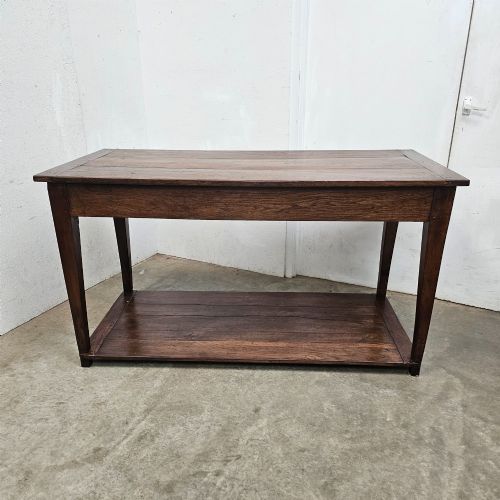
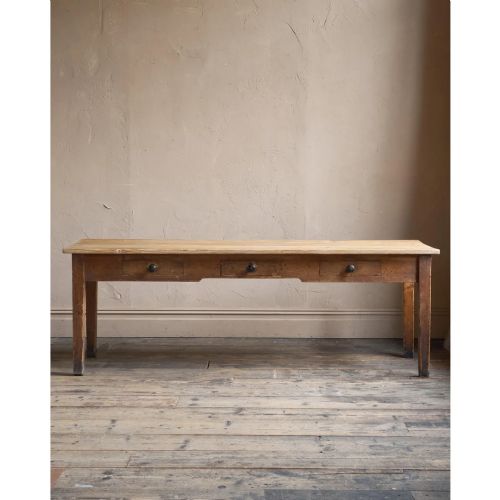
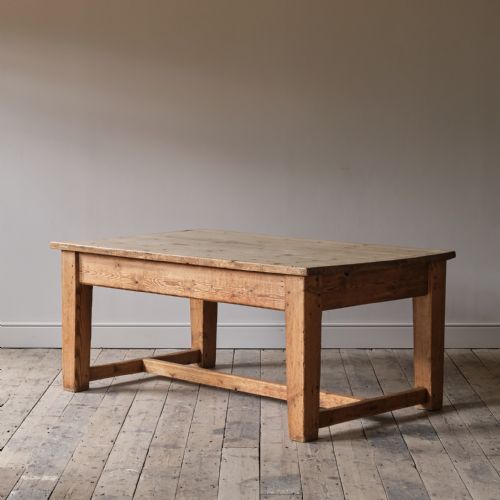
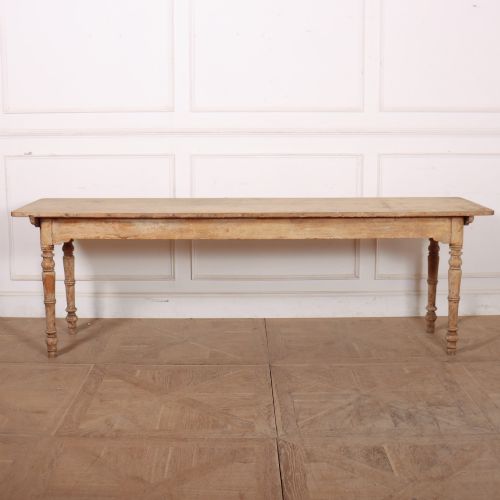
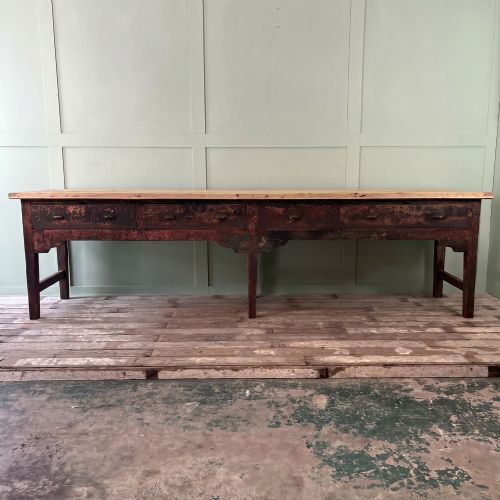
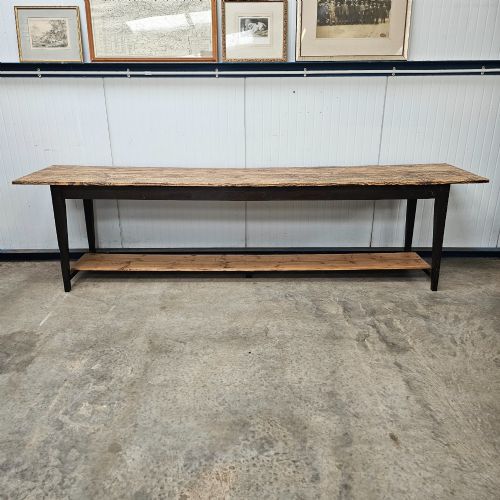
The pieces on this page span several regional traditions, notably English, French, Swedish and Italian country styles. Common forms include harvest tables, scullery tables, drapers tables and work tables, often fitted with drawers and sustained by square section supports.
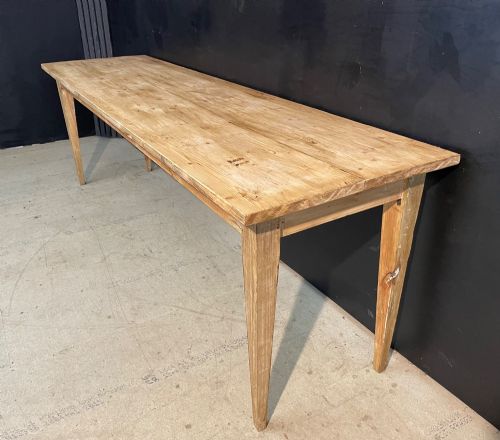
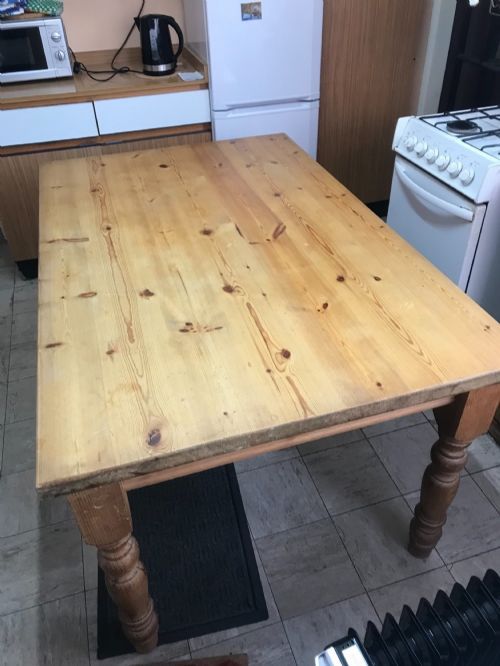
Most examples rely on pine or oak, sometimes with original painted timber finishes or scrubbed surfaces. Dimensions can be substantial, frequently accommodating multiple people for dining alongside daily kitchen preparation.
How they were made
Makers utilised solid pine and oak for their heavy framing and thick top boards, ensuring the structure could withstand vigorous daily labour. Structural support typically comes from robust square section legs or heavy trestle frames joined securely to the main surface.
Surfaces were frequently left as scrubbed pine or finished with painted timber, showing the practical nature of nineteenth-century utility furniture. Brass and iron hardware appear on drawer fittings and supports, adding functional strength to the assembled piece.
Some tables retain flour dust embedded deep within the grain from centuries of pastry making.
What varies in quality
Quality rests in the integrity of the timber and the depth of its working patina, showing decades of genuine kitchen use. Tables retaining their original scrubbed finish or untouched painted surfaces command greater interest than those stripped down in modern times.
Proportion and scale dictate the success of the piece, particularly where length exceeds eight or nine feet without sagging. The presence of original drawers, sound joinery and sturdy square section supports distinguishes superior examples from simpler domestic furniture.
The Large Wooden Prep Table Glossary
- Scrubbed pine
- Pine timber that has been repeatedly scoured with water and brush, leaving a pale, clean grain. This finish results from years of heavy cleaning in nineteenth-century sculleries.
- Harvest table
- An elongated dining or work table traditionally used during seasonal gatherings and farm work. These tables typically feature long spans and sturdy wooden legs.
- Drapers table
- A long, narrow work table originally utilised in fabric shops for measuring and cutting cloth. They often incorporate lower shelves or multiple drawers for storage.
- Square section supports
- Straight table legs fashioned with flat square profiles rather than turned curves. This construction provides solid weight distribution for heavy preparation tasks.
Large Wooden Prep Table: Frequently Asked Questions
Can I use a prep table for everyday dining?
These large wooden surfaces accommodate daily meals easily, providing ample legroom and generous seating space for family and guests.
Their robust timber construction handles the spills and knocks of daily family life without losing character.
How do I clean a scrubbed pine top?
Maintenance requires simple warm water and mild soap applied with a stiff brush along the grain of the wood. Avoid harsh chemical cleaners that strip the historic oils and dry out the pine.
Allow the timber to dry naturally after washing to prevent warping or splitting in the old boards.
Are painted finishes original on these tables?
Many pieces retain their original painted timber surfaces, showing layers of historic pigment applied in country workshops. Others have been scrubbed back to raw pine through decades of kitchen use.
Examination of the paint layers reveals whether the colour dates to the nineteenth century or represents a later decorative layer.
What is the difference between a harvest table and a prep table?
Harvest tables generally focus on length for communal dining, while prep tables prioritise sturdy work surfaces and include drawers for tools. Both forms served central roles in nineteenth-century country kitchens and sculleries.
Many surviving pieces combine both functions, acting as work surfaces during food preparation and dining tables afterwards.