

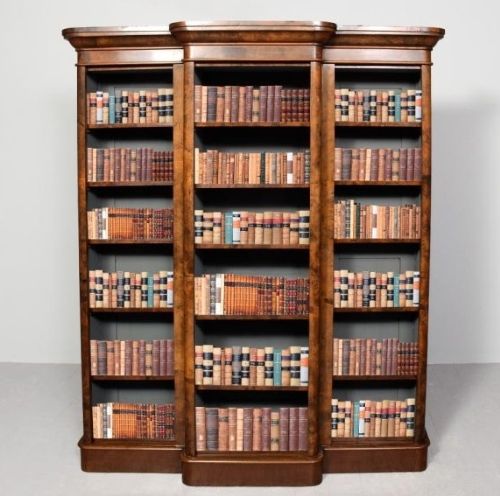


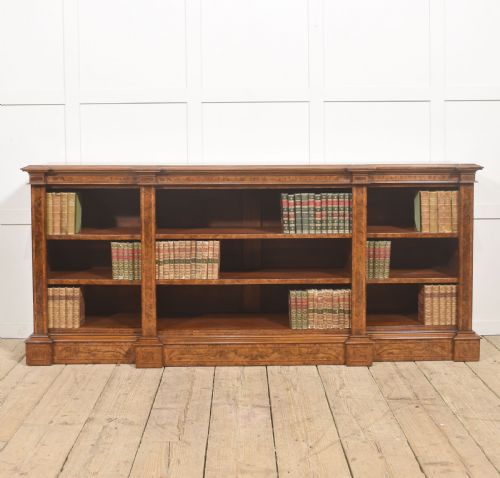
Large Walnut Bookcase
When you search for a large walnut bookcase, you enter a world of substantial library furniture shaped by Victorian and Edwardian craftsmanship.
Large Walnut Bookcase
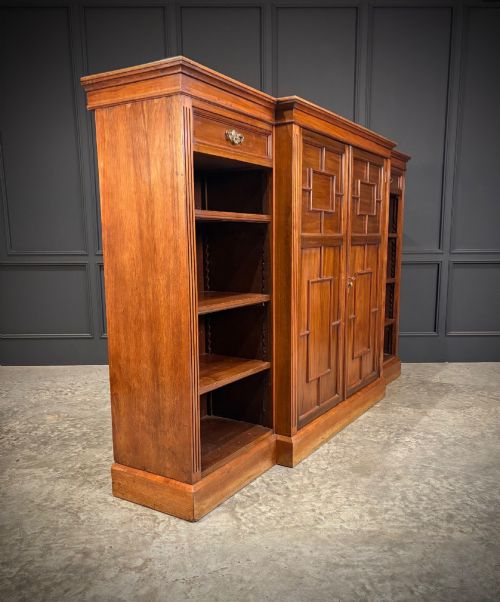
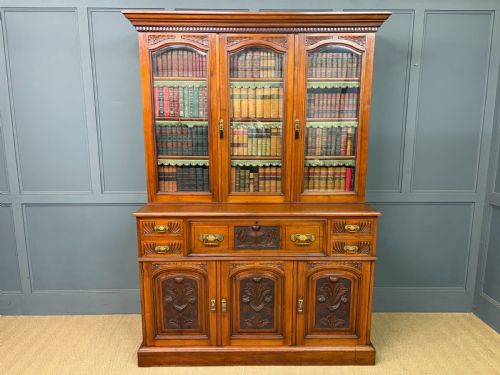
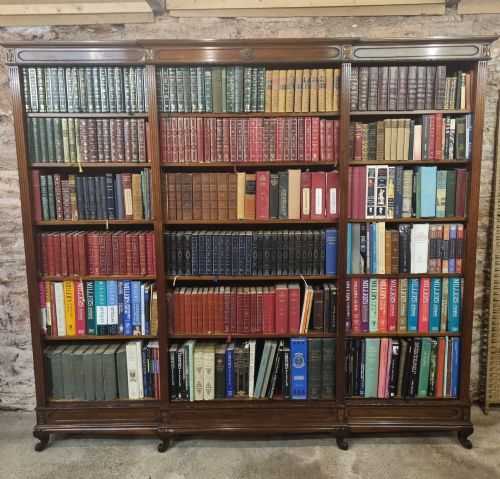
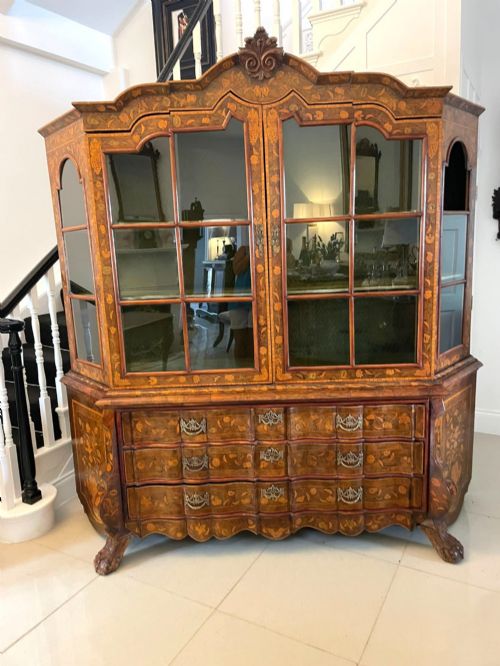
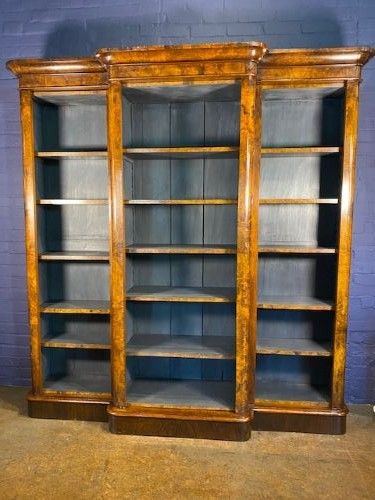
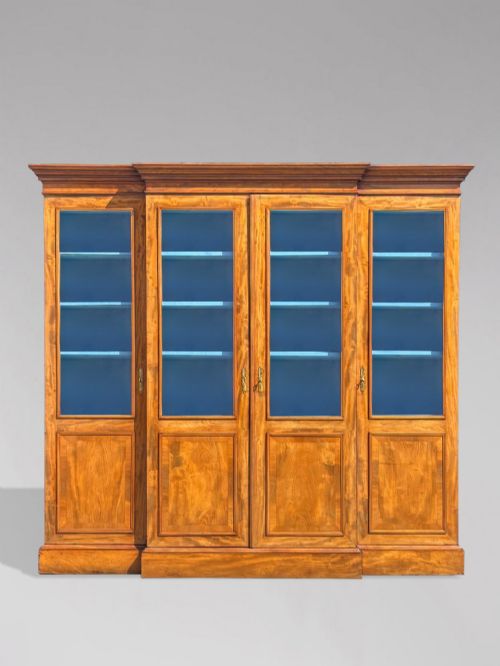
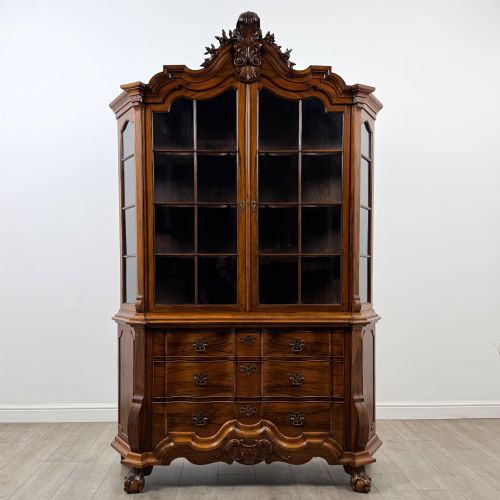
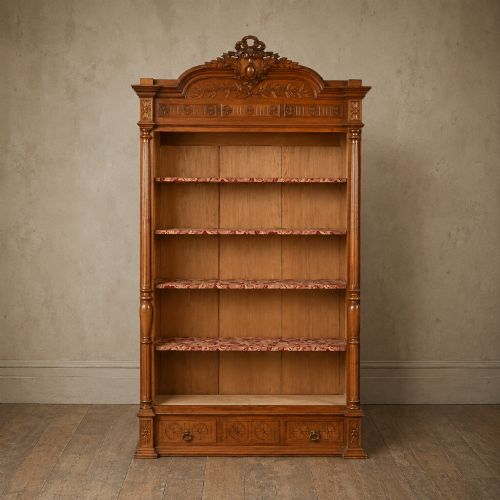
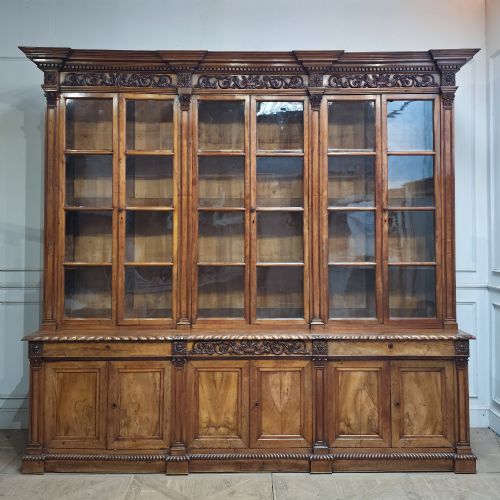
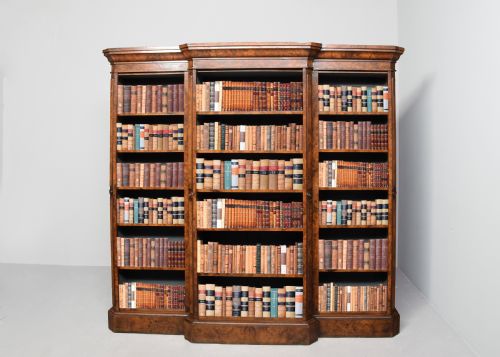
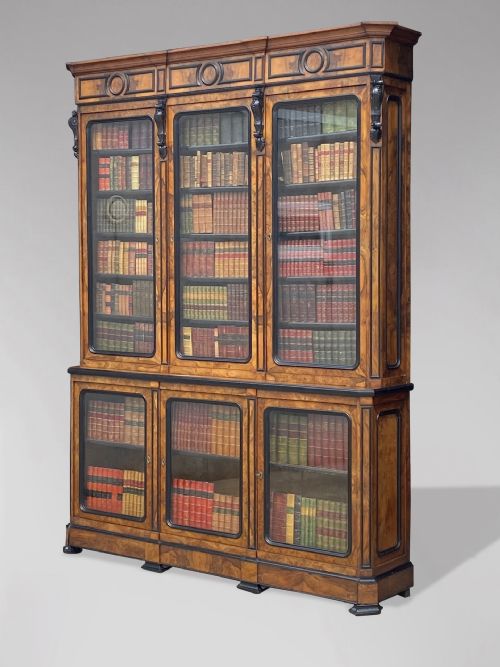
A large walnut bookcase serves as a commanding architectural presence in a room, designed to hold substantial collections of books and display fine objects. These pieces range from open library shelving to glazed cabinets, breakfront forms, and bureau bookcases.
The most common versions met on this page date from the nineteenth century and the Edwardian period, often displaying the generous proportions and architectural cornices typical of Victorian and continental workshops.
Makers utilised timber with rich grain patterns, creating functional storage that also acted as a primary focal point for a formal study or drawing room.
How they were made
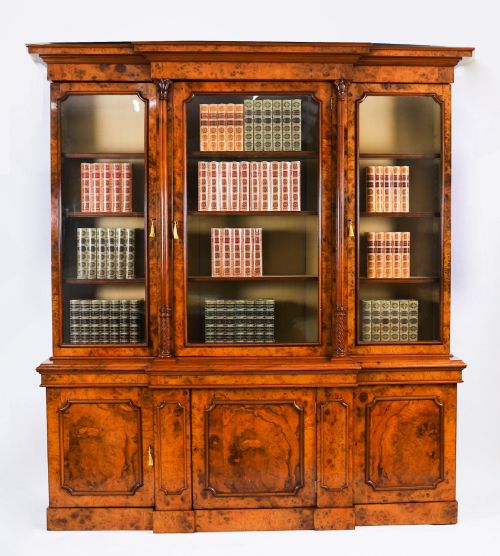
Cabinet makers built these pieces using solid timber carcasses overlaid with carefully selected walnut veneers and figured burr walnut to create striking symmetrical patterns across large doors and drawer fronts. Secondary timbers provided internal stability, while glass panels were fitted into glazed doors to protect valuable libraries from dust.
Decoration relied on skilled hand-carving, brass mounts, ormolu details, and intricate marquetry or inlay using contrasting woods like ebony and amboyna. Adjustable shelving systems allowed owners to customise interior heights for varying volumes.
Large Walnut Bookcase Retail Price Guide 2026
Typical asking prices for large walnut bookcase among the pieces listed under this phrase on Sellingantiques today, from the lower quarter to the upper quarter. They describe what is for sale here now, not the wider market.
Several revolving bookcases in the archive let readers spin an entire miniature library with a single gentle push of the hand.
What varies in quality
The distinction between standard utility storage and top-tier pieces lies in the choice of timber and the precision of the cabinet work. Highly figured burr walnut veneer carefully matched across multiple doors represents a higher standard of manufacture than plain timber surfaces.
Subtle indicators of superior execution include finely executed hand-carved friezes, well-fitted adjustable brass shelf racks, original hardware, and sturdy structural joinery that maintains alignment across wide breakfront sections.
Waring & Gillow·Maple & Co.·Holland & Sons·Druce & Co·Warings
The Large Walnut Bookcase Glossary
- Breakfront
- A piece of furniture featuring a central section that projects forward from the flanking sides. This layout creates depth and visual rhythm in large library cabinets.
- Ormolu
- Gilded bronze mounts applied to furniture for decorative effect. This technique was frequently utilised on nineteenth-century continental and Victorian pieces.
- Marquetry
- The art of applying decorative pieces of veneer to a structure to form intricate pictorial designs. Craftsmen used various coloured woods to create floral or geometric motifs.
- Ebonised wood
- Timber treated with a dark finish to imitate expensive ebony. This dark staining provided stark contrast against lighter walnut panels.
Large Walnut Bookcase: Frequently Asked Questions
How do I care for walnut veneer?
Keep the wood away from direct sunlight and sudden temperature changes to prevent the delicate veneer from drying out or lifting. Regular dusting with a dry, soft cloth maintains the natural finish without building up chemical residue.
Apply a quality beeswax polish sparingly every few months to nourish the timber and preserve the deep lustre of the grain.
Are the shelves adjustable?
Many nineteenth-century and Edwardian examples feature adjustable wooden shelves supported by wooden ratchets or brass strip systems. This flexibility allows you to store books of varying heights.
Some open bookcases and glazed cabinets retain their original numbered shelving supports, indicating high-grade bespoke manufacture.
How do I distinguish Victorian from Edwardian styles?
Victorian pieces generally display heavier proportions, deep carving, and dark, rich timber tones with architectural cornices. They often incorporate elaborate decorative elements like barley twist columns or ormolu mounts.
Edwardian furniture tends to feature lighter construction, sometimes drawing inspiration from earlier Georgian revival designs or incorporating Arts and Crafts simplicity.