


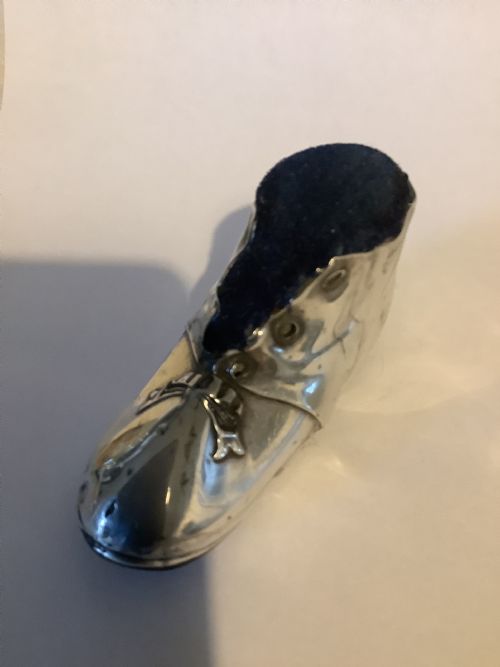


Large Victorian Pin
A large Victorian pin is a substantial statement piece of nineteenth-century jewellery or silverwork, often worn as a brooch or utilised as a desktop pin cushion.
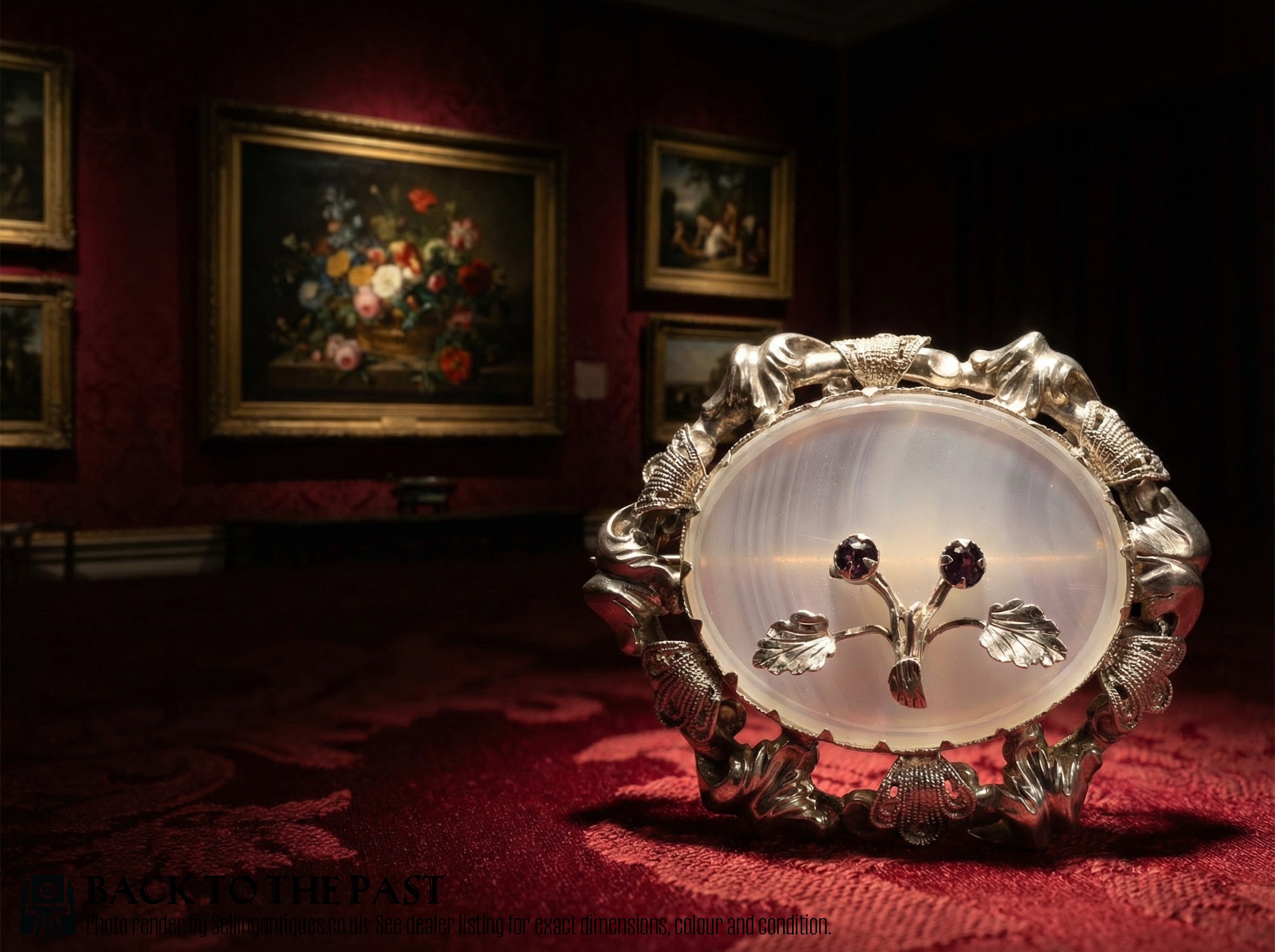
Large Victorian Pin
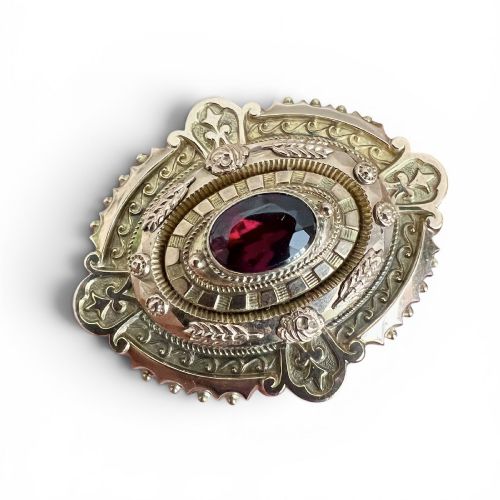
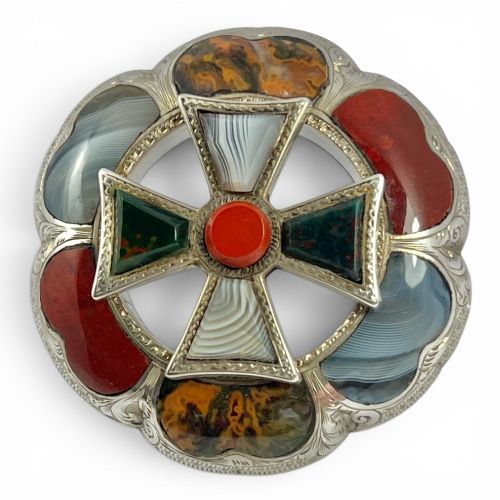
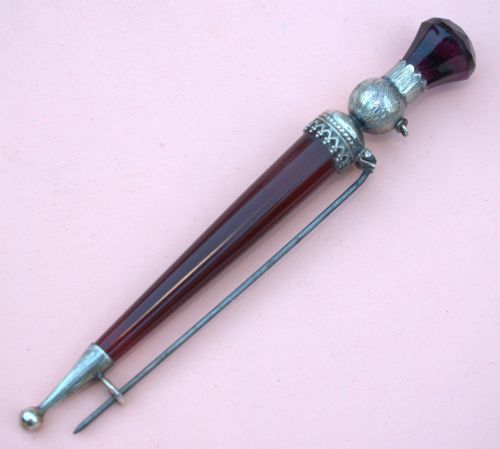
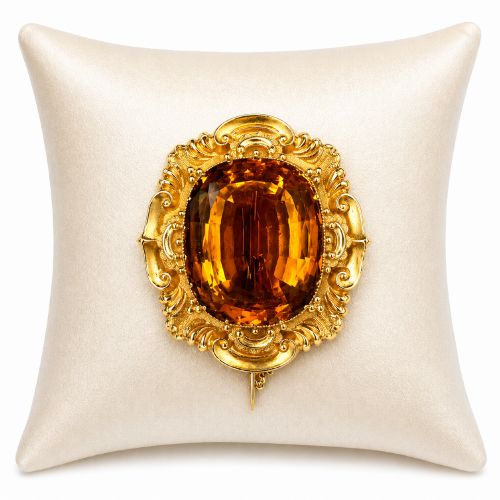
When searching for a large Victorian pin, a buyer encounters a diverse group of items spanning the nineteenth century, most frequently taking the form of substantial brooches or decorative pin cushions. The selection includes Scottish pebble jewellery featuring agate and jasper, Etruscan Revival gold work set with garnets and topazes, and novelty silver pieces shaped like boots or shoes.
The objects serve dual purposes as ornamental dress fasteners and functional sewing accessories. Many pieces originate from the Victorian and Edwardian eras, displaying regional variations such as Austrian cold painted bronze alongside British silver and gold constructions.
Materials and construction techniques
The pieces rely on precious metals including silver, solid gold, and fifteen-carat gold, frequently paired with natural stones like garnet, turquoise, chalcedony, and seed pearl. Metalwork techniques encompass silver gilt, cold painted bronze, and detailed wirework associated with the Etruscan Revival style.
Stonework and organic materials are integrated through precision cutting of hardstones in Scottish pebble brooches, alongside hand-carved shell cameos and applied glass paste. Structural assembly involves secure collet settings and hinged pin stems suited to heavier garments.
Listings combine wearable jewellery like garnet lockets and cameo brooches with functional silver and bronze pin cushions shaped as boots.
Distinctions in manufacture and preservation
Quality rests upon the crispness of the metal chasing, the security of stone settings, and the integrity of natural materials such as unenhanced turquoise or genuine carbuncle garnets. Superior examples display balanced proportions, clean soldering, and well-preserved surface patinas without structural repair.
In novelty pieces and pin cushions, excellence is visible in the realistic casting of forms like boots and ibexes, combined with intact velvet upholstery or pierced silver framework. The retention of original fixings and legible hallmarks further distinguishes finer specimens from standard production items.
The Large Victorian Pin Glossary
- Etruscan Revival
- A nineteenth-century design style drawing on ancient Mediterranean goldsmithing techniques, characterised by granulation and filigree wirework.
- Carbuncle
- A cabochon-cut garnet or other red gemstone, popular in mid-nineteenth-century cluster and locket brooches.
- Hardstone
- Opaque or semi-precious decorative stones such as agate, jasper, and malachite, frequently sliced and polished for Scottish pebble jewellery.
- Paste
- Faceted glass used to imitate precious gemstones in antique jewellery, secured in closed-back or open-backed metal mounts.
- Silver Gilt
- Sterling or solid silver that has been coated with a thin layer of gold, providing the appearance of solid gold while utilising a silver base.
Large Victorian Pin: Frequently Asked Questions
How were large Victorian pins worn?
These items functioned primarily as substantial brooches secured to heavy fabrics like woollen shawls, coats, and kilt plaids. Their weight required sturdy fastenings and robust garment structures to prevent sagging.
Alternative domestic versions, such as silver pin cushions shaped like boots or shoes, sat upon dressing tables or sewing desks to hold common dressmaker pins.
What materials are common in Scottish pebble brooches?
Makers utilised native Scottish hardstones including various coloured agates, jaspers, and smoky quartz, set within silver mounts. These stones were cut and polished to display natural banding and earthy tones.
Designs frequently incorporated dirk, sword, or horseshoe silhouettes inspired by traditional Highland dress and the nineteenth-century Scottish Revival.
How do I identify Etruscan Revival pieces?
Etruscan Revival items feature characteristic gold wirework, tiny applied granules arranged in geometric patterns, and central cabochon gemstones like garnets. The style mimics ancient Greek and Etruscan artefacts discovered during nineteenth-century excavations.
Such pieces often present a matte yellow gold finish rather than high-polish bright gold, achieved through a chemical treatment called colouration.
What is the difference between a brooch and a pin cushion?
Brooches are wearable jewellery items fitted with a pin stem and safety catch for fastening to clothing. They generally showcase gemstones, cameos, or hardstones framed in gold or silver.
Pin cushions are decorative desk or vanity objects, often formed from solid silver or cold painted bronze enclosing a velvet or stuffed core designed to store loose pins.