

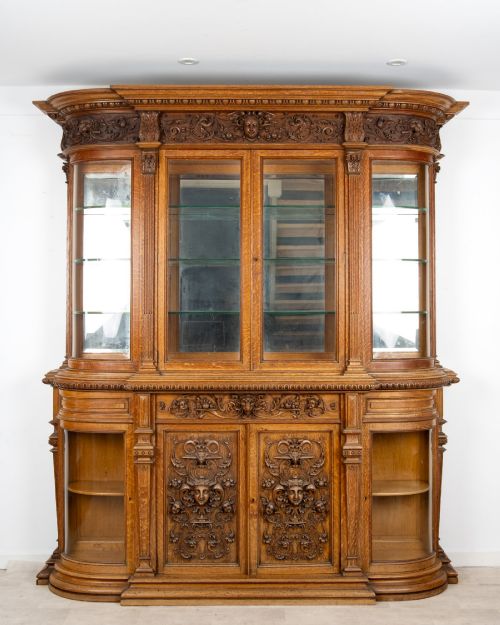
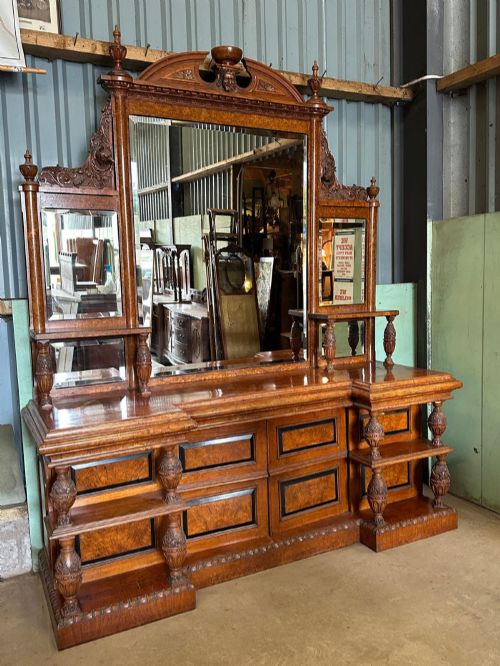
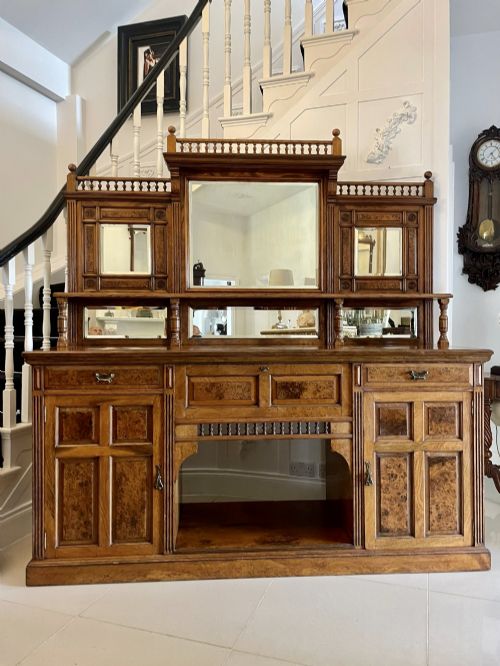
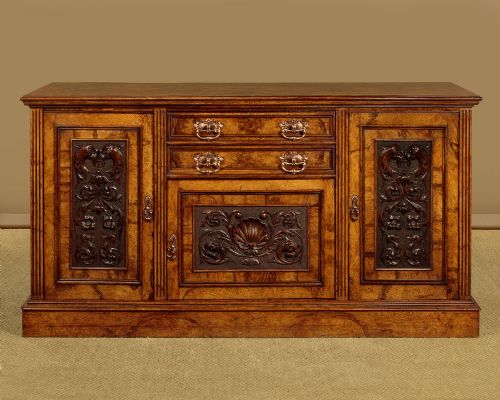
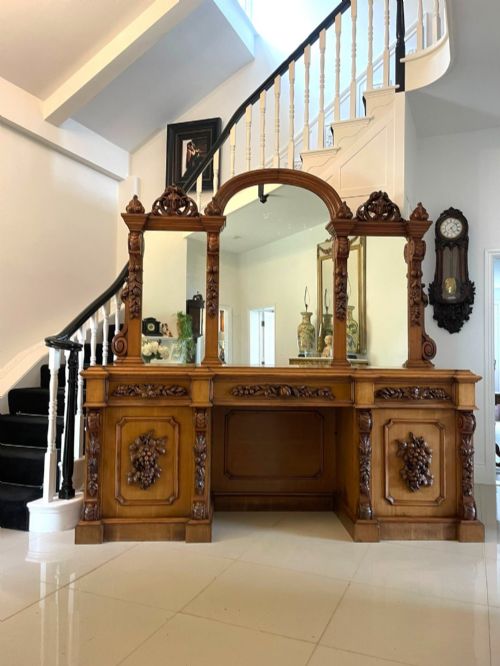

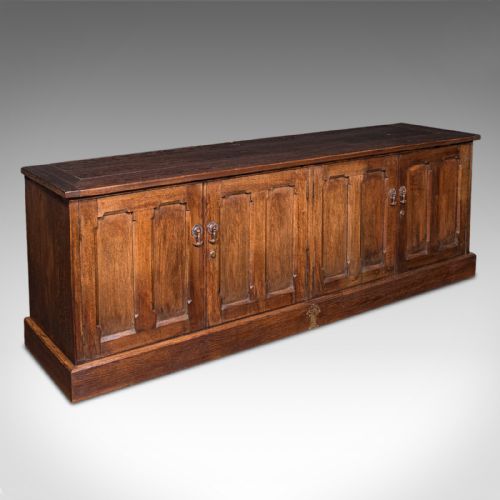


Large Victorian Oak Dresser
A large victorian oak dresser anchors a room with solid presence, offering substantial display and storage built to last generations.
Large Victorian Oak Dresser
A large victorian oak dresser brings together robust timber construction and generous proportions, typically functioning as a kitchen dresser, dresser base, or mirror-backed sideboard. These pieces serve as practical storage units while showcasing the prominent grain and heavy build characteristic of nineteenth-century cabinet work.
Buyers encountering this group will find diverse forms including Welsh dressers with plate racks, library bookcases, court cupboards, and mirrored sideboards. Most examples date from the Victorian era and the broader nineteenth century, reflecting periods of confident domestic furnishing.
Stylistic variations range from plain English country house interpretations to ornate pieces incorporating Jacobean Revival, Gothic Revival, and Arts and Crafts details. Carved motifs, green man masks, and glazed doors frequently appear across these substantial forms.
How they were made
Makers utilised solid oak alongside decorative veneers such as pollard oak to create durable frames and striking visual surfaces. Timber was selected for strength and figured grain, then joined using traditional methods suited to heavy furniture.
Hardware played an essential functional and decorative role, incorporating brass handles, iron fittings, mirrored glass panels, and specialised locks such as those by Hobbs and Co. Ebonised wood details often provided contrast against the warm tones of the primary oak.
Large Victorian Oak Dresser Retail Price Guide 2026
Typical asking prices for large victorian oak dresser among the pieces listed under this phrase on Sellingantiques today, from the lower quarter to the upper quarter. They describe what is for sale here now, not the wider market.
Listings span the Victorian era, nineteenth century, and early twentieth century up to nineteen thirty.
What varies in quality
The distinction between standard output and finer work rests on the depth and execution of the carving, the selection of figured pollard oak veneers, and the integrity of the structural joinery. Monumental pieces with integrated architectural elements or maker attribution represent the upper tier of production.
Proportion and balance dictate the success of these large forms, where heavier revival styles require careful handling so the ornamentation complements rather than overpowers the timber structure. Original hardware, glass, and locks further separate everyday utility pieces from exceptional survivors.
Hobbs and Co
The Large Victorian Oak Dresser Glossary
- Pollard oak
- Timber taken from the upper branches of pollarded trees, producing a dense, highly figured grain pattern prized for decorative veneer panels.
- Court cupboard
- A traditional English enclosed cupboard with upper and lower tiers, often revived during the nineteenth century with heavy carved ornamentation.
- Mirror-backed sideboard
- A large base cabinet featuring an attached superstructure with a tall mirror and display shelves, popular in Victorian dining rooms.
- Green man
- A sculptural architectural motif depicting a human face emerging from or entwined with foliage, frequently found on carved Victorian furniture.
- Housekeeper's cupboard
- A tall, utilitarian storage piece with multiple panelled doors, originally used in large country houses for linens and dry goods.
Large Victorian Oak Dresser: Frequently Asked Questions
How do I clean an oak dresser?
Dust regularly with a dry cloth and apply a quality beeswax periodically to nourish the timber without building up heavy residues.
Avoid using silicones or modern aerosol polishes, which can penetrate open oak pores and soften the original finish over time.
Can these dressers be dismantled?
Many larger examples, particularly mirror-backed sideboards and bookcases, separate into distinct upper and lower sections for easier transport.
Cornices, plate racks, and mirrored superstructures often unbolt from the main base cabinet, though professional removal is recommended for monumental pieces.
Where should I place a large oak sideboard?
These substantial pieces require sturdy flooring and adequate wall space, making dining rooms, wide hallways, and large kitchens ideal locations.
Keep oak furniture away from direct heat sources and strong sunlight to prevent the timber from drying out or splitting.
How do I date a Victorian oak piece?
Examine the construction methods, secondary timbers, hardware styles, and decorative vocabulary such as Gothic or Arts and Crafts influences.
Maker stamps, patent locks, and registration marks can also provide specific production dates within the nineteenth century.