

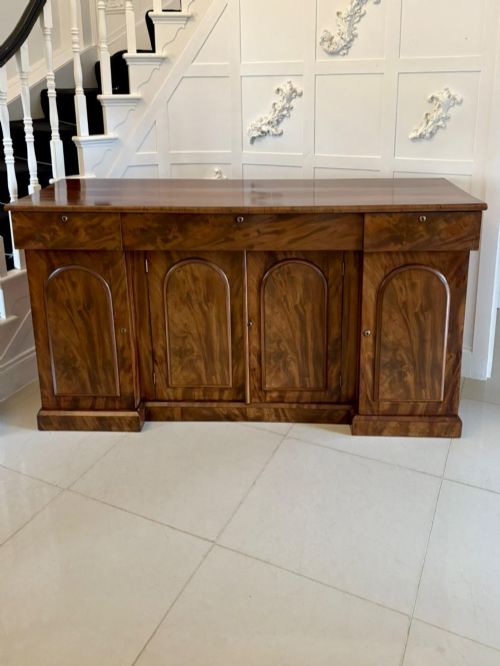
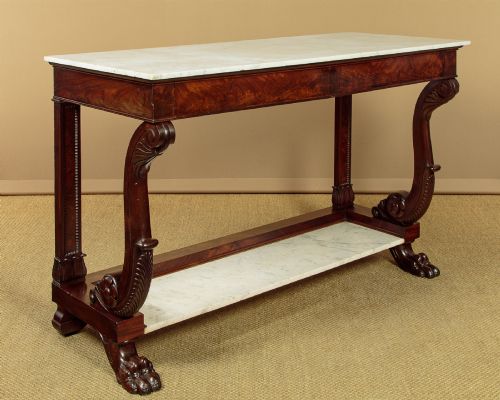
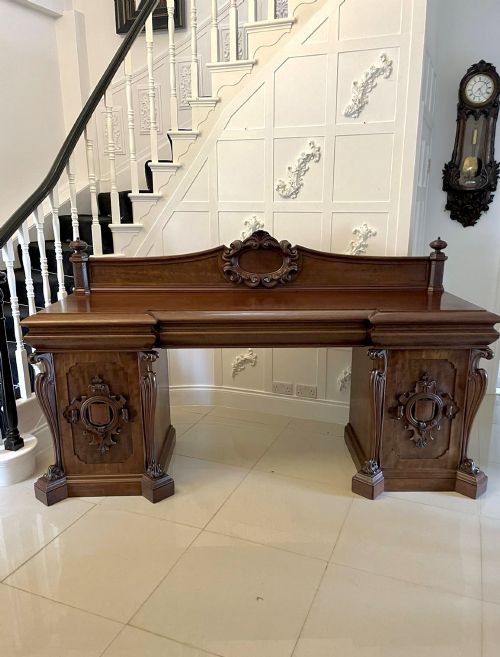
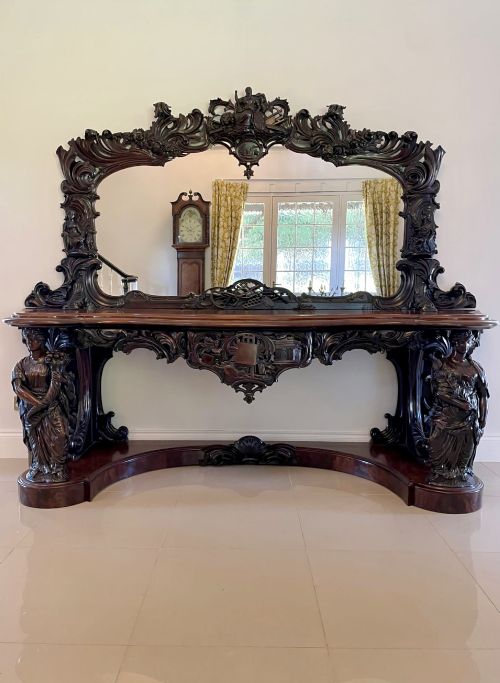
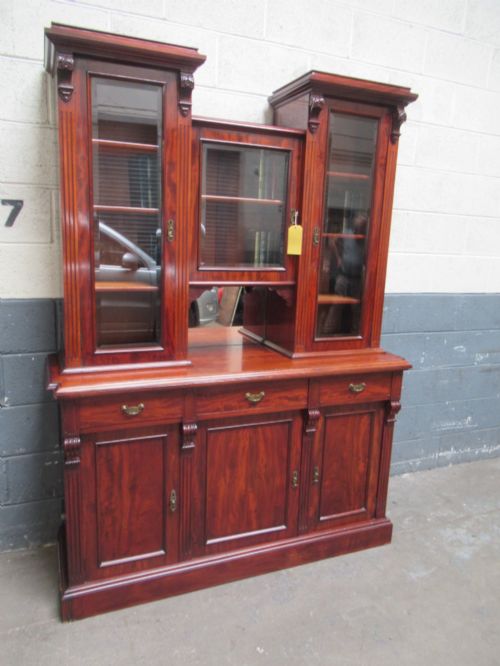
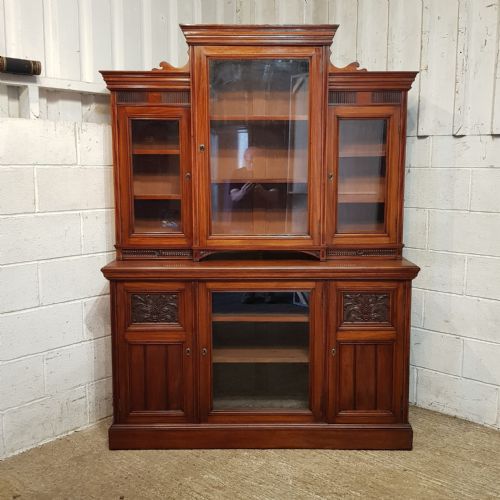
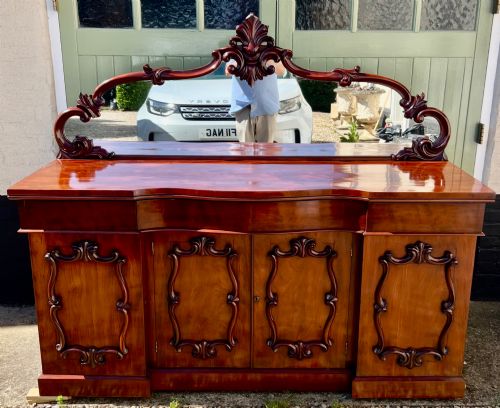
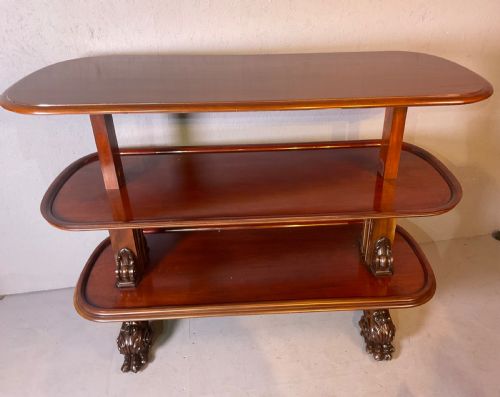


Large Victorian Mahogany Sideboard
A large victorian mahogany sideboard commands a dining room with rich timber grain and substantial proportions.
Large Victorian Mahogany Sideboard
A large victorian mahogany sideboard brings substantial nineteenth-century presence to a dining room or hall. These grand storage pieces appear most frequently as four-door formats, breakfront designs, and pedestal sideboards.
The evidence shows forms ranging from simple pedestals to ornate mirror-backed chiffoniers and breakfront servers. Many examples incorporate deep cupboards, drawers, and occasionally specialised storage such as champagne bottle drawers.
Makers working during the Victorian period alongside earlier William IV and Regency influences shaped these heavy timber items. They served as functional dining room servers and display pieces for substantial country houses.
How They Were Made
Cabinet makers utilised solid mahogany and applied flame mahogany veneer to create deep, figured grain patterns across large surfaces. Mirror glass and brass hardware often supplemented the timber construction.
Carved details, panelled doors, and breakfront configurations required skilled joinery to manage timber movement across substantial widths. Workshops constructed these heavy carcases to withstand decades of heavy domestic use.
Large Victorian Mahogany Sideboard Retail Price Guide 2026
Typical asking prices for large victorian mahogany sideboard among the pieces listed under this phrase on Sellingantiques today, from the lower quarter to the upper quarter. They describe what is for sale here now, not the wider market.
Some nineteenth-century sideboards arrived equipped with dedicated champagne bottle storage drawers for serious dining.
What Varies in Quality
The selection of timber grain sets apart standard production from exhibition pieces. Richly figured flame mahogany veneer demonstrates superior material choice compared to plain sawn boards.
Depth of carving and structural integration define the upper tier of cabinet making. Crisp hand-carved details and substantial breakfront proportions elevate the presence of a piece far beyond basic utilitarian storage.
Gillows·Robson & Sons·Maple & Co
The Large Victorian Mahogany Sideboard Glossary
- Breakfront
- A cabinet design where the central section projects forward from the flanking outer cupboards. This configuration adds architectural depth to large dining room furniture.
- Flame mahogany
- A veneer cut from timber where the branch meets the trunk, producing a distinctive flickering flame pattern. Cabinet makers used this timber on prominent door panels and drawer fronts.
- Chiffonier
- A low sideboard or cabinet featuring shelves or a mirror superstructure. Victorian examples often incorporate enclosed cupboards beneath a serving surface.
- Pedestal sideboard
- A heavy form featuring two distinct columnar cupboards supporting a substantial top. These pieces frequently include central drawers and concealed cellarette storage.
- Figured mahogany
- Timber displaying natural optical variation and grain movement within the board. This figuring creates visual depth when polished.
Large Victorian Mahogany Sideboard: Frequently Asked Questions
Where should a large sideboard go?
These substantial dining room pieces require a generous wall space to balance their heavy proportions and deep footprint. Placing them opposite a window or in a large hall allows the figured timber grain to catch available light.
Ensure adequate floor clearance for doors to open fully, particularly on four-door or pedestal formats that extend outward into the room.
How do I care for mahogany?
Maintain the timber surface by applying a quality beeswax polish sparingly and buffing gently with a soft cloth. Avoid placing these items in direct sunlight or near heat sources to prevent timber shrinkage.
Keep humidity levels stable within the room to protect both the solid mahogany carcase and the delicate veneer surfaces from splitting.
How can I date a Victorian sideboard?
Examine the timber selection, construction methods, and hardware style to determine the period of manufacture. Earlier nineteenth-century examples often display Regency or William IV architectural influences alongside heavy carved pedestals.
Late Victorian pieces frequently incorporate simpler four-door layouts or mirror-backed superstructures that reflect changing interior tastes towards the end of the century.