


Large Victorian Ceramic Jug
A large victorian ceramic jug offers a commanding presence on a sideboard or table, combining robust utility with period ornament.
Large Victorian Ceramic Jug
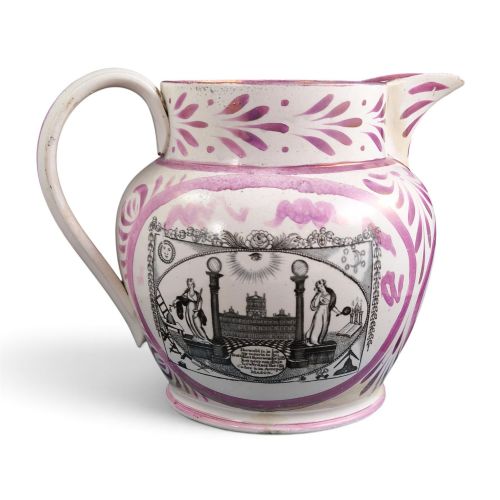
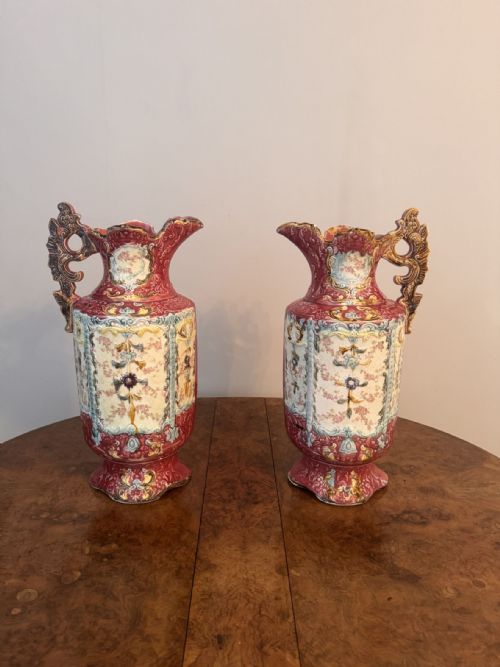
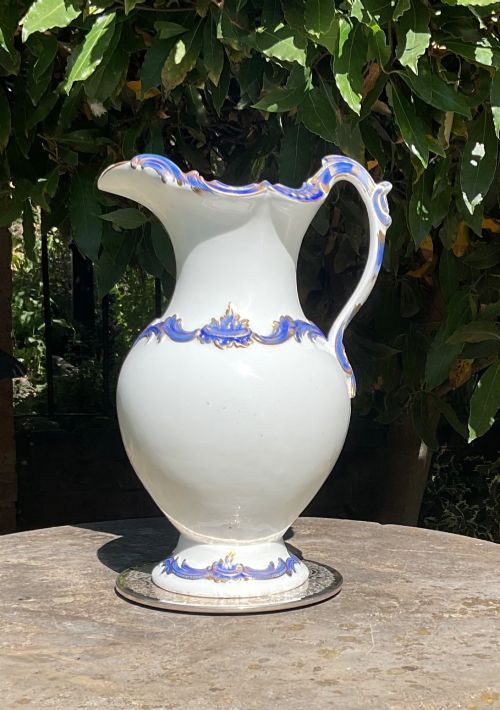
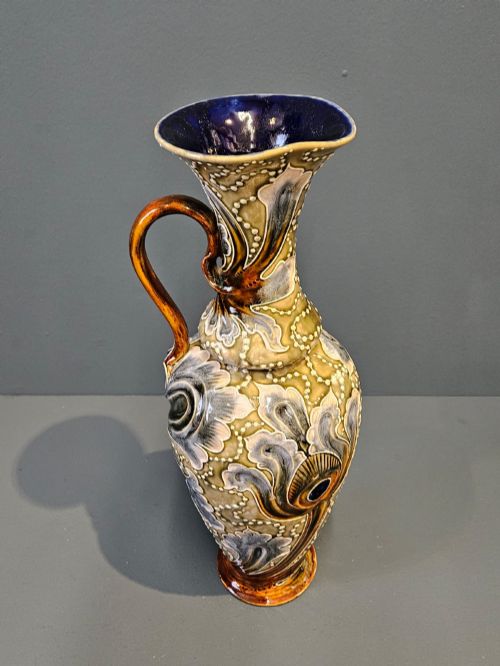
A large victorian ceramic jug takes many functional and decorative forms, including water pitchers, ewers, and harvest vessels designed for everyday use or display. These substantial vessels originate primarily across the nineteenth century, reflecting diverse regional potteries and studio practices.
The versions most commonly met on this page span earthenware, stoneware, and porcelain, frequently featuring relief-moulded figures, lustrous metallic finishes, or hand-painted pastoral and mythological scenes. They range from utilitarian salt-glazed storage pieces to ornate exhibition ewers and matching basin sets.
How they were made
Potters built these vessels using regional clays such as earthenware and dense stoneware, shaped by hand or pressed into moulds to achieve crisp relief decoration. Surfaces received fluid glazes, enamel pigments, or salt glazing before firing in high-temperature kilns.
Many examples incorporate applied details like sprigged stoneware motifs or metallic lustre treatments, whilst others feature hand-applied silver rims and gilt highlights added after the initial glaze firing.
Listings feature earthenware, stoneware, and porcelain pieces spanning the nineteenth century, including marked examples from Lambeth and Staffordshire potteries.
What varies in quality
Quality rests in the crispness of the moulded relief, the evenness of the glaze, and the sophistication of the painted or transferred decoration. Superior examples display sharp detailing in complex figural scenes and balanced proportions that elevate them beyond standard utility.
The distinction between ordinary production pieces and exhibition-grade work lies in the control of the kiln firing, the richness of the enamel colours, and the inclusion of fine mounts such as hallmarked silver rims.
Doulton Lambeth·Masons Ironstone·Charles Meigh·Minton·Royal Worcester·Staffordshire
The Large Victorian Ceramic Jug Glossary
- Ewer
- A large, ornamental jug with a flared spout and curved handle, historically used for pouring water at the dining table or washstand. These pieces often prioritise sculptural form over simple utility.
- Majolica
- A colourful, tin-glazed earthenware developed in the Victorian era, known for vibrant lead-glazed colours and realistic naturalistic or figural modelling.
- Salt glaze
- A vitreous, slightly textured coating formed by throwing common salt into the kiln during high-temperature firing, producing an orange-peel finish durable enough for heavy stoneware.
- Lustreware
- Earthenware or porcelain coated with a metallic film that creates an iridescent sheen, achieved through a specialised reduction firing process.
- Sprigging
- A technique where individually moulded clay motifs are applied to the unfired body of a vessel using slip as an adhesive to create raised decorative reliefs.
Large Victorian Ceramic Jug: Frequently Asked Questions
How were large jugs used in Victorian homes?
These vessels served practical functions such as carrying water for washstands, serving wine or milk at large gatherings, and storing harvest liquids. Many also sat on sideboards purely as decorative centrepieces.
Larger capacity pieces handled heavy domestic demands, while finer porcelain and majolica versions were displayed in parlours to signal household refinement.
How can I tell a Victorian jug from a later copy?
Examine the weight, the handling of the base, and the consistency of the glaze. Nineteenth-century pieces often show typical potting irregularities and age-related wear beneath the foot rim.
Decoration techniques such as genuine salt glazing, hand-applied lustre, and nineteenth-century transfer printing differ visibly from modern mass-produced reproductions.
What maintenance do ceramic jugs require?
Keep these pieces away from direct sunlight to preserve enamel colours and metallic lustre finishes. Dust them gently with a soft, dry cloth.
Avoid submerging antique ceramics in water, especially pieces with delicate painted details or applied silver rims, to prevent moisture damage to the glaze and body.