



Salt Glazed Pottery Vessel
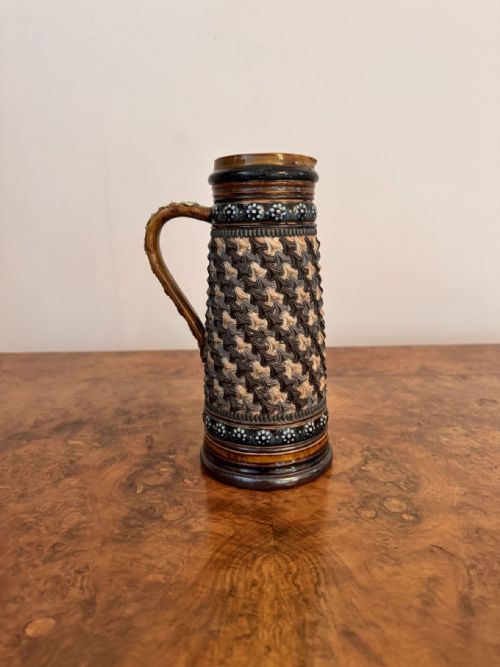
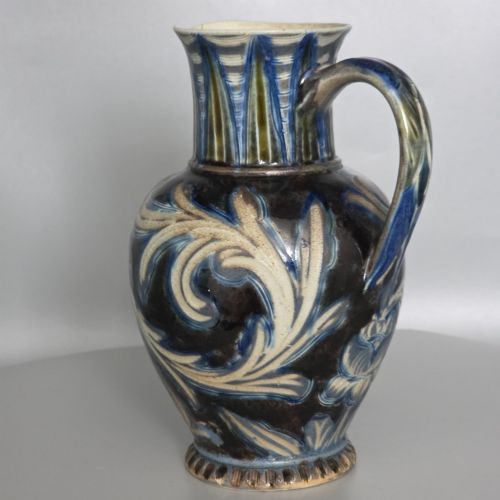
A salt glazed pottery vessel is a durable ceramic piece defined by its characteristic textured, pebbled surface, prized for both historic utility and decorative form.
Salt Glazed Pottery Vessel
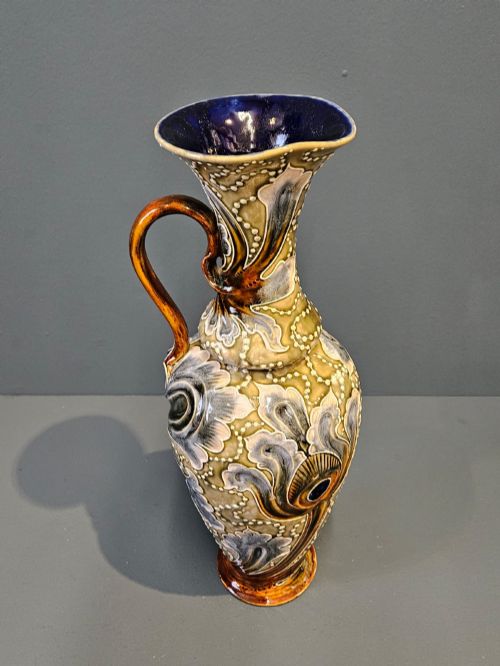
A salt glazed pottery vessel encompasses an array of historic utilitarian and decorative forms, stretching from early continental flagons to Victorian jugs and jardinieres. When exploring this selection, buyers frequently encounter robust stoneware bottles, ewers, and German vessels shaped in centuries past.
The selection spans domestic kitchenalia alongside ambitious art pottery. Pieces range from early German tankards and Bartmann jugs carrying royal ciphers to English Victorian ewers and water filter urns, reflecting changing domestic requirements across generations.
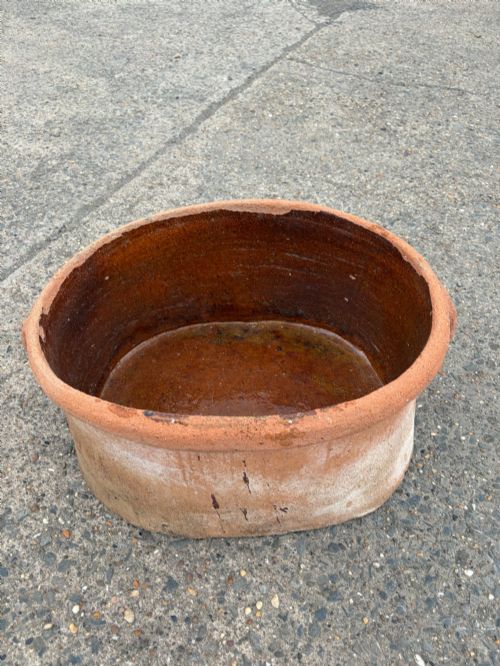
Origins vary widely across England, France, and Germany. Collectors find everything from North Devon terracotta pieces and Fulham pottery to Westerwald stoneware bearing traditional cobalt decoration.
Materials and Technique
The defining characteristic of these pieces is the salt glaze applied during firing, where common salt thrown into the kiln vaporises and reacts with the silica in the clay body. This chemical union produces a distinct, durable orange-peel texture across the stoneware surface.
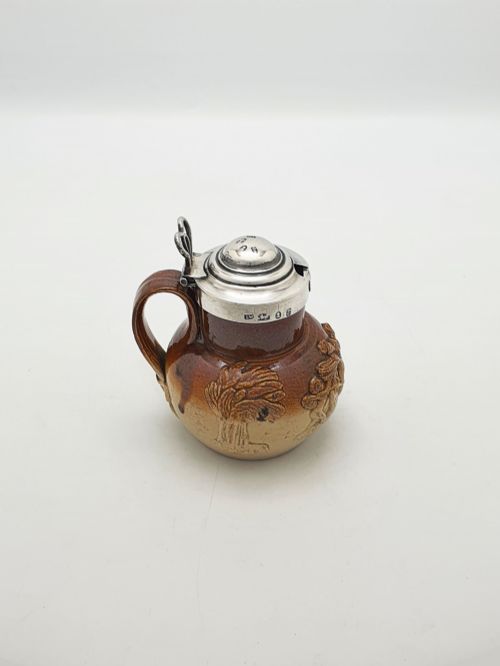
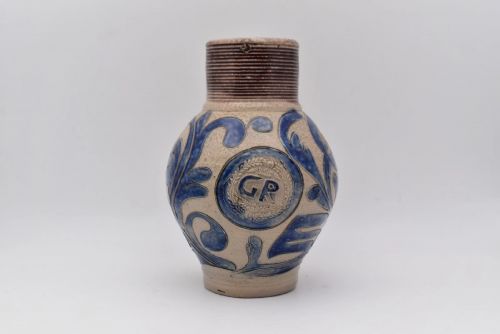
Makers utilised dense clay and stoneware bodies capable of withstanding extreme kiln temperatures. Many vessels incorporate applied sprigged decoration or incised motifs, sometimes highlighted with cobalt oxide pigments before firing.
Early tavern-goers tested their wits with salt-glazed puzzle jugs designed with hidden spouts meant to spill down an unwary drinker's chin.
Markers of Distinction
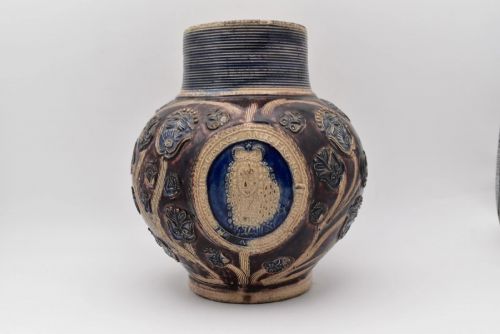
Quality in a salt glazed pottery vessel rests primarily upon the crispness of the moulded or incised detail and the evenness of the orange-peel texture. Pieces with sharply defined mask decorations, royal ciphers, or intricate slipwork stand apart from simpler utilitarian wares.
The presence of precious metal mounts, such as hallmarked sterling silver collars and hinged lids on stoneware jugs, elevates a piece significantly. Furthermore, signed studio or factory attribution, such as distinct artist marks from Doulton Lambeth, defines the upper tier of the range.
Doulton Lambeth·Fulham Pottery·Roger Guerin
The Salt Glazed Pottery Vessel Glossary
- Bartmann jug
- A type of German stoneware jug featuring a bearded mask applied to the neck. These vessels date back to the sixteenth and seventeenth centuries and are also known as Bellarmine jugs.
- Salt glaze
- A vitreous coating formed by introducing common salt into the kiln at the height of firing. The process leaves a pebbled, orange-peel texture unique to stoneware.
- Sprigged decoration
- A technique where separate moulded clay motifs are applied to the damp body of a vessel before firing. It creates a low-relief decorative effect common on eighteenth-century and Victorian stoneware.
- Westerwald
- A historic German ceramic region known for producing grey stoneware decorated with cobalt blue and manganese purple. These pieces often feature stamped medallions and royal ciphers.
- Tyg
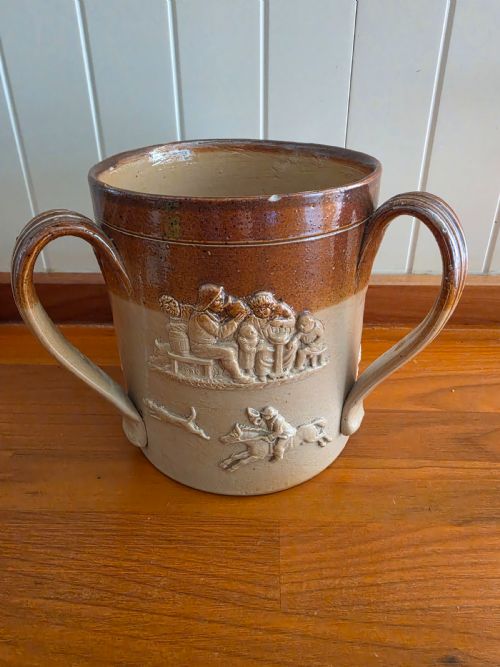
- A large drinking vessel featuring three or more handles designed for communal passing around a table. Early examples frequently appear in sturdy salt-glazed stoneware.
Salt Glazed Pottery Vessel: Frequently Asked Questions
How do I identify a salt glazed pottery vessel?
Look closely at the exterior surface for a distinctive pitted texture resembling the skin of an orange. This unique finish results from salt vaporising inside the kiln during the high-temperature firing process.
Heavier pieces are typically composed of dense stoneware rather than porous earthenware. Many also feature characteristic cobalt blue coloration painted beneath the glaze.
What were these vessels originally used for?
Historic salt-glazed pieces served primarily practical domestic purposes such as storing wine, oil, vinegar, and drinking water. Sturdy stoneware containers kept contents cool and secure.
Over time, forms evolved to include decorative ewers, puzzle jugs, jardinières, and commemorative items for royal jubilees. Tyg vessels were specifically made for communal drinking at feasts and taverns.
How can I tell the age of a piece?
Dating relies on examining manufacturing techniques, stylistic motifs, and any stamped maker marks or ciphers. Early German pieces often display Westerwald characteristics and mask adornments, whereas Victorian examples may feature distinct factory stamps or sterling silver collars with hallmarks.
Comparing the potting weight, handle attachment, and glaze consistency against documented examples helps narrow down the period of origin.